
Cats have a surprisingly large vocabulary when they think dinner is late. My cats have their own lineup of chirps, yowls, tiny meows, and other noises that start as soon as I miss the usual feeding time. Some are clearly demands for food, while others are just part of their individual personalities. Here are the three mealtime sounds I hear most often, along with what I’ve learned to look for when they start their dinner complaints.
The Chirping Sound Cats Make Before Dinner
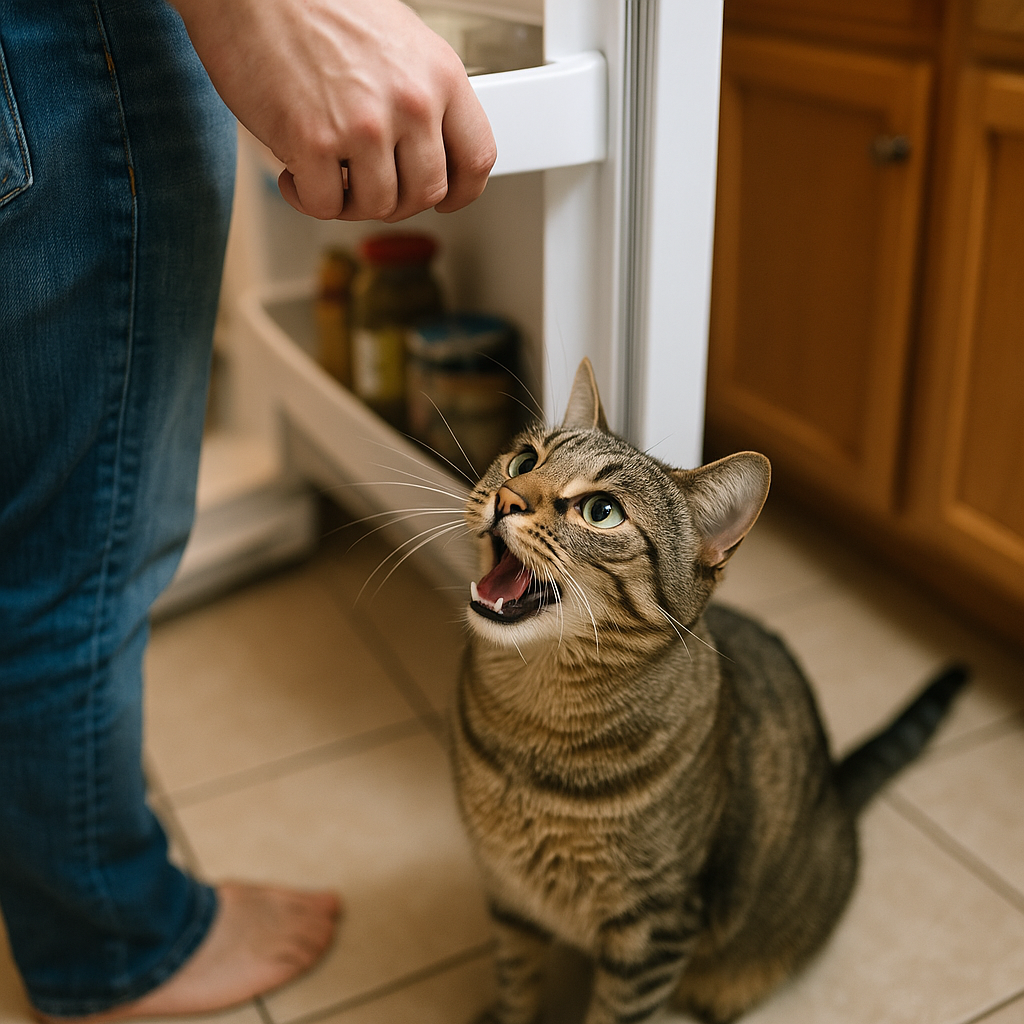
Right before feeding time, one of my cats lets out a quick, bright chirp. It usually happens when I open the fridge door or when I step onto the kitchen tile. It is not the same noise she uses at the window, and it is not the long, dramatic meow she saves for when she wants you to follow her somewhere. This one is short, upbeat, and spammed in bursts.
In my house, that chirp is basically her way of saying, "I see you initiating food-related behaviors." If dinner is late, the chirps get sharper and more frequent, and she starts weaving her body against my ankles with the tail straight up, as if she can physically steer me toward the bowl by friction alone. If you want to see whether food is part of the trigger, notice whether the chirping reliably starts around familiar mealtime cues, such as opening the food container or approaching the feeding area.
The Loud Yowl When Dinner Is Late
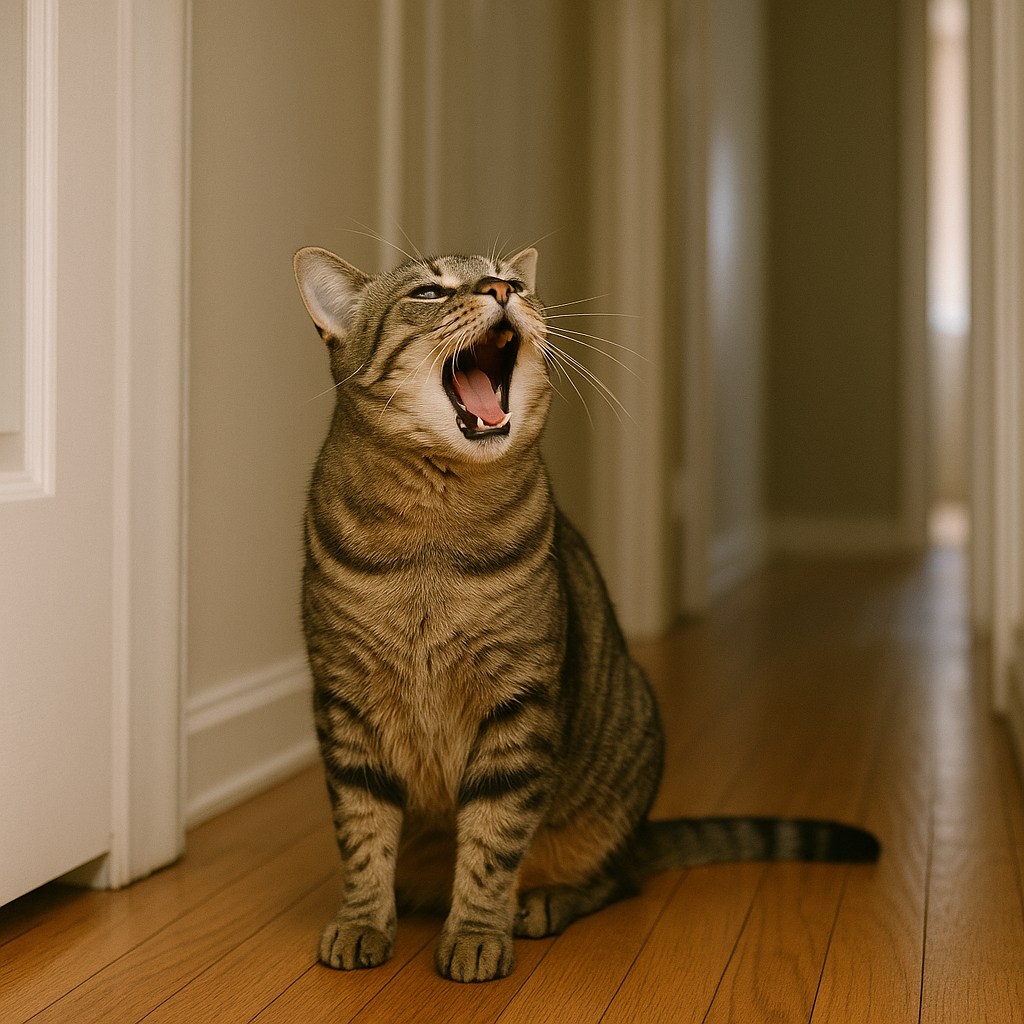
When dinner runs late, my other cat leaves the kitchen entirely and performs in the hallway. He plants himself where the sound carries, lifts his head, and releases this long, round yowl that makes it seem like something tragic is happening in the next room. Then you walk out, make eye contact, and he does it again at a slightly higher pitch.
I have learned that context matters. When my cat yowls around his usual mealtime and heads toward the kitchen, I read it as part of his dinner routine. But yowling can also happen with stress, discomfort, or other problems, so I pay attention to changes in his usual behavior. The dinner version is bold and public.
If your cat does the hallway thing, watch what happens when you stand still and do nothing for ten seconds. Mine usually escalates the volume. If I follow him, he leads me to the feeding area and stares at the spot where the bowls usually are.
Note that if this sound is new, sudden, or paired with other changes (hiding, not eating, litter box issues), do not write it off as personality. Cats can be dramatic, but they are also good at using their voice when something is off. My rule is simple. If it is the usual dinner aria at the usual time, I roll my eyes and keep cooking.
The Little Meows and Noises at the Food Bowl
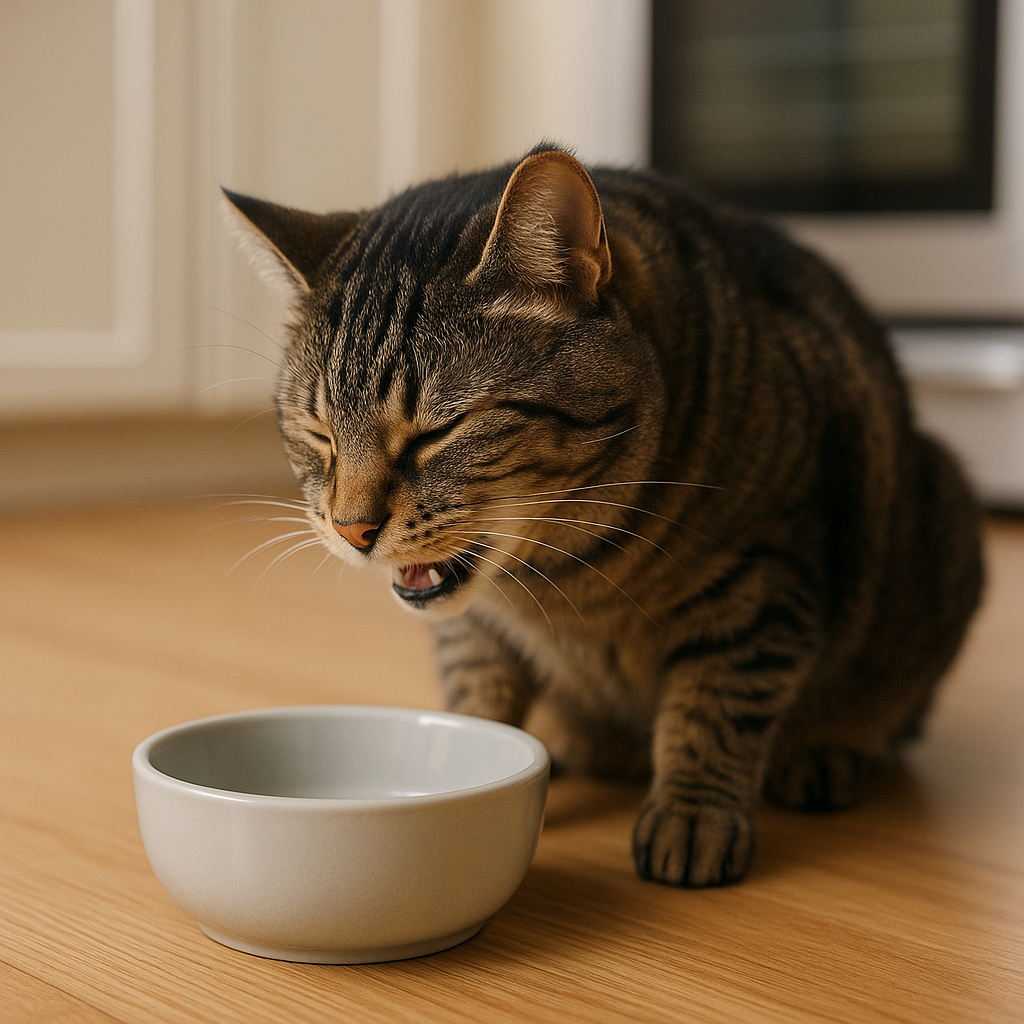
This is the one that cracks me up because it is so personal. Instead of the big announcement meow, my cat sits directly beside the bowl and does these tiny, irritated sounds that barely qualify as meows. They are more like little puffs of voice: mreh. mreh. Then he stops making noise entirely and starts tapping his teeth against the rim of the bowl, like he is testing whether the universe forgot to load kibble today. The first time I heard it, I thought he had something stuck in his mouth. If a cat repeatedly clicks or taps its teeth while eating, though, I wouldn't automatically assume it's just a quirky dinner habit.
The mutter usually shows up when the routine is almost right but not quite. I am in the kitchen. The food is out. Maybe I am opening a can of wet food, and I paused to rinse the spoon. That pause is all it takes. He positions himself close enough that I cannot miss him, but he does not chase me. He is not pleading. He is documenting. If I look down, he does a slow blink and then another tiny meow that feels like, "Yes, I am still here. Yes, this is still unacceptable."
There is a very specific sound that comes with kibble, too: the click-click of pieces skittering in a ceramic bowl versus the duller thud in stainless steel. My cat also seems to notice every little change in the feeding routine. If I pour and the sound is too low, he gives me a look as if I am trying to pass off an empty bowl. If the tooth-tapping occurs repeatedly or is accompanied by difficulty eating, drooling, dropping food, or other changes, I would have a veterinarian check his mouth. If you want to reduce the commentary, pre-portioning helps.