
If you've ever shared your home with both a dog and a cat, here are three classic dog-and-cat misunderstandings that you might have noticed, even when they give way to complete confusion.
When a Dog's Play Bow Looks Like an Insult to a Cat
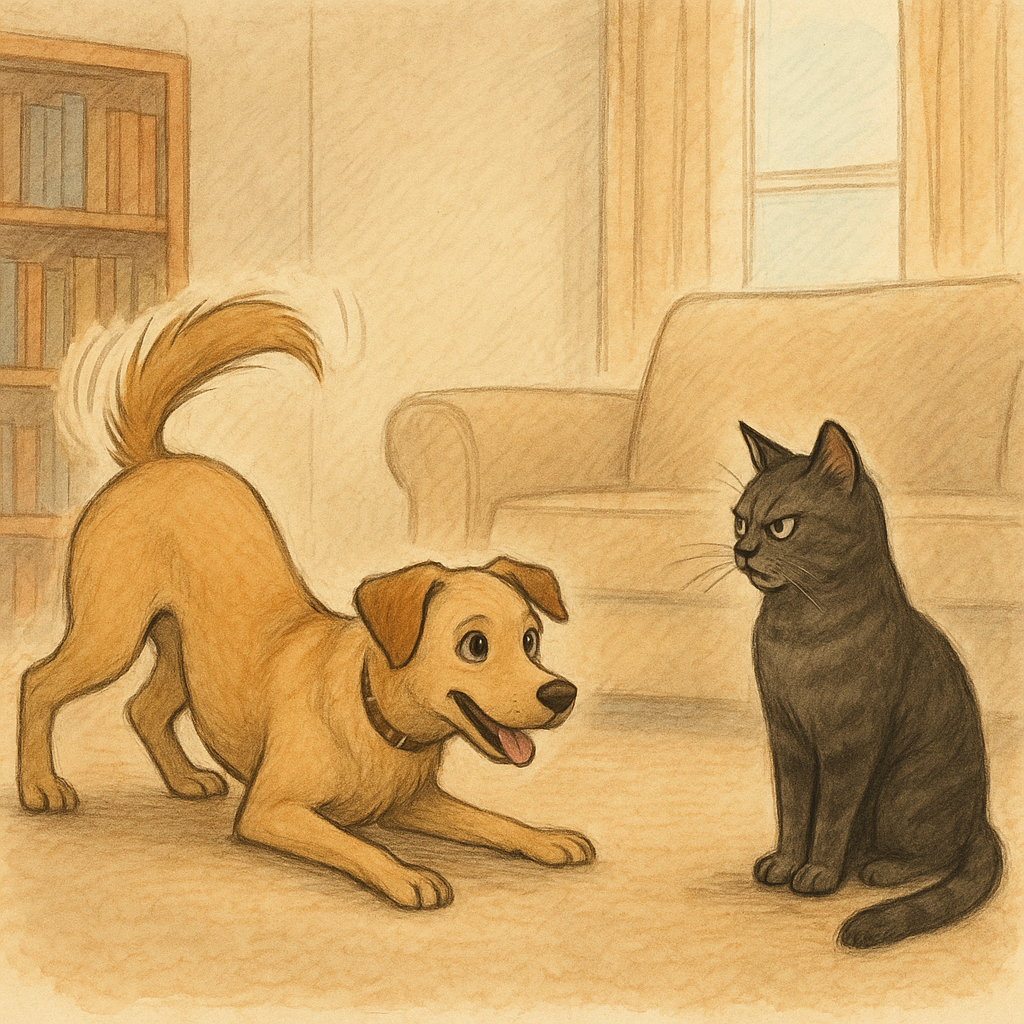
The first time I watched my dog do that textbook play-bow (front end down, butt in the air, tail going like a windshield wiper), I thought, "Great, he finally learned to be polite around the cat." The cat, however, froze, with her eyes wide, and then gave him the kind of stare that says, I will not be mocked in my own living room. For a lot of cats, that bow plus the fast tail reads like a challenge. Plus, the little hop forward dogs do right after looks like a pounce. Cats know pounces, and they're not big fans of them.
In my house, this misunderstanding shows up as a standstill. Nobody moves, but the tension goes up a notch every second. If I let it run, the dog gets louder (snorty huffs, little yips), and the cat answers with a single warning swat that lands on the dog’s nose and ends the whole interaction in offended silence.
It helps to give the dog a different "invitation" channel and give the cat an exit from the whole situation. I keep a tug toy or a ball within reach, because redirecting a dog is faster than negotiating with a cat. I ask for a sit, then toss the toy away from the cat so the dog’s body turns, and the pressure is off. For the cat, I make sure there’s a vertical option nearby: a cat tree, a sturdy bookshelf ledge, even the back of the couch. When she can step up and watch from above, she stops feeling like she has to settle the matter with her paws. Everybody’s happy enough to coexist.
When a Cat's Tail Sends the Wrong Message to a Dog
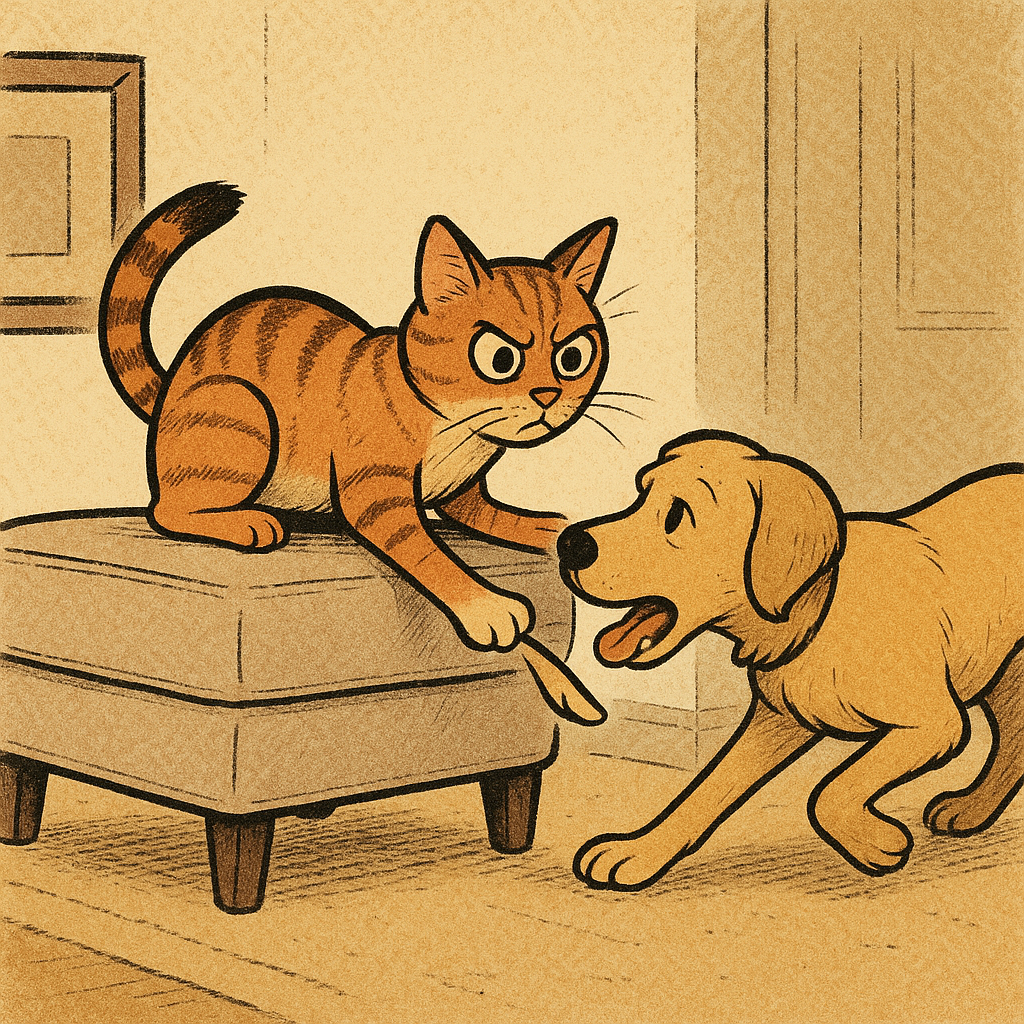
Dogs have this slightly tragic belief that if something moves, it probably wants to be interacted with. When you put them together with a cat, there's a big misunderstanding where the cat’s tail flicks and the dog assumes it’s an invitation for interaction. The more the tail moves, the more convinced the dog becomes that a conversation is happening. Soon, he’s doing that little open-mouth nibble motion in the air.
Then the cat does what cats do when they feel their boundaries have been ignored: it swats with its paw. The dog, however, reads the correction completely differently. Instead of recognizing a limit, he interprets it as excitement and an invitation to continue. Suddenly, two animals with completely different social rules are having a full-blown misunderstanding, with one trying to end the interaction and the other convinced it has just begun.
When you're witnessing this, yelling the dog’s name mid-chase doesn't register because the dog is already in motion. I do better with a practiced interrupter sound (a sharp, kissy noise or a quick clap) and a pre-instated go-to-your-mat cue. If you don't have that cue, start when nobody’s excited: lure the dog to a bed, reward, repeat until it’s automatic. For the cat, I make sure there’s at least one no-dog lane: a baby gate with a small cat door, or a room where the gate is high enough that the cat can slip under a side table and the dog can't follow. This simple change makes a big difference. The cat doesn’t have to sprint, and the dog doesn’t get rewarded by the thrill of pursuit.
Why Dogs and Cats Disagree About the Litter Box
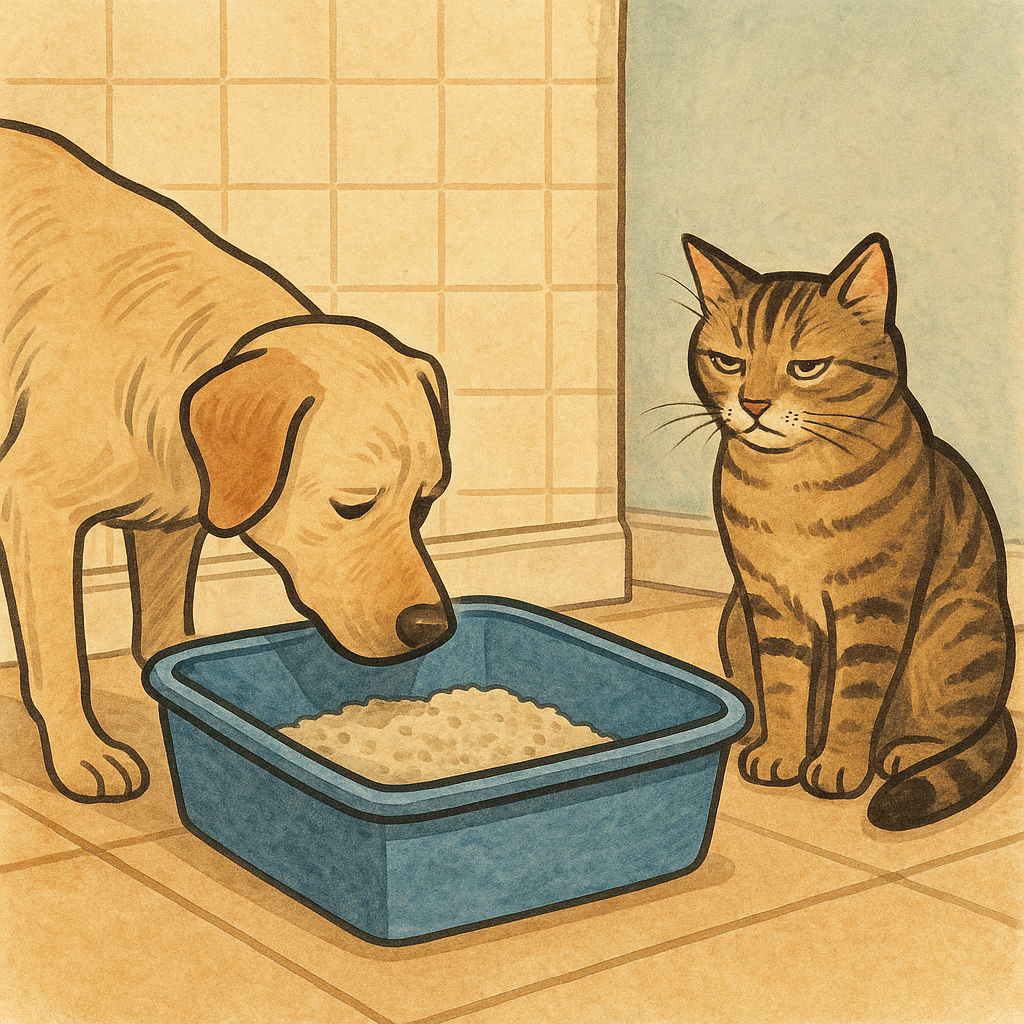
I wish I could say this is rare, but if you’ve ever lived with a dog and a cat, you already know the weird gravitational pull of the litter box. Dogs catch one whiff and decide they’ve discovered forbidden cuisine. The cats, on the other hand, get worried about safety and privacy, because for a cat, using the box is a vulnerable moment. When the dog shoves his nose in right after, it is as if someone barged into a private bathroom uninvited. I’ve seen my cat start guarding the entrance after a few incidents, and that can spiral into her avoiding the box or picking a different spot in the house.
I don't try to train this out with willpower alone. The cleanest solution I’ve used is a covered box inside a cabinet-style enclosure with a cat-sized entry hole, so the dog physically can’t get his head in there. If you’re not doing furniture, a baby gate across a laundry room works, as long as the gap is wide enough for the cat but not for the dog. Another option that worked pretty well is top-entry litter boxes. Many cats take to them fast, and most dogs can't angle their snouts down the hole without climbing in, which they usually won’t do if the sides are tall and the surface is wobbly.
When I had to solve it on a budget, I spent a few bucks on a tall plastic storage tote and a basic set of cutting tools, then made a high side-entry. Cut a smooth opening near the top on one long side, sand the edge, and put the tote in a corner so the cat has a clear in-and-out line but the dog can’t comfortably reach. It isn’t fancy, but it stops the conflict immediately.