A Zoo Had to Split Up a Gang of Foul-Mouthed Parrots Who Kept Swearing at Visitors
Visitors walking into Lincolnshire Wildlife Park probably expected the usual squawks and chatter. What they didn’t expect was to be heckled. Within days of arriving, five African grey parrots began hurling swear words at guests, then cracking up when people gasped or burst out laughing.
Instead of polite bird sounds, the group delivered full-on pub-style insults. The more visitors reacted, the more the parrots performed. Staff quickly realized the birds were encouraging each other, turning it into a noisy competition.
Eventually, the park had to split them up before their colorful vocabulary caught on with the hundreds of other birds nearby.
How Five Parrots Turned Into A Swearing Squad
The situation started in 2020 when five African grey parrots named Billy, Eric, Tyson, Jade, and Elsie were donated to Lincolnshire Wildlife Park. As part of standard intake procedures, the birds were placed in quarantine together before joining the main colony of roughly 200 parrots.
During that period, staff quickly noticed a pattern in the sounds the birds were repeating. The parrots were swearing frequently and loudly. Even more surprisingly, they reacted to each other in ways that kept the behavior going. One bird would shout an expletive, another would laugh, and then another would repeat the word.
Zoo chief executive Steve Nichols later explained that parrots often repeat sounds that trigger strong reactions. When people laugh, gasp, or respond loudly, parrots tend to repeat whatever produced that response.
Visitors mostly found the birds entertaining, but because many families and children visit the park, the staff decided to intervene. The parrots were separated and placed in different areas of the park to reduce the frequency with which they reinforced each other’s behavior.
Parrots Copy Humans So Well
African grey parrots are widely considered one of the most intelligent bird species. Research shows they can solve problems, recognize patterns, and copy sounds with remarkable accuracy.
Unlike many animals, parrots learn sounds from their environment. In the wild, they copy other parrots. In human environments such as homes or zoos, they copy human speech patterns and sounds.
Swear words often stand out because people usually say them loudly and with strong emotion. These qualities make the sounds easier for parrots to detect and repeat.
Parrots are not using language in the same way humans do. They are simply repeating sounds that consistently get attention or reactions.
The Story Did Not End There
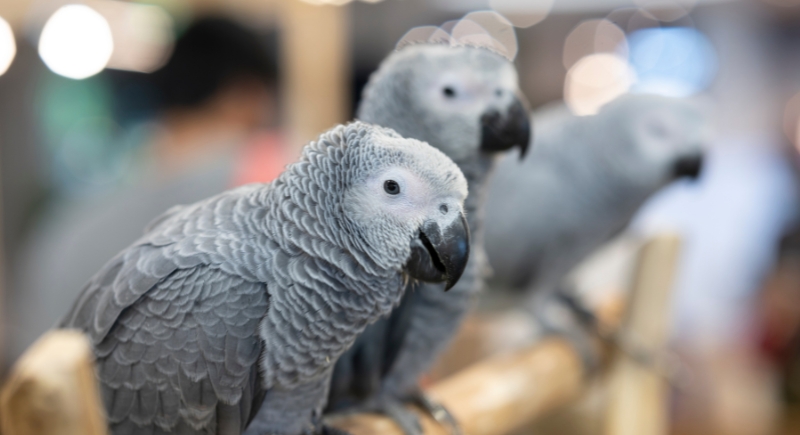
Image via Getty Images/Thiradech
In later years, more parrots at the park picked up similar language patterns. At one point, staff tested a different approach. Instead of isolating swearing parrots, they placed them with larger groups of parrots that did not swear. The goal was to surround them with more neutral sounds so those sounds would become more common in their environment.
It is still unclear which method works best in the long term. What researchers and keepers consistently observe is that parrots absorb sounds from the environment they spend the most time in, whether that is with other birds or with humans. There is also a long history of foul-mouthed parrots appearing in stories, folklore, and historical accounts.
The Birds Are Still Famous
Despite the chaos, the parrots became one of the park’s most talked-about attractions. Staff placed warning signs letting visitors know they might hear strong language. Complaints were rare, and most guests found the situation funny.
The attention also highlighted how advanced African grey parrot cognition is. Some research suggests they can complete certain cognitive tasks at levels comparable to young children. It’s a level of intelligence that supports their ability to copy sounds with high accuracy.