Amsterdam Has a Boat Full of Cats Called De Poezenboot
Amsterdam is known for its canals, museums, and houseboats, but one floating landmark stands apart from the rest. De Poezenboot began as a personal effort by a local resident who kept taking in stray cats with nowhere else to go. As the numbers grew, she made an unconventional choice and turned a canal boat into a shelter. What started as a private act of care evolved into a long-running rescue that has helped countless abandoned cats find safety right on the water.
A Personal Mission Became A Floating Sanctuary
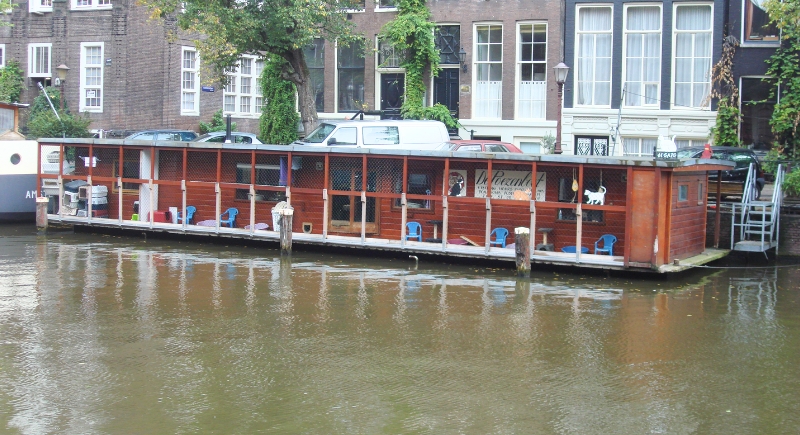
Image via Wikimedia Commons/Oxyman
De Poezenboot began in 1966 when Henriette van Weelde started housing abandoned cats on a modified sailing barge. The project grew fast because stray populations across Amsterdam needed consistent care. The vessel changed several times over the decades, eventually becoming a houseboat version in 1979 that better supported long-term animal housing.
The organization became an official nonprofit in 1987. Another major renovation occurred in 2001 to ensure the sanctuary met Dutch legal standards for animal welfare facilities. Safety features now include reinforced structures that prevent animals from falling into the canal water. Van Weelde continued leading the mission until her death in 2005 at age 90, and the structure she created still operates under the same rescue-first philosophy.
Life On The Catboat Today
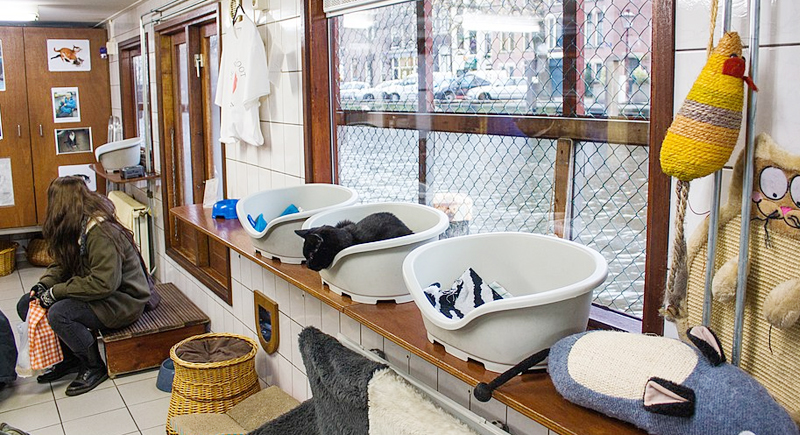
Image via Wikimedia Commons/Shadowgate
The sanctuary typically houses about 50 cats at one time. Roughly the mid-teens stay permanently because age, health, or behavior makes adoption difficult. The rest rotate as rescues arrive, recover, and eventually move into homes. Most animals receive neutering or spaying and microchipping, which helps track ownership and health history.
Volunteer support drives daily operations, with around 20 to 25 volunteers helping clean living areas, feed animals, manage visitor interactions, and assist with adoptions. Many also help coordinate rescue pickups across the city. The group also funds sterilization services for pet owners who cannot afford veterinary procedures.
The Importance of Visiting The Catboat
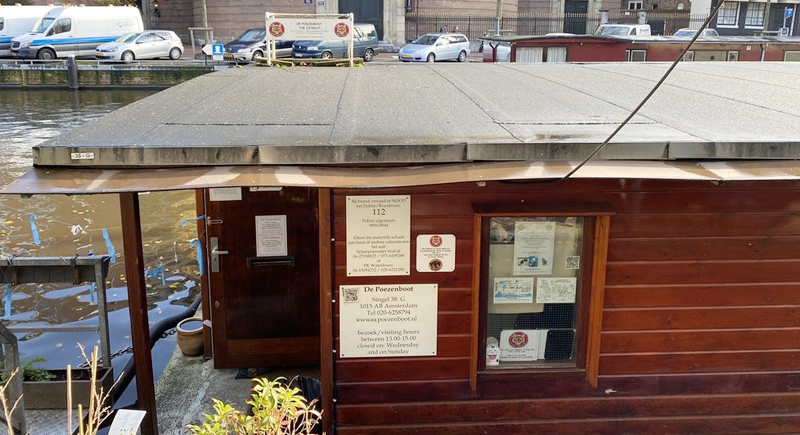
Image via Yelp/Sam M.
The sanctuary is located at Singel 38G in central Amsterdam, about a 10-minute walk from the main train station. Visiting hours are Tuesday, Friday, and Saturday from 1 p.m. to 3 p.m. Entry is free, though donations fund food, medical treatment, and facility upkeep, and the site receives no government subsidy.
Visitor numbers are tightly controlled; only six people can enter at a time, which reduces stress on the animals. Online reservations ended in 2025 after repeated no-shows caused crowd management problems. Visitors now line up during open hours and wait if capacity fills. Many arrive hoping to adopt, while others come purely to support the charity and meet animals that now live safely after abandonment.
Why It Became A Global Curiosity
The sanctuary attracts thousands of visitors annually, many of whom travel internationally. The concept is unique because very few cities combine dense urban canals with animal welfare infrastructure. The Catboat also represents a practical solution to urban animal welfare. It rescues strays, supports pet owners struggling with vet costs, and helps connect adoptable animals with permanent homes.
Cats leaving the boat generally adapt well to indoor home life once adopted, which reinforces the long-term impact beyond tourism interests. De Poezenboot continues to operate mainly through donations and volunteer work, keeping the focus on animal care while keeping the sanctuary accessible to visitors curious about one of Amsterdam’s most unusual success stories.