An Entire Town Stopped Everything to Find a Missing Blind Cat and Faith in Humanity Is Restored
When a cat goes missing, neighbors may simply keep an eye out. When that cat is blind, the response can be very different. In late October 2025, urgency spread quickly through the town of Helston, Cornwall, after a blind cat named Harry disappeared from his home. Harry could not see traffic, unfamiliar terrain, or safe hiding spots. The situation demanded immediate action, and Helston responded without hesitation.
It turned into a full community effort that lasted nearly five days and involved strangers, local radio, rescue groups, and residents who refused to stop looking until there was an answer.
The Urgency of Harry’s Disappearance
Image via Getty Images/StockSeller_ukr
Harry went missing from his home in the Roskilling Wartha area in late October 2025. What made the situation especially serious was that Harry is blind. Unlike most cats, he couldn’t rely on sight to navigate unfamiliar streets, avoid traffic, or find his way back home.
Blind cats depend heavily on memory, scent, and sound. Once they’re displaced from a familiar environment, their ability to orient themselves drops sharply. That reality shaped how people in Helston understood the situation. This wasn’t a case where waiting it out felt reasonable. Every hour mattered.
How A Private Search Became A Town-Wide Mission
One family’s fear quickly turned into something bigger. Residents printed leaflets, shared posts, checked gardens and garages, and walked streets they had never searched before. People knocked on doors, scanned hedges, and followed tips from neighbors they had never met.
Resident Tracy Sargent contacted BBC Radio Cornwall to spread the word, pushing the search beyond social media and into daily broadcasts. The coverage kept Harry’s name circulating and reminded listeners to keep checking their surroundings.
Rescue groups and volunteer organizations offered equipment, guidance, and practical support. This wasn’t symbolic help. It was hands-on coordination, day after day, even as hope became harder to hold onto.
The Moment Harry Was Found
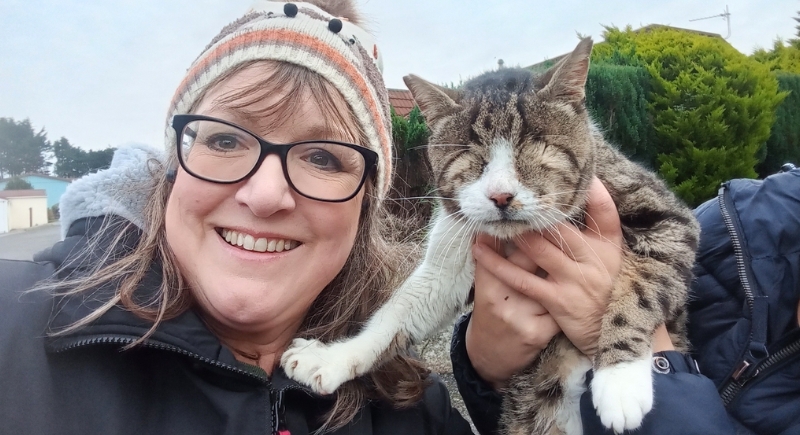
Image via Facebook/Trace Sarge
After almost five days, two volunteers followed a gut instinct and searched an area that initially seemed unlikely. It meant considering that Harry may have crossed a main road, something no one wanted to believe was possible.
In Gwealmayowe Park, after knocking on doors and calling his name, Harry emerged from a hedge.
He was alive. The people who found him described how he clung to them immediately, responsive and clearly aware he was safe. The search ended with relief, confirmation, and the quiet satisfaction of knowing persistence had worked.
Why This Story Struck A Nerve Far Beyond Cornwall
BBC Radio Cornwall later shared the update with listeners, calling it a story that touched the town. That description stuck because the outcome wasn’t luck. It was a combination of coordination, patience, and people choosing to help without being asked.
Helston didn’t act because of recognition or reward. It acted because a vulnerable animal needed help and giving up wasn’t acceptable. In a time when the community can feel abstract, this was visible proof of what it looks like in practice.
Harry’s return home didn’t just close a stressful chapter for one family. It reminded people watching from afar that collective care still exists, and sometimes it shows up in the simplest form: neighbors refusing to stop looking for someone who can’t find their own way back.