These Animals Actually Have Better Jobs Than You Do
It may sound a little ridiculous, but some animals technically hold jobs that many humans would envy. Once you start looking into it, the idea becomes surprisingly real. What kind of work could an animal possibly do that earns respect, attention, and sometimes even a paycheck?
Around the world, certain animals actually hold official roles. Some serve in military programs, others take part in civic traditions, and a few even hold ceremonial public offices. They are more than mascots. Many have defined duties, public appearances, and in some cases, formal recognition or compensation.
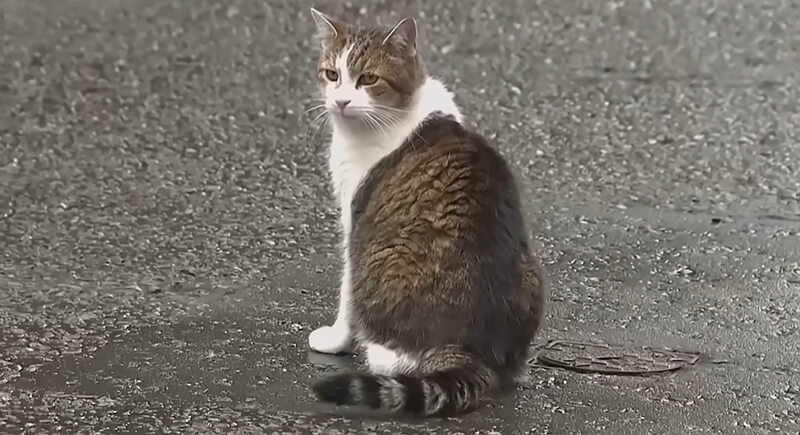
Larry the Cat – Chief Mouser, 10 Downing Street
Credit: Youtube
Since 2011, Larry has served as Chief Mouser to the Cabinet Office at the official residence of the British Prime Minister. Adopted from Battersea Dogs & Cats Home, he was appointed to control rodents at 10 Downing Street. Cats have served in similar roles since the reign of Henry VIII in the 1500s. Larry has worked under multiple prime ministers and maintains an active public presence. Few employees can say they’ve survived that many leadership changes.
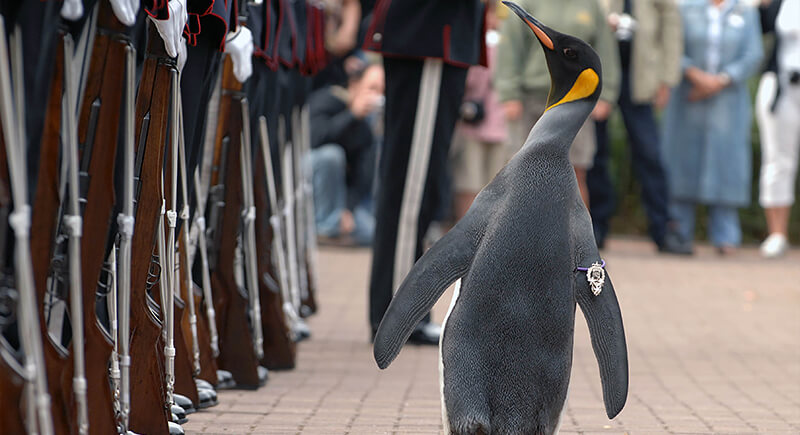
Nils Olav III – Major General, Norwegian King’s Guard
Credit: Wikimedia Commons
Nils Olav III is a king penguin stationed at Edinburgh Zoo in Scotland. He serves as the official mascot and regimental figure of Norway’s King’s Guard. Over the decades, he has been promoted through formal military ceremonies and now holds the honorary rank of Major General. Most people wait years for a managerial title. This penguin outranks them. Soldiers stand at attention during his inspections, and his promotions are awarded publicly.
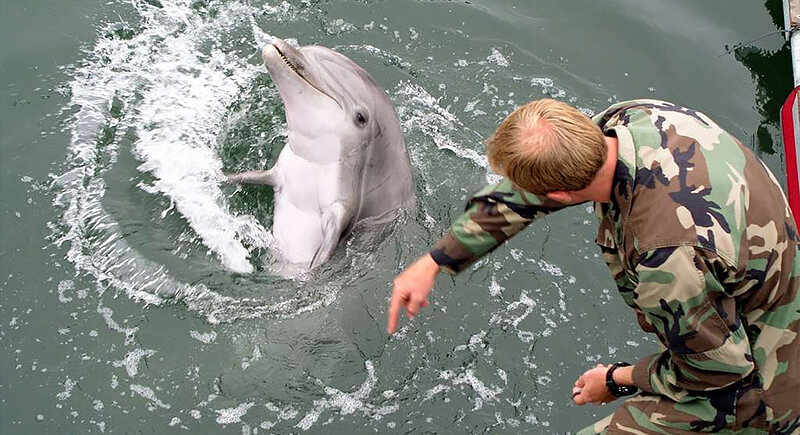
Military Dolphins – U.S. Navy Marine Mammal Program
Credit: PICRYL
The U.S. Navy employs bottlenose dolphins to detect underwater mines and protect harbors. Their natural sonar abilities outperform many mechanical systems in murky or deep water. As of 2015, the Navy reported 85 dolphins and 50 sea lions in active service. These animals have participated in operations during the Vietnam War and the Persian Gulf. They remain operational assets in national defense.
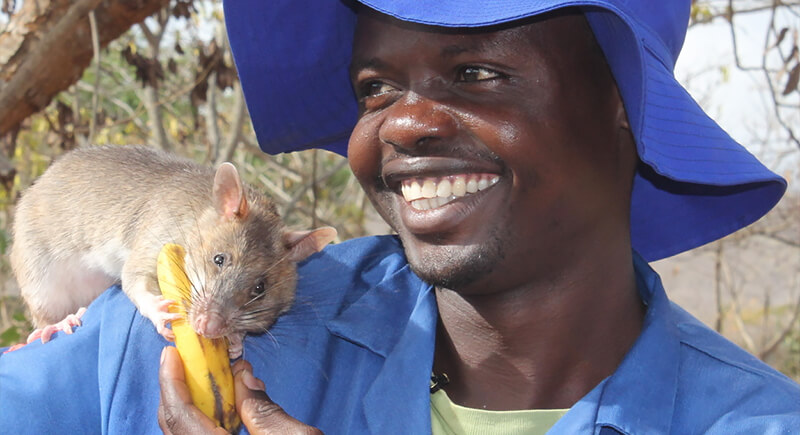
Gambian Pouched Rats – Professional Land Mine Detectors
Credit: Wikimedia Commons
In parts of Africa and Asia, land mines remain buried long after conflicts end. Gambian pouched rats are trained to detect the scent of explosives. Training takes about nine months. Because they are lightweight, they can walk across minefields without triggering devices. These rats clear ground faster than humans and help save thousands of lives. They are rewarded with food, often bananas, for successful detection runs.
Cairo – Navy SEAL Working Dog
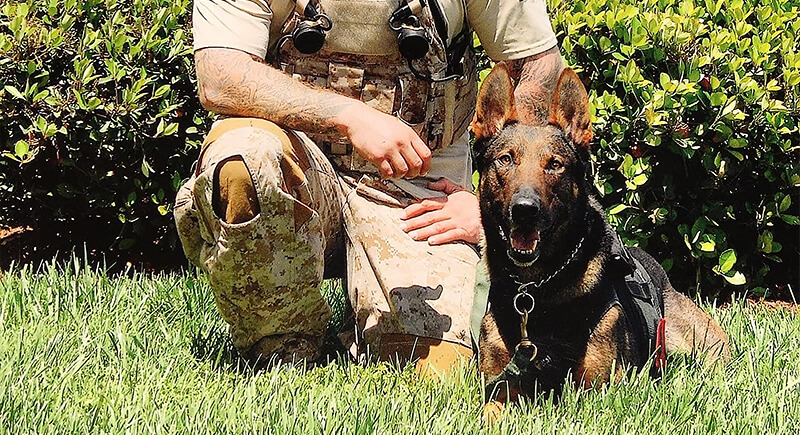
Credit: Facebook
Cairo, a Belgian Malinois, was part of Navy SEAL Team Six during Operation Neptune Spear in 2011, the mission that led to the death of Osama bin Laden. Few careers carry higher operational stakes. Military working dogs like Cairo are trained in detection, tracking, and tactical operations. They wear specialized protective gear and deploy alongside elite human units.
Miniature Guide Horses – Federally Recognized Service Animals
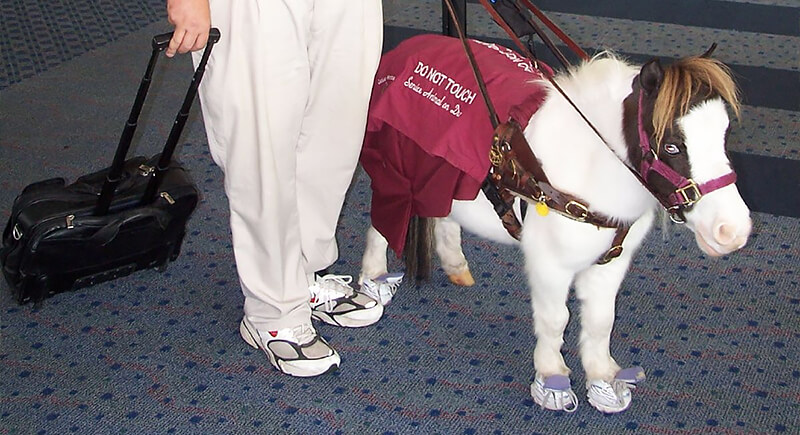
Credit: Wikipedia
Miniature horses are calm, strong, and capable of working for more than 25 years. Many can live past 50. While service dogs often retire after around 10 years, these horses can serve one person for decades. In 2011, the Americans with Disabilities Act formally recognized miniature horses as service animals. They guide visually impaired individuals and assist those with disabilities. Plus, they have even greater advantages for those allergic to dogs.
Medical Detection Dogs – Cancer and Seizure Alerts
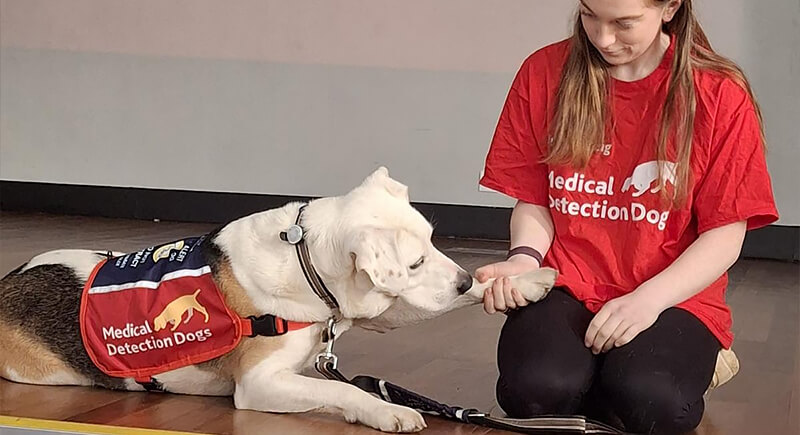
Credit: Facebook
Dogs have demonstrated the ability to detect certain cancers by smelling biological changes in the human body. They can also alert owners to low blood sugar or impending epileptic seizures. Researchers continue studying how they detect seizures, whether through scent or subtle behavioral cues. Regardless of the mechanism, these dogs provide early warnings that can prevent injury or even death.
Moose – $10,000 Per Episode on Frasier
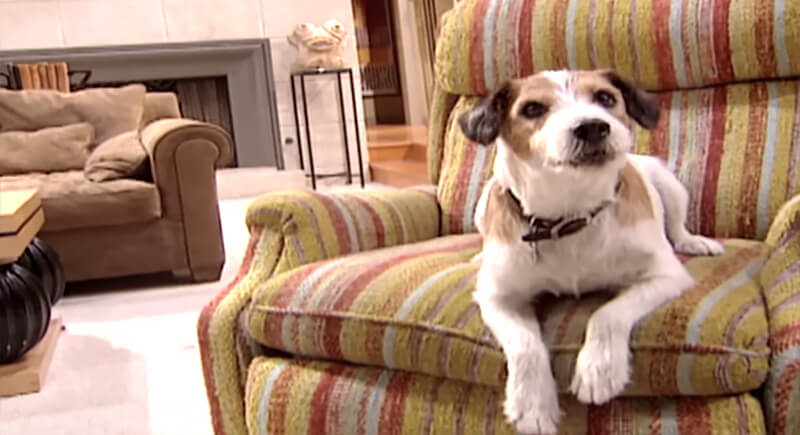
Credit: Youtube
Moose, the Jack Russell terrier who played Eddie on the television show Frasier, reportedly earned $10,000 per episode. The show ran for 11 seasons. Moose’s job involved sitting, staring, and occasionally reacting on cue. He became one of the most recognizable animal actors in television history and was inducted into the Hollywood Paw Walk.
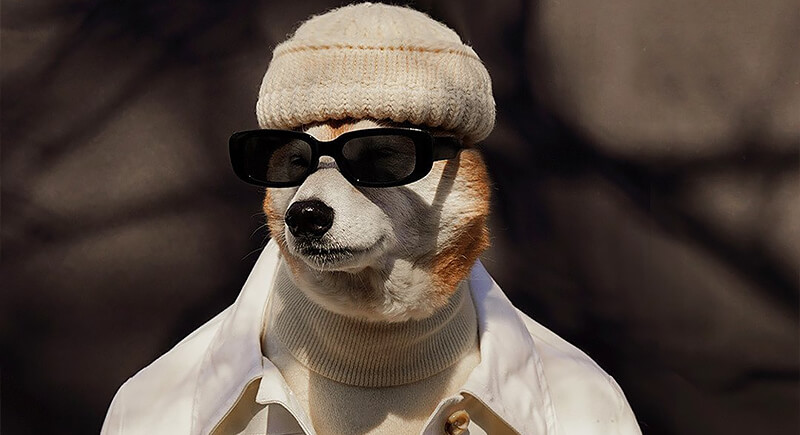
Menswear Dog – $15,000 Per Month in Fashion Modeling
Credit: Facebook
Bodhi is a Shiba Inu known as Menswear Dog. He became a fashion model after photos of him wearing tailored outfits went viral in 2013. At the height of his career, reports estimated he earned up to $15,000 per month. He has appeared in campaigns for brands such as Coach and American Apparel and has been featured in publications including GQ and Time. He also released a book in 2015.
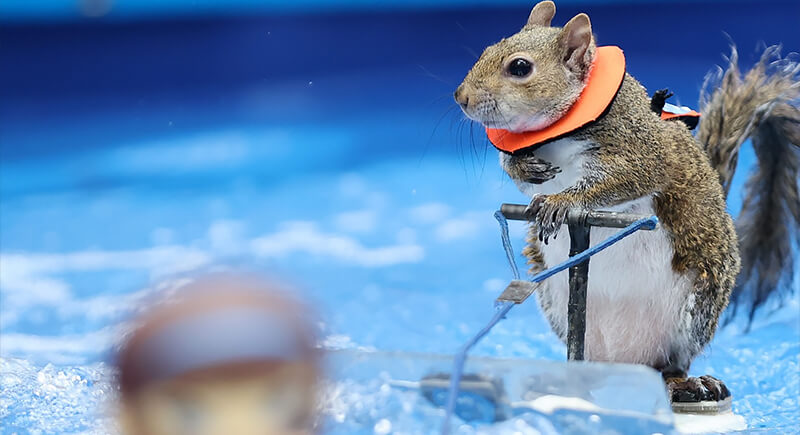
Twiggy the Waterskiing Squirrel – Film Credits Included
Credit: Facebook
First trained in 1978, Twiggy is a gray squirrel who performs water-skiing routines at boat shows across North America. Her act also promotes boating safety. She has appeared in films including Dodgeball: A True Underdog Story and Anchorman: The Legend of Ron Burgundy. The act has continued across multiple generations of trained squirrels.