Fascinating Animals That Have Never Once Seen the Light
Sunlight shapes most life on Earth. It fuels plants, supports food chains, and helps many animals navigate, hunt, and regulate their daily cycles. Yet some animals live their entire lives in places where sunlight never reaches. Deep caves, underground aquifers, hydrothermal vents, and ocean trenches remain permanently dark.
Here, eyes become useless, pigment disappears, and entire bodies reorganize around survival in permanent darkness.
Giant Tube Worm (Riftia pachyptila)
Credit: Wikimedia Commons
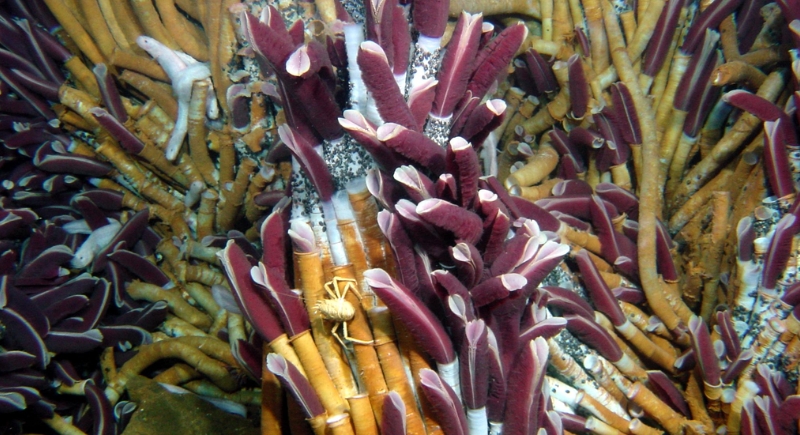
In 1977, oceanographers exploring deep-sea hydrothermal vents expected barren volcanic rock. Instead, they found dense colonies of tall tube worms with bright red plumes rising from cracks in the seafloor. These animals live in complete darkness and have no mouth or digestive system. Bacteria inside their bodies convert chemicals from the vents into energy, allowing them to survive where sunlight never reaches.
Olm (Proteus anguinus)
Credit: Wikimedia Commons
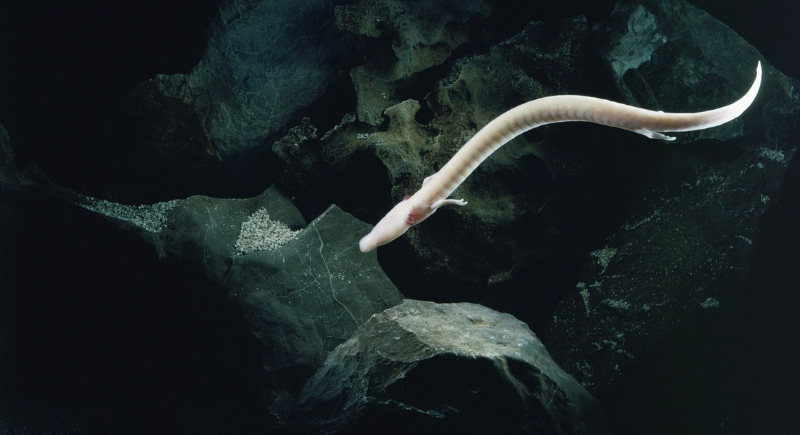
The olm is nicknamed the “human fish” because of its pale skin. This cave amphibian lives in underground waters in Slovenia, where sunlight never reaches. Food is scarce, so its metabolism runs extremely slowly. It can survive nearly a decade without eating and may live for more than a century. Instead of sight, it moves through dark water by sensing chemical changes and subtle vibrations.
Hadal Snailfish (Pseudoliparis species)
Credit: Wikimedia Commons
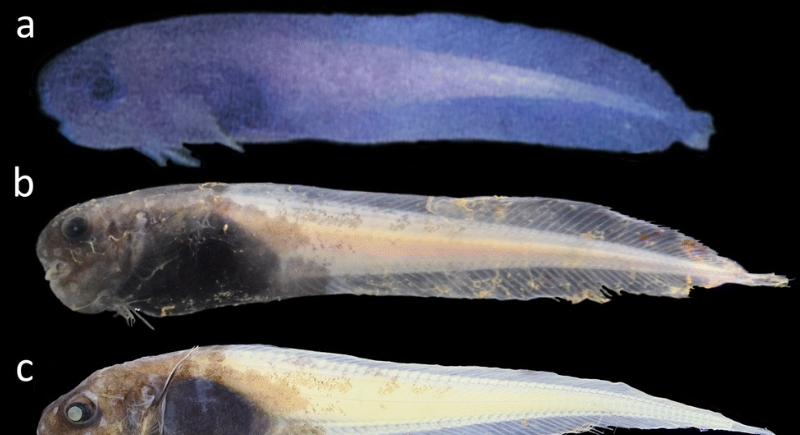
The hadal snailfish lives at depths beyond 8,000 meters, where pressure exceeds 1,000 times what exists at the ocean surface and sunlight never reaches. Its body is soft and translucent and lacks the gas-filled bladders found in many shallow-water fish that would collapse under such pressure. These fish survive by feeding on organic material that slowly drifts down from distant ecosystems far above them.
Mexican Blind Cavefish (Astyanax mexicanus – cave form)
Credit: Wikimedia Commons
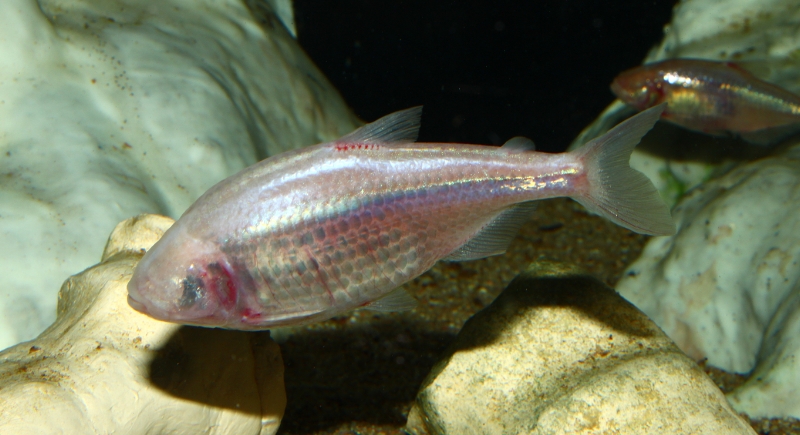
The Mexican blind cavefish offers a clear example of how species change when they adapt to life in darkness. Surface populations of this fish still have normal eyesight, but cave populations lost that ability over time. During early development, the embryos briefly form eye structures. The body later reabsorbs them, which reduces the energy needed to maintain vision. Adult cavefish grow up without eyes and without pigment.
Kauaʻi Cave Wolf Spider (Adelocosa anops)
Credit: Wikimedia Commons
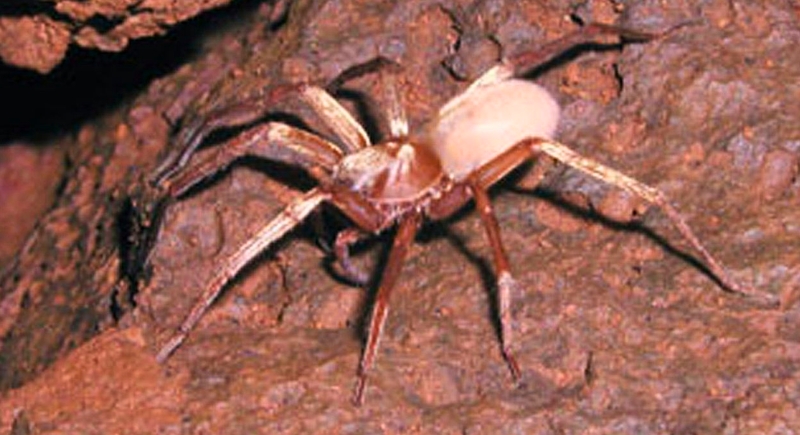
Restricted to the pitch-black Hawaiian lava tube caves, the Kauaʻi cave wolf spider has no eyes. Most spiders are visual predators, but this one hunts entirely without sight. There is no surface equivalent. This spider’s lineage evolved entirely within darkness. Its world consists of rock corridors carved by ancient lava flows, sealed from sunlight indefinitely. It has evolved into a high-precision tactile hunter, using specialized hairs to “read” the air currents and tremors of its volcanic home.
Vent Shrimp (Rimicaris exoculata)
Credit: Wikimedia Commons
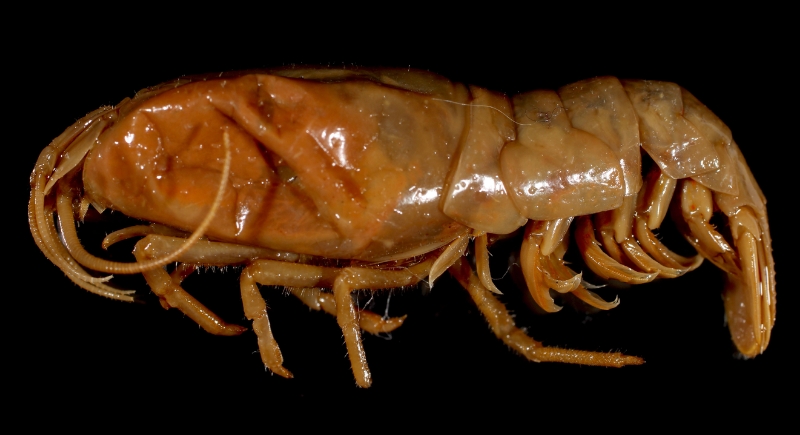
Vent shrimp gather in large swarms around hydrothermal vent chimneys on the Atlantic seafloor, where superheated, mineral-rich water flows into the dark ocean. These shrimp do not rely on normal eyesight. Instead, they carry a light-sensitive organ on their backs that detects heat and faint infrared radiation from the vents. This sense helps them stay close enough to graze on bacteria without drifting into water hot enough to kill them.
Texas Blind Salamander (Eurycea rathbuni)
Credit: Wikimedia Commons
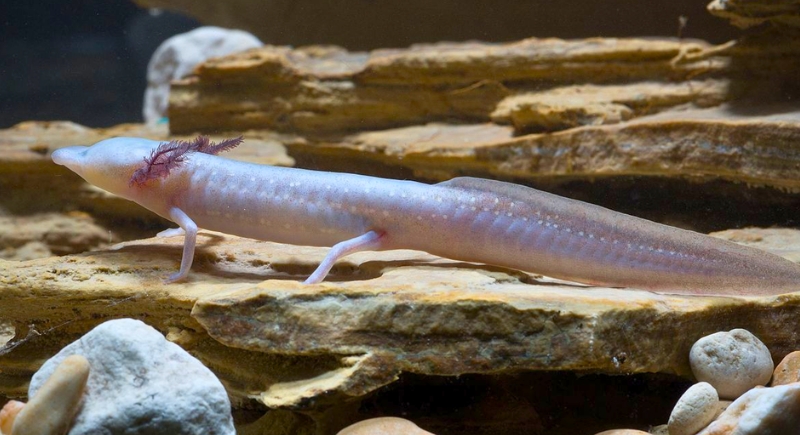
Beneath the cities of central Texas lies the Edwards Aquifer, a vast underground water system. Within it swims the Texas blind salamander. Its body is translucent, and with its blood-red external gills and flattened snout, it detects the movement of prey through the water with extreme sensitivity.
Remipede
Credit: Wikimedia Commons
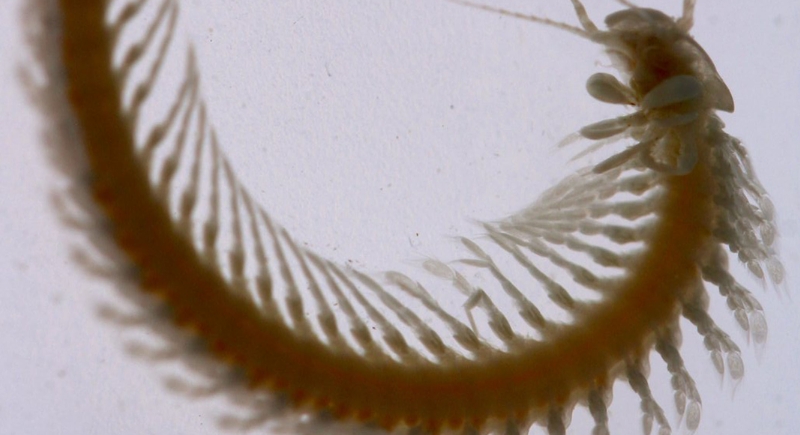
Scientists first discovered remipedes in submerged coastal caves. These crustaceans are blind and pale and live in underground waters where sunlight never reaches. Despite the limited food in these environments, remipedes are active hunters. They move through the caves using touch and chemical signals to locate prey. Their body structure is considered very ancient, which suggests this group has remained largely unchanged for a long time.
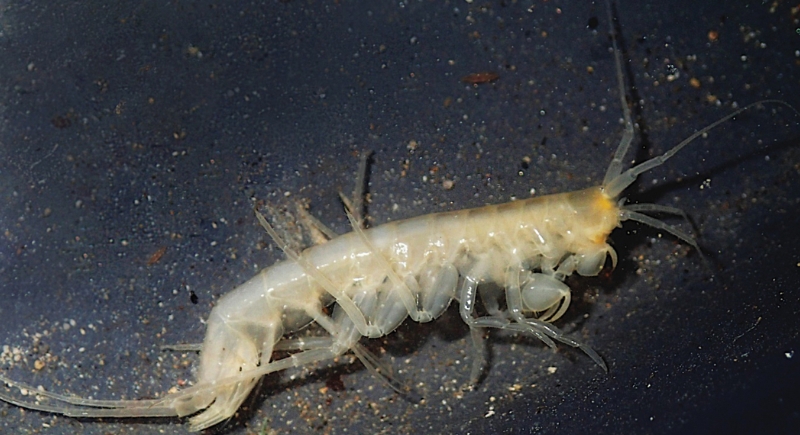
Subterranean Amphipods
Credit: Wikimedia Commons
Subterranean amphipods are tiny, translucent crustaceans that live in underground aquifers where sunlight never reaches. Each individual is small, but together they form an important part of groundwater ecosystems. They feed on organic debris that collects in these water systems, which helps keep the water moving and cleaner. Because they are very sensitive to pollution and environmental changes, scientists often monitor their populations to assess groundwater health.
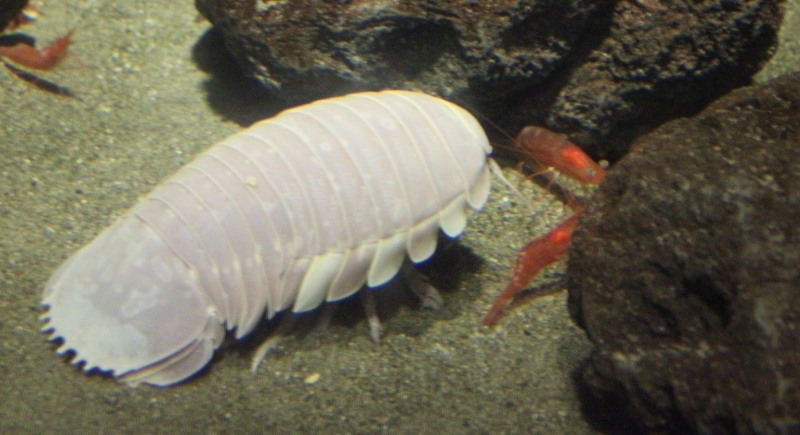
Giant Isopod (Bathynomus giganteus)
Credit: Wikimedia Commons
The Giant Isopod is a scavenger that lives on the seafloor at depths exceeding 600 meters. Although they resemble common pill bugs, these isopods can grow over 16 inches long. Their compound eyes are adapted for extremely low light, even though they live in zones where sunlight is absent. Because food is scarce in the deep ocean, they scavenge animal carcasses that sink from the surface and can survive for years between meals.