10 Animals That Glow in the Dark
Some animals produce their own light, no special effects involved. In certain cases, it helps them hunt or avoid predators. In others, it plays a role in communication or camouflage. While many of these species live deep underwater, bioluminescence also appears on land. This list examines animals that naturally glow and how their ability works in the wild.
Firefly Squid
Credit: Canva
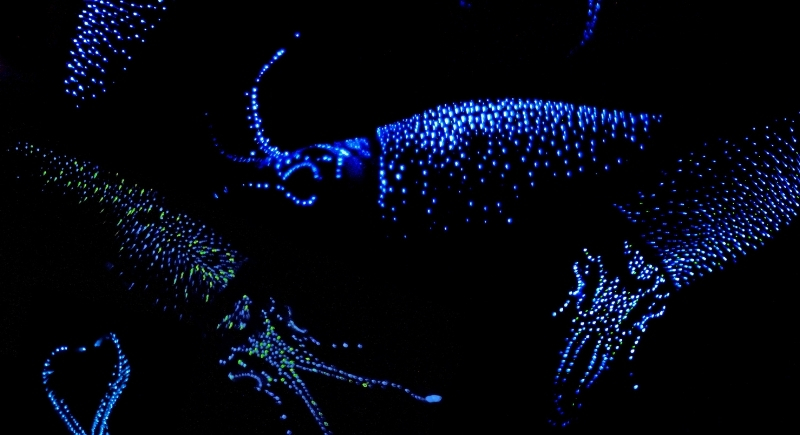
This tiny squid flashes with pinpoint blue light, thanks to photophores packed into its head and body. It’s only about three inches long, but it still manages to produce a full light display underwater. Scientists believe it uses the glow to attract mates and may even hide by blending into the moonlit surface to avoid predators below.
Anglerfish
Credit: flickr
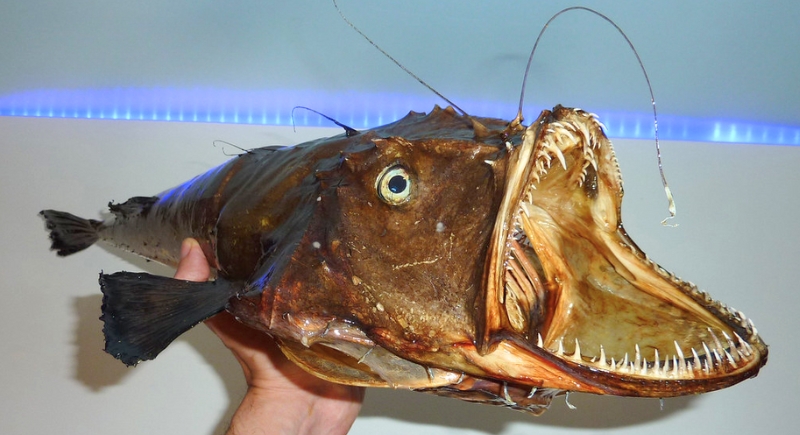
Far below the ocean’s surface, a female anglerfish carries a glowing lure just above her mouth. The light comes from bacteria living inside the tip, drawing curious prey close enough to catch. Males are much smaller and lead a very different life. When one finds a female, he attaches himself to her and slowly fuses with her body, relying on her entirely for survival as time goes on.
Lantern Shark
Credit: Wikimedia Commons
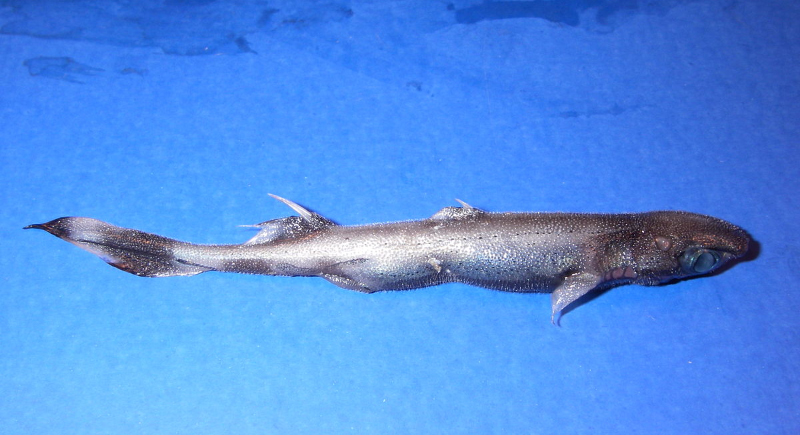
The lantern shark glows in all the right places—mainly its belly and fins—to avoid casting a shadow in the dim blue of the deep sea. Think of it like stealth mode. Scientists believe that this “counter-illumination” helps it evade detection by both predators and prey.
Fireflies
Credit: Getty Images
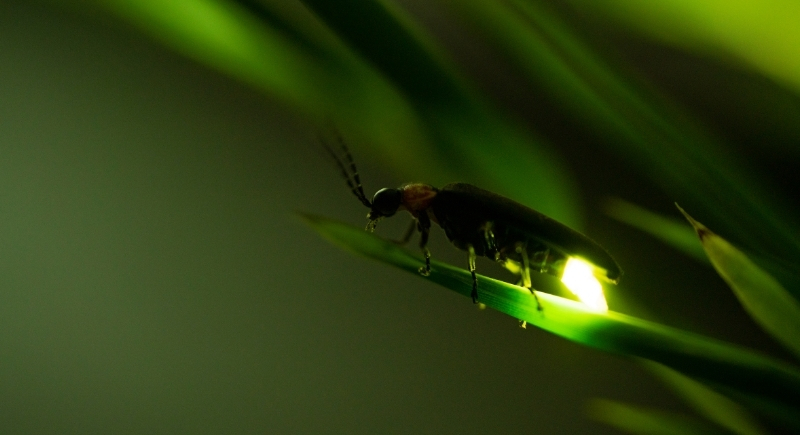
Everyone recognizes the twinkle of fireflies in summer, but their bioluminescence is a lot more technical than it looks. These beetles produce light through a chemical reaction involving luciferin and oxygen, resulting in an energy-efficient glow. Some species synchronize their flashes in massive groups, much like blinking night displays.
Tomopteris
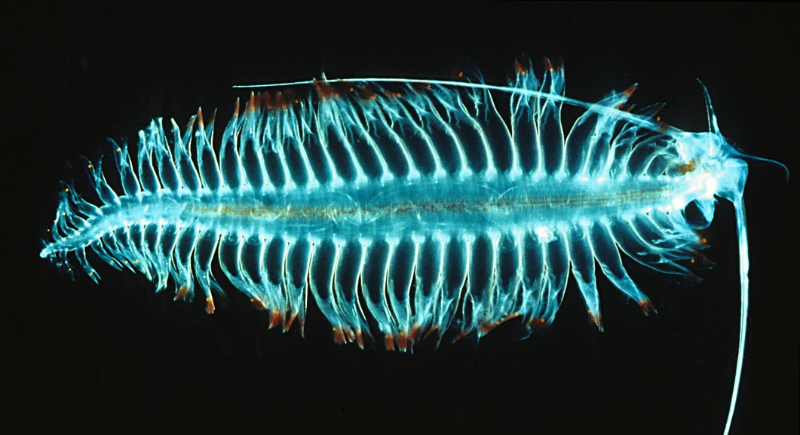
Credit: Wikimedia Commons
This marine worm doesn’t look like much at first glance, but it produces rare yellow bioluminescence, a departure from the usual ocean blue. The light appears to emanate from leg-like extensions and may serve as a distraction when something gets too close.
Sea Firefly
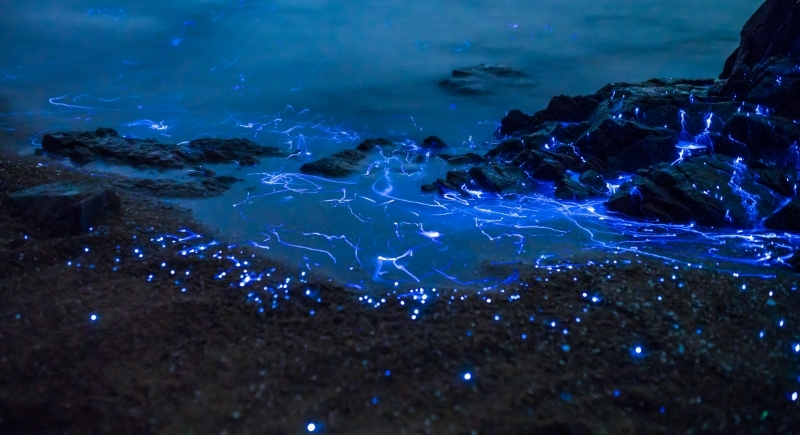
Credit: Getty Images
Barely the size of a grain of rice, this small crustacean pulls off some big tricks. It inhabits shallow Japanese waters and emits a glowing blue mucus when threatened. The goo distracts predators and lights up the water. Males also glow during the courtship season, using bursts of light to find mates.
Bioluminescent Fungus Gnats
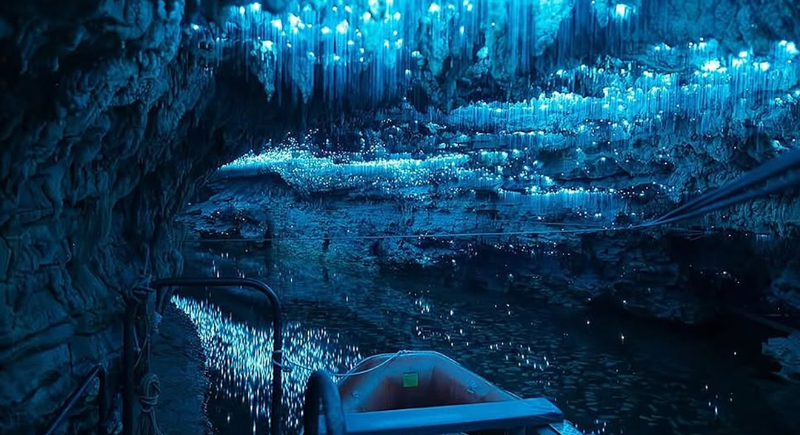
Credit: Instagram
Inside New Zealand caves, glowworm larvae hang sticky threads from cave ceilings. These aren’t true worms—they’re gnat larvae—but their glow is used to trap insects like moths. Prey flies toward the light, sticks to the threads, and becomes a meal. The result is a ceiling full of glowing dots.
Flashlight Fish
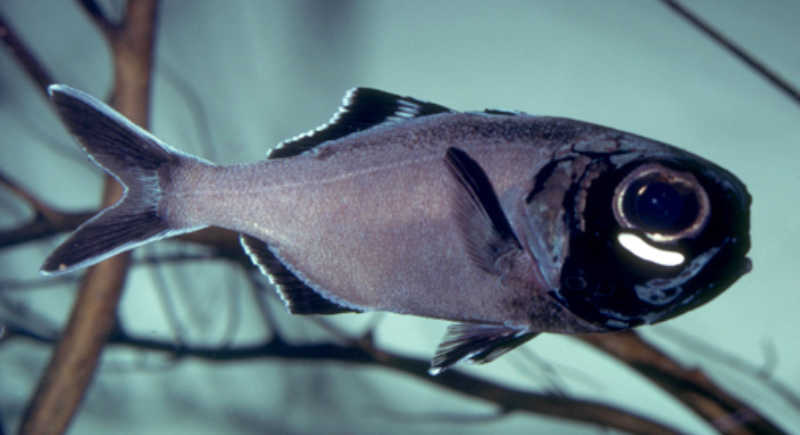
Credit: Wikimedia Commons
With a name like that, there’s no subtlety. Flashlight fish have glowing organs just under their eyes, filled with bioluminescent bacteria. A flap of skin works like eyelids—they can blink the light on or off. These fish use their natural headlights to communicate and spook predators.
Tasmanian Devil

Credit: Wikimedia Commons
Scientists only recently discovered that Tasmanian devils glow under ultraviolet light. When researchers examined them using UV cameras, they noticed a faint blue-green tint in their fur. The purpose remains unclear, although it may play a role in communication or visibility at night. Tasmanian devils are not alone in this trait. Other mammals, including flying squirrels and springhares, show similar biofluorescence.
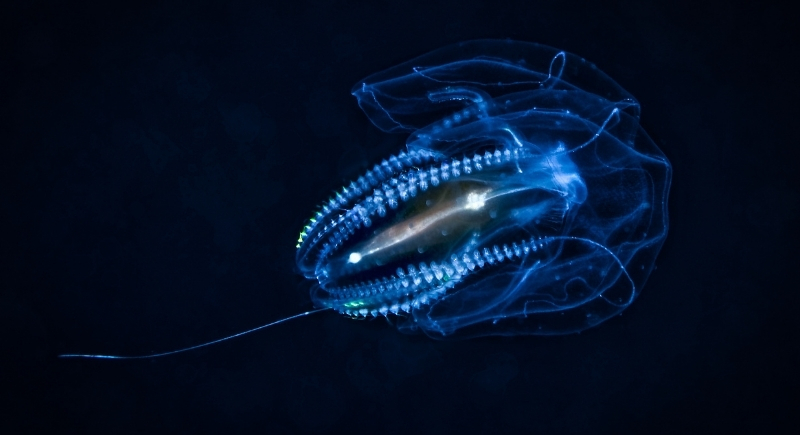
Comb Jellies
Credit: Getty Images
These jellyfish relatives don’t produce light the usual way. Instead, they scatter existing light with moving rows of cilia, creating a shifting rainbow effect. In the dark, their shimmering colors are easy to mistake for bioluminescence, but it’s pure refraction. Their lightshow may even help attract mates or deter curious predators.