Australia Once Sent an Army to Fight Emus and Completely Lost
Australia’s history includes droughts, gold rushes, and plenty of political debates. One unusual episode, however, began with farmers dealing with a problem they could not control. By late 1932, wheat growers in Western Australia were watching large groups of emus move through their farmland and destroy crops they relied on to make a living.
Farmers kept raising the issue with government officials in Canberra, and the response soon took an unexpected turn. Soldiers were sent to the region carrying machine guns and thousands of rounds of ammunition. The plan sounded simple enough: stop the emus before they wiped out more farmland.
Birds Became a National Problem
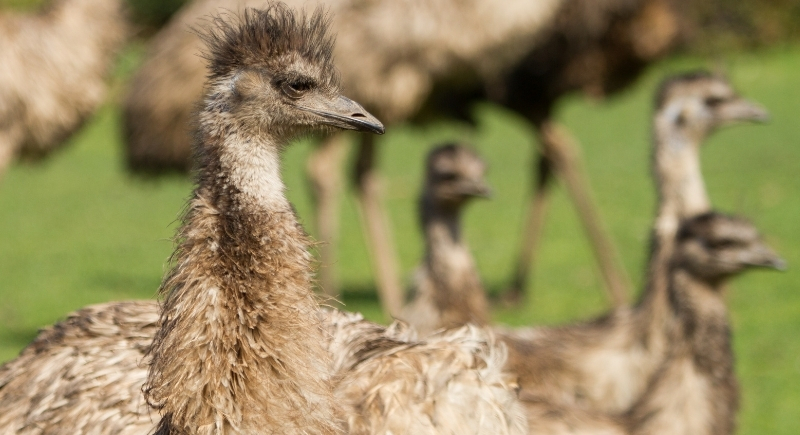
Image via Getty Images/CraigRJD
The trouble started after World War I. Australia encouraged returning soldiers to settle in Western Australia and farm wheat, and more than 5,000 veterans accepted the offer and moved into the region known as the Wheatbelt. However, farming was difficult because soil quality was inconsistent, rainfall was unreliable, and global wheat prices collapsed during the early years of the Great Depression.
A drought in 1932 pushed huge flocks of emus toward the farmland. Around 20,000 birds poured into wheat fields near towns such as Campion and Walgoolan. Emus are close to 6 feet tall and move quickly across open terrain. They smashed fences meant to keep rabbits out and trampled crops while searching for food. Farmers watched their harvest disappear, and many had invested everything in those fields. Requests for help reached the federal government, and officials agreed to intervene.
The Army Steps In

Image via Canva/Bumblee-Dee
Australia’s Minister of Defence, Sir George Pearce, approved an unusual solution. If emus behaved like an invading force, the military would treat them like one. The operation began in November 1932. Major Gwynydd Purves Wynne-Aubrey Meredith of the Royal Australian Artillery led the mission, and two soldiers joined him: Sergeant S. McMurray and Gunner J. O’Halloran.
Their equipment included two Lewis light machine guns and roughly 10,000 rounds of ammunition. The goal was to reduce the emu population and protect wheat farms. On November 2, locals tried to herd a large group of birds toward waiting soldiers, but the plan collapsed almost immediately. Instead of moving as a flock, the emus split into smaller groups and sprinted in different directions.
The Birds Refuse To Cooperate
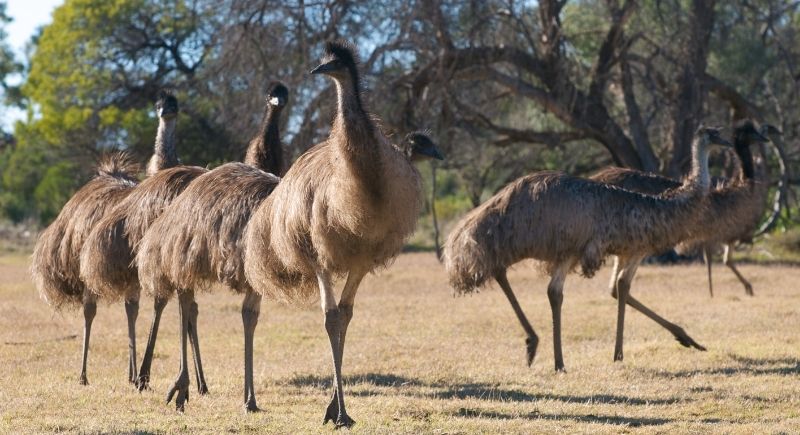
Image via Getty Images/Byronsdad
Speed became the army’s biggest problem because emus can run really fast and cover long distances while searching for food and water. Their powerful legs and endurance made them difficult targets across uneven ground.
Another attempt came on November 4 when soldiers prepared an ambush near a large group of birds. Thousands gathered near a watering area, offering what seemed like the perfect opportunity. Then a Lewis gun jammed just as the shooting started, causing most of the birds to escape.
Major Meredith later described the birds with grudging respect. He compared their durability to armored vehicles and joked that a military unit with their resilience could face any army. Soldiers even mounted a machine gun on a truck to chase the birds. The rough terrain shook the vehicle so violently that the gunner struggled to aim.
A Costly And Embarrassing Campaign
Early reports claimed dozens of birds had been killed, yet the numbers were far below expectations. Ammunition disappeared quickly, and thousands of rounds were fired while only a small number of birds fell. About 45 days later, soldiers had killed roughly 2,500 emus. That number barely dented the population roaming Western Australia.
The government withdrew the troops in November 1932. Newspapers soon labeled the strange episode the “Emu War,” and the story spread quickly. Many readers treated it like a comedy about soldiers chasing birds across the countryside.
The Birds That Outran The Army
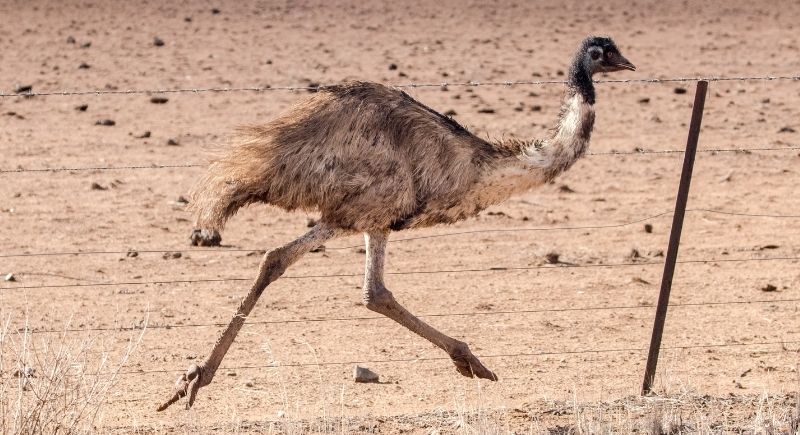
Image via Getty Images/Ken Griffiths
The military campaign faded, but emus remained a permanent part of Australia’s landscape. Scientists note that the birds play a valuable ecological role by spreading seeds across large distances. Researchers have found dozens of plant species in emu droppings, including the native quandong fruit.
The species also holds cultural importance in Indigenous Australian traditions and appears on Australia’s national coat of arms. As of 2026, the country hosts more than 600K wild emus.