Bears Actually Just Sit Down to Admire the View Like Humans Do
Sometimes you come across a photo of a bear sitting upright near a lake or on a mountain ridge, just staring out over the landscape. For a moment, it looks almost human, like someone who stopped during a hike to enjoy the view. Wildlife photographers capture this posture often, which makes many people wonder the same thing: is the bear actually admiring the scenery?
The Viral Question: Are Bears Appreciating Beauty?
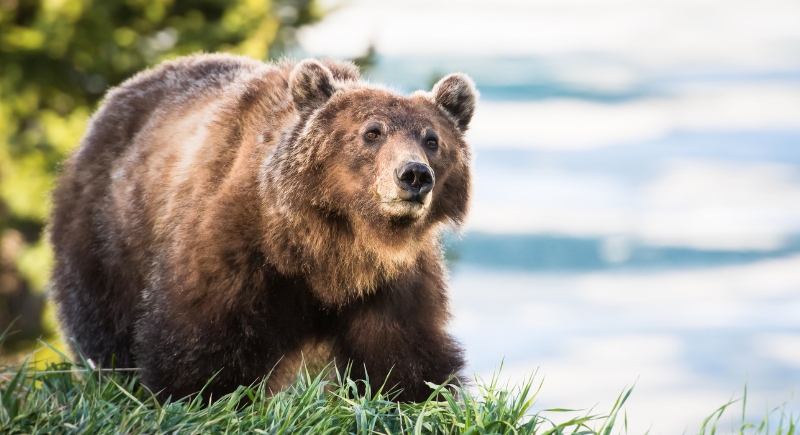
Image via Getty Images/Jillian Cooper
In recent years, photos and short videos of bears sitting upright in scenic environments have circulated widely, often framed as evidence that the animals also contemplate their surroundings. The posture appears calm and deliberate, which encourages interpretation beyond the animal simply resting.
One of the most frequently referenced examples dates back to the 1990s, when artist Maureen Enns and rancher Charles Russell lived near Kambalnoye Lake on Russia’s Kamchatka Peninsula among wild brown bears. Enns observed cubs resting in nests that overlooked the lake and the surrounding landscape.
She believed the animals may have intentionally selected those locations because of the views. Photographs from that period show bears seated upright, facing expansive scenery, without actively feeding or interacting.
However, while the images are compelling, the interpretation that bears are appreciating beauty remains speculative. Observational accounts do not establish motive, and the absence of visible activity does not automatically indicate aesthetic contemplation.
Why Bears Sit Upright in Open Landscapes
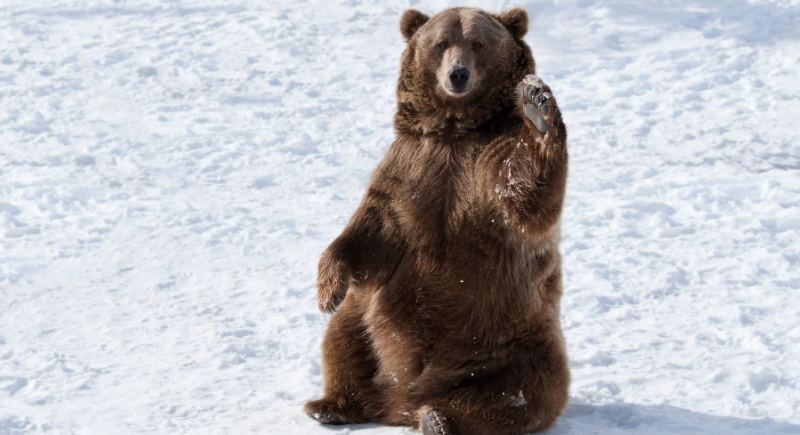
Image via Getty Images/wanderluster
There are several well-established biological explanations for this behavior. Bears rely heavily on their sense of smell. By sitting upright and lifting their heads, they improve scent detection, especially when the wind carries information about prey, other bears, or potential threats. Elevated terrain enhances airflow and expands the range of detectable scents.
Open vantage points also provide visual advantages. From a ridgeline or lakeshore, a bear can monitor movement across wide areas while conserving energy. Remaining stationary reduces unnecessary exertion, which is important for large mammals with significant caloric demands.
Digestive rest is another factor. After consuming large meals, particularly during peak feeding seasons, bears often remain inactive for extended periods while processing food. During this time, sitting upright can simply be a comfortable and stable resting position.
Environmental conditions may also influence posture. Wind exposure helps regulate body temperature, and dry, elevated ground reduces moisture retention in thick fur. Each of these explanations accounts for the behavior without aesthetic motivation.
Intelligence Without Assumption
Bears are widely recognized as intelligent mammals. Research has shown that they possess strong spatial memory, which enables them to recall seasonal food locations over long distances. In controlled environments, bears have demonstrated problem-solving abilities and adaptability.
Cubs engage in extended play behavior, which supports neurological development, and maternal care is attentive and sustained. These traits indicate cognitive complexity. However, intelligence alone does not confirm that bears evaluate scenery for beauty in a human sense.
The scene is powerful because a bear silhouetted against a mountain skyline mirrors a human stance associated with reflection or relaxation. Because we often seek elevated views for emotional or psychological reasons, it is easy to project similar motivations onto the animal. This tendency is known as anthropomorphism.
A bear may appear to be enjoying the view from a distance, yet that posture often serves a practical function tied directly to survival.