Here’s Why Cows Have Become a Swiss Icon
Switzerland raises about 1.5 million cattle in a country where only about one-third of the land is used for crop farming. That reality shaped how towns grew, how food moved, and how farmers earned income. Cattle still influence dairy exports, tourism marketing, and national farm policy. Looking at their contributions shows why cows stay part of daily Swiss life.
Rooted in Early History
Credit: Wikimedia Commons
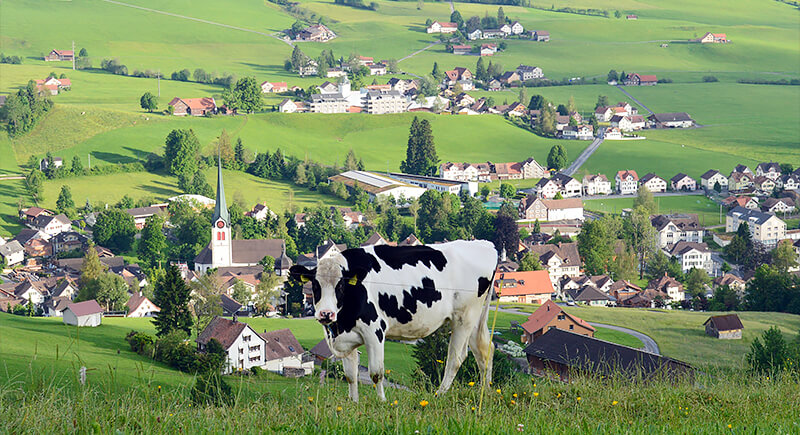
By the 1200s, farming in Switzerland’s mountain valleys was difficult. Thin soil and short growing seasons left little room for crops, making livestock essential for survival. Historical tax records show that farmers often paid their dues in butter or cheese instead of cash. Over time, cattle came to appear on local battle banners, reflecting how everyday survival farming slowly shaped regional identity around livestock ownership.
Foundation of the Dairy Economy

Credit: Wikimedia Commons
Cheese became a major export in the late 1700s because aged wheels survived long trade journeys across Europe. The advantage still shapes production today. Switzerland produces about 3.4 million metric tons of milk annually, and roughly 45% of that becomes cheese. Dairy now generates over 10 billion Swiss francs annually through combined exports and domestic sales.
Backbone of Swiss Agriculture
Credit: Wikimedia Commons
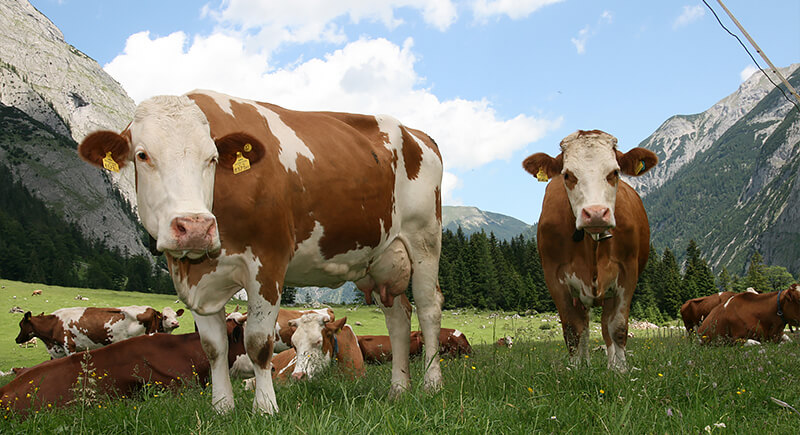
Across Switzerland, cattle account for a large share of farm income. They bring in more than half of all livestock-related revenue nationwide. Milk feeds major industries like chocolate, butter, and packaged dairy products. Federal programs track herd health and milk yield carefully because losing domestic dairy output would force Switzerland to import far more staple foods.
Familiar Part of Growing Up
Credit: Wikimedia Commons
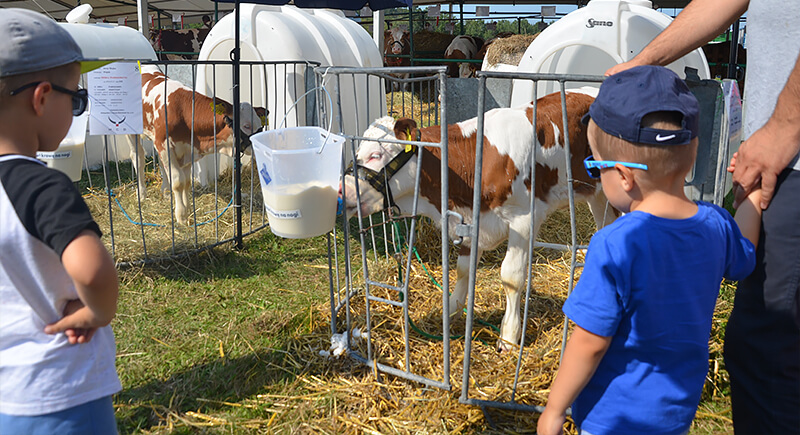
In many parts of Switzerland, kids learn about farming early through school programs tied to local agriculture. Classes often visit active dairy farms, watch milking sessions, and walk through aging rooms where cheese matures for months. Events tied to seasonal cattle movements still feature the song “Ranz des Vaches” in several regions.
Seasonal Life in the Alps
Credit: Wikimedia Commons
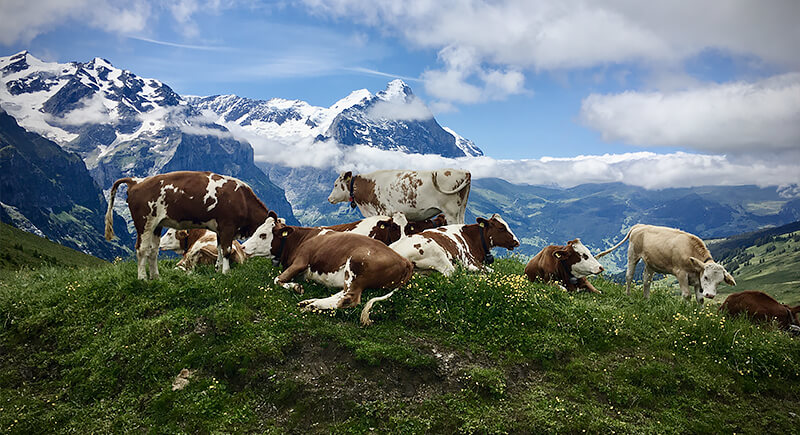
Alpine cattle movement depends more on weather and snow conditions than on fixed dates. Most herds head to higher pastures between late May and mid June, then return to valleys by early October. Grazing at elevations above 6,000 feet raises milk fat levels. Fall return celebrations draw visitors into smaller mountain communities.
Soundtrack of the Mountains
Credit: Wikimedia Commons
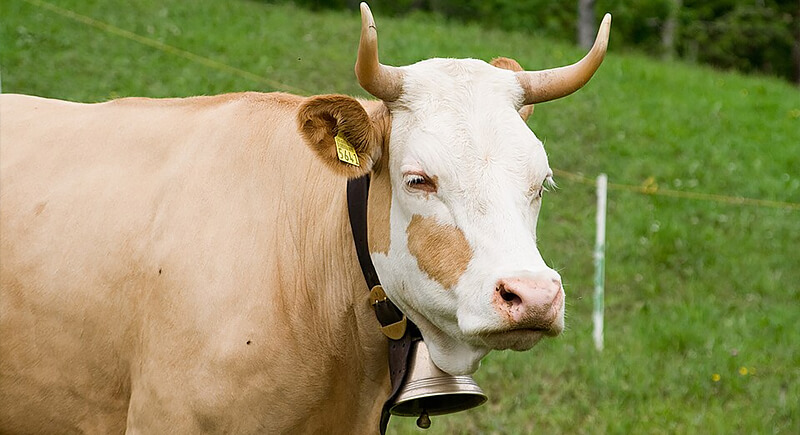
Farmers still rely on cowbells to track animals in fog, heavy rain, and steep grazing zones where visibility drops fast. Sudden sound changes help signal injury or separation. High-quality handmade bells can weigh over 10 pounds and sell for thousands of dollars, especially when used in ceremonial herd return events.
Powerful Tourism Image
Credit: Wikimedia Commons
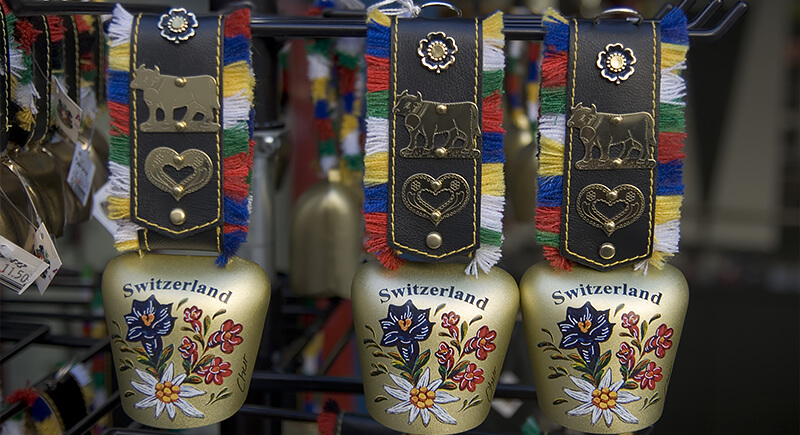
International visitors often expect to see grazing cattle when picturing Switzerland, and tourism campaigns lean into that expectation. Cow imagery appears across chocolate packaging, travel ads, and souvenir branding. Tourism agencies use cattle visuals because they convey rural stability and food quality to global audiences without the need for language translation.
Breeds Shaped by Geography
Credit: Wikimedia Commons
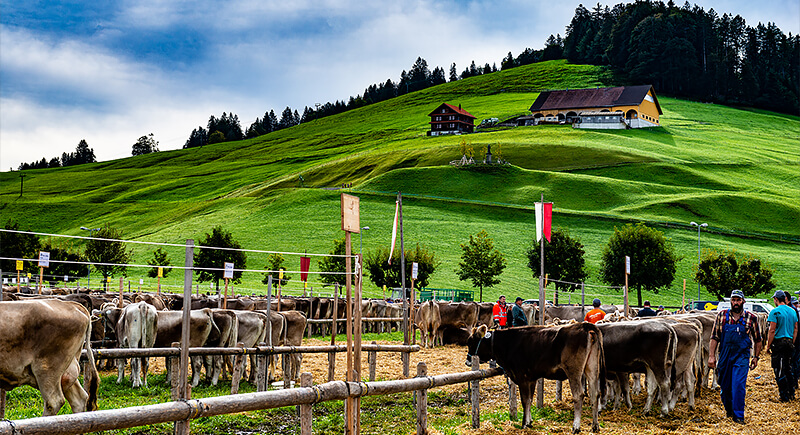
Different regions raise cattle suited to local terrain and milk needs. Simmental cattle support large-scale cheese production. Brown Swiss cattle produce milk with higher fat content, which is used in alpine dairy styles. Hérens cattle handle steep mountain pastures and appear in traditional cow competitions that still attract regional crowds.
Support That Keeps Traditions Alive
Credit: Wikimedia Commons
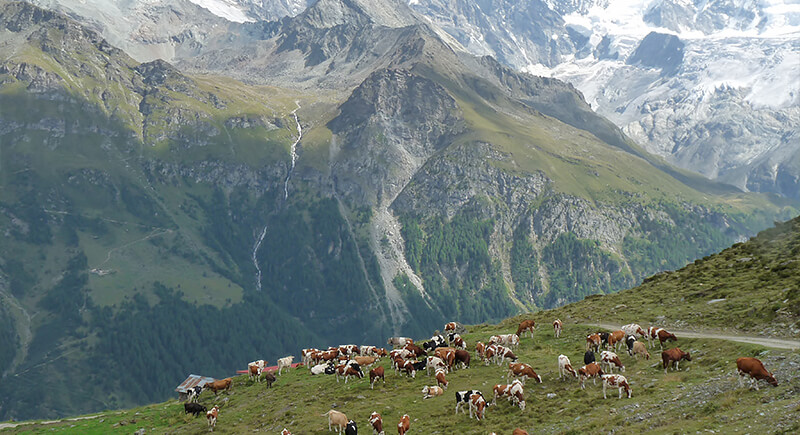
Alpine cattle farming remains financially viable through government subsidies that can reach roughly $5,000 per cow each year, depending on region and elevation. Payments help offset labor demands and limited mechanization options. Federal planners also see maintained grazing land as a means of protecting against erosion and uncontrolled forest expansion.
Everyday Visibility Beyond Farms
Credit: Wikimedia Commons
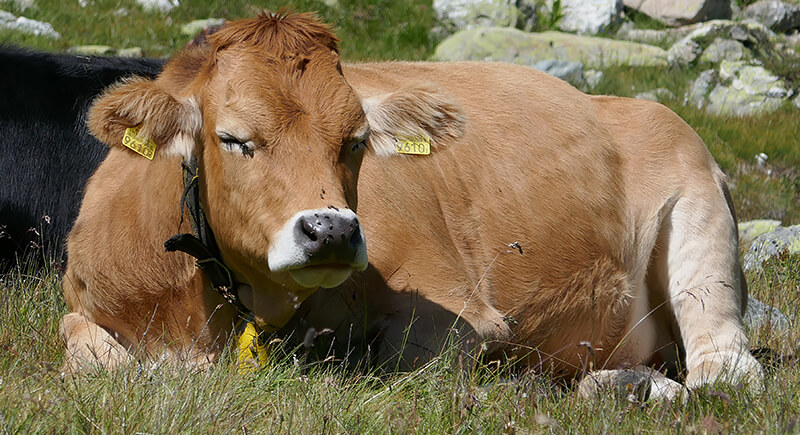
Swiss cattle identification rules require numbered ear tags linked to national livestock tracking databases, and those tags are affixed to animals transported across public roads daily. Dairy collection trucks visit many farms every 24 to 48 hours. With roughly 700,000 dairy cows nationwide, regular milk transport and livestock movement keep cattle integrated into normal transportation and logistics patterns.