
Three laugh-out-loud routines that quietly make pets braver, gentler, and easier to live with.
The fake sneeze that resets the room
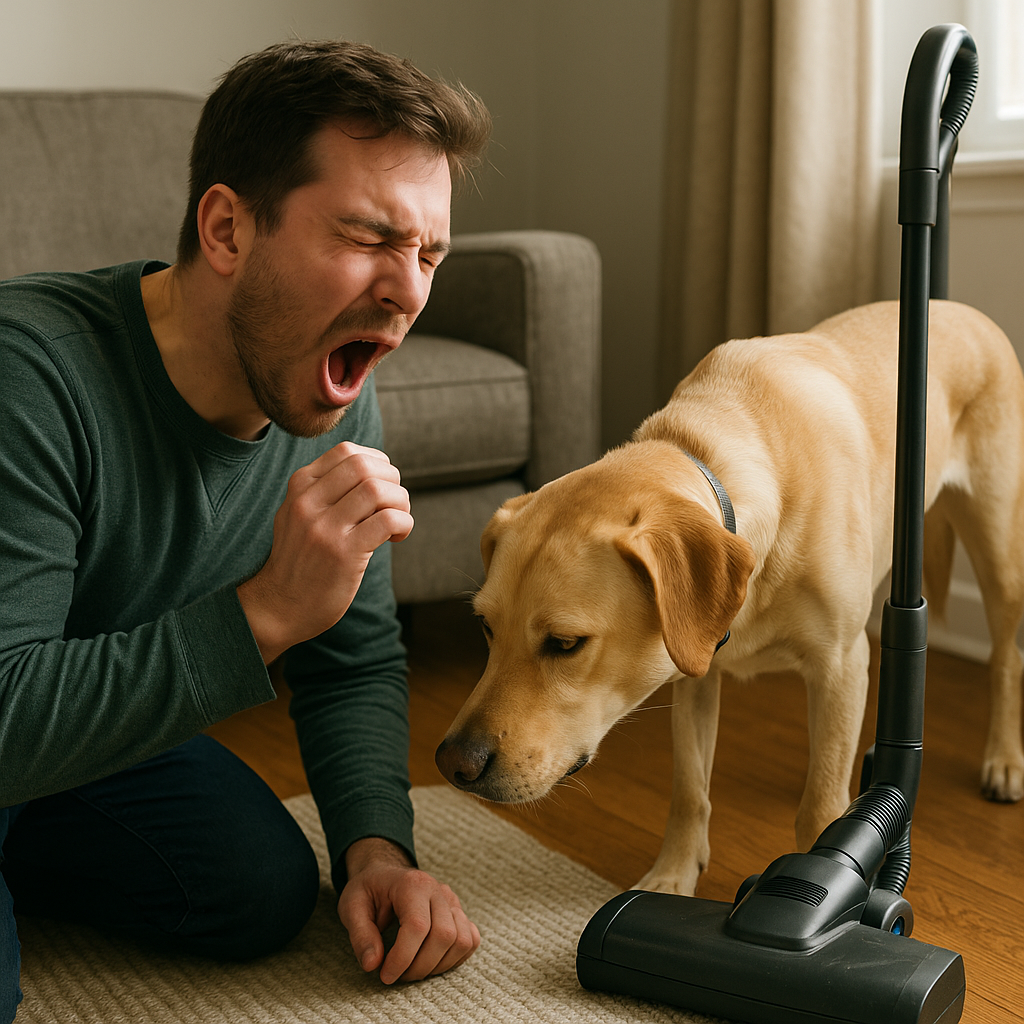
I started doing this by accident the first time my dog got weirdly sticky about the vacuum. Not barking, not hiding. Just that stiff, side-eye posture that makes you feel like you brought home an enemy. I did one exaggerated, cartoon sneeze (the kind you do when you want a laugh out of a kid), and he blinked like his brain had to reboot. Then he trotted over and sniffed the vacuum like it had lost its villain status.
Now I use the fake sneeze on purpose. It works best when you can see the moment your pet is winding up: the hard stare at a new object, the tense little pause before they decide whether a guest is acceptable, the cat's tail doing that irritated tick-tick against the floor. A normal soothing voice doesn't always cut through because your tone can sound like you're nervous too. The sneeze is different. It's nonsense. It signals, pretty plainly, that you're not treating the situation as dangerous.
Here's the part that surprised me: it doesn't just defuse the moment, it makes the next one easier. After a week of doing it during low-stakes stuff (vacuum, a box fan, the doorbell), my dog started checking in with me instead of spiraling. And my cat, who normally does a suspicious crouch when anything changes, will sometimes do a slow blink like, fine, you're being an idiot, I guess we're safe. I can't prove what's happening in their heads, but I can tell you what I see: less bracing, more investigating. That little laugh you get out of yourself is doing work.
Talk-show commentary during the household stampede
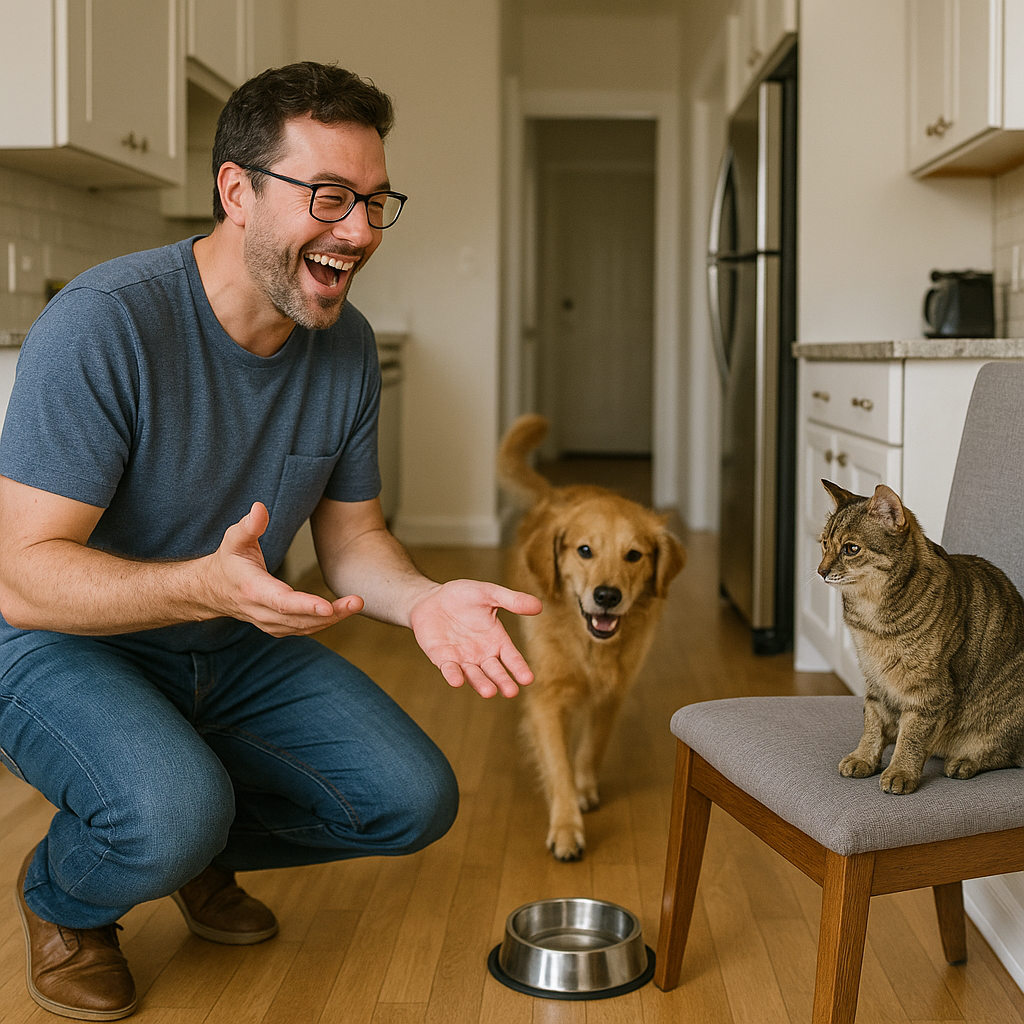
Every house has a daily stampede. Ours is the evening loop: someone hits the kitchen, someone else does a lap because a leash might appear, and the cat materializes like a stage manager to make sure nobody forgets their cues. If I try to manage it with stern commands, I just add another stressed voice to the pile. If I narrate it like I'm hosting a low-budget sports broadcast, my own body stays loose. That matters more than I used to think.
I do it out loud, in a deliberately calm cadence. Not baby talk, not hype. More like: And here comes the dog from the hallway with big feelings, folks. The cat is taking the high ground near the water bowl. Bold strategy. It's silly, and yes, it makes me laugh. But the benefit shows up in their behavior: my dog stops ricocheting between people, and the cat quits doing those petty, drive-by shoulder checks when the dog is overexcited. When I'm not clenching my jaw, I move slower. When I move slower, they read me as predictable. It's a chain reaction.
I've also noticed it changes what I focus on. With the commentary running, I catch the tiny good choices instead of staring at the mess. The dog pauses and looks at me before rushing the door. The cat waits on the chair back instead of cutting across the dog's path. Those are moments you can reward with a tossed kibble, a quick scratch, or just opening the door after a beat of calm. You're basically marking behavior without turning your living room into a training session.
And on nights when everything goes sideways (someone knocks over the stainless-steel bowl and it makes that cannon-clang), the narration keeps me from snapping. Nobody learns anything from me sounding mad about a bowl. They do learn from me sounding steady, even while I'm laughing at how dramatic a simple dinner routine can get.
The wobble-walk apology after you step wrong
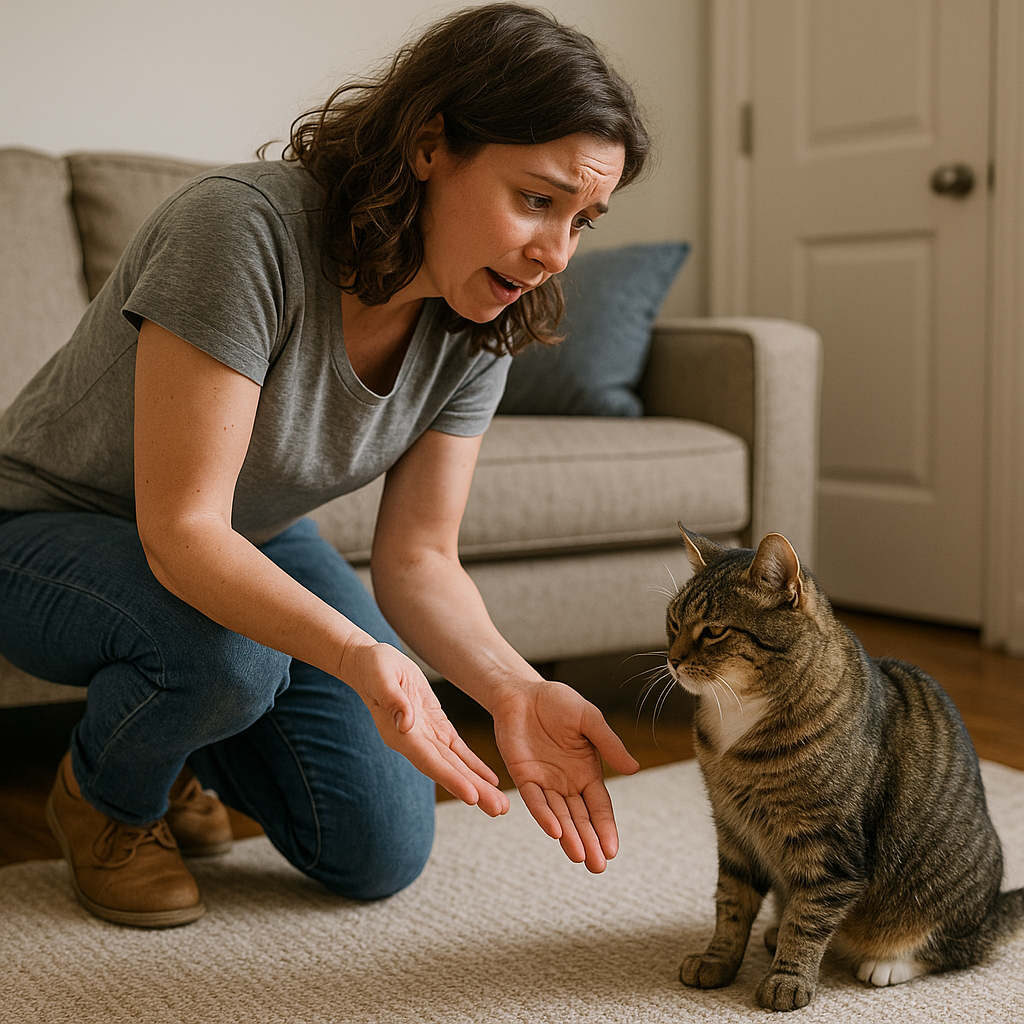
If you live with animals long enough, you will eventually do the thing you swear you didn't do: step too close, bump them with a laundry basket, catch a tail with a door because you thought they were behind you but they teleported. I used to go into frantic apology mode, which is mostly for me. Lots of words, lots of reaching, and a stressed face right in their space. My cat in particular would stiffen and then avoid me for an hour like I was untrustworthy furniture.
The fix that works in my house looks ridiculous: I immediately soften my posture, take two steps back, and do a brief wobble-walk. Think loose knees, slow feet, like I'm moving in gentle motion on purpose. No grabbing. No looming. Then I turn my body sideways (less confrontational), crouch a little, and offer my open hand low for a sniff. If they don't want it, I don't push it. I just keep my movements slow and stupid until the tension breaks.
Why the wobble? Because it changes me fast. I stop moving like I'm trying to control the scene, and I start moving like someone safe. Pets read motion before they care about words. When I do this after a mistake, my dog will often shake it off within seconds, literally, then come back for contact. My cat usually does one sharp look, then she blinks and goes to rub her cheek on the corner of the couch like, fine, you survived your own clumsiness.
It's a small thing, but it adds up. The more I can turn my own stress into a quick laugh, the less often a minor accident turns into a whole evening of skittishness. And that's the unexpected part: the humor isn't just for mood. It's a practical tool for repairing trust without escalating the moment.