Dog Goes From Black to White Over Two Years Due to Rare Condition
In one photo, Buster is a small black pup with rough, spiky fur. In the next scene, he’s the same dog with the same expression, only his coat has turned completely white. The contrast surprised people online and led many to wonder if the pictures were edited. His owner from Oklahoma City explained that the change was real and happened gradually over about two and a half years, the result of a rare condition that lightened his fur over time.
The Dog Everyone Thought Had To Be Fake
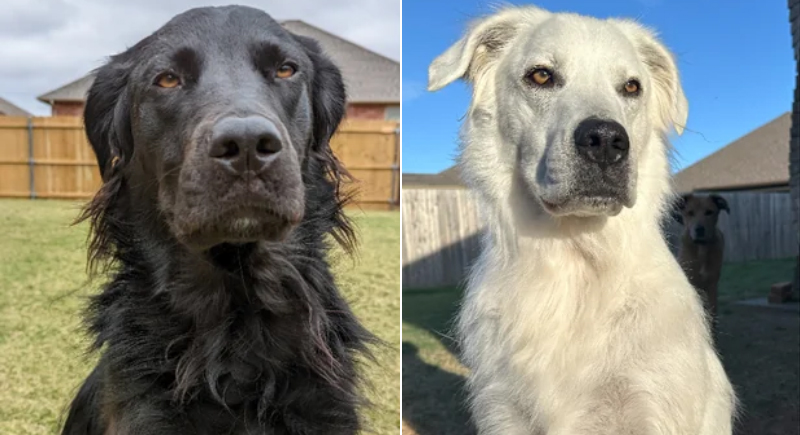
Image via Reddit/TallyMatty
Buster started life as a standard black dog. Around the age of two, his owner, Matt Smith, noticed small, pale patches near the mouth and chin. At first, it looked like random speckling, nothing dramatic. Over the next months, the pale fur crept across the muzzle, then up toward the eyes.
Reddit posts documented each stage: August 2022 still showed a mostly dark face with a few striking white spots, November 2022 leaned heavily gray, and by mid-2023, most of his face looked frosted. Eventually, every dark patch gave way. Fresh white fur replaced the black, and older photos became the only proof that Buster ever looked different.
What Vitiligo Actually Does
Veterinary sites like PetMD and Rover explain that vitiligo causes pigment cells in the skin to stop working or disappear. Melanin fades, and fur growing out of those areas turns pale as well. In dogs, this usually begins on the face, especially around the nose, lips, and eyes, then may spread along the body.
Experts describe it as rare in pets, affecting a very small percentage of dogs, with some breeds slightly more prone than others, including German Shepherds, Rottweilers, Dachshunds, and Golden Retrievers. In Buster’s case, the condition did exactly what textbooks describe, only on a dramatic full-body scale that cameras could capture step by step.
It’s A Rare Condition, Not A Dangerous One
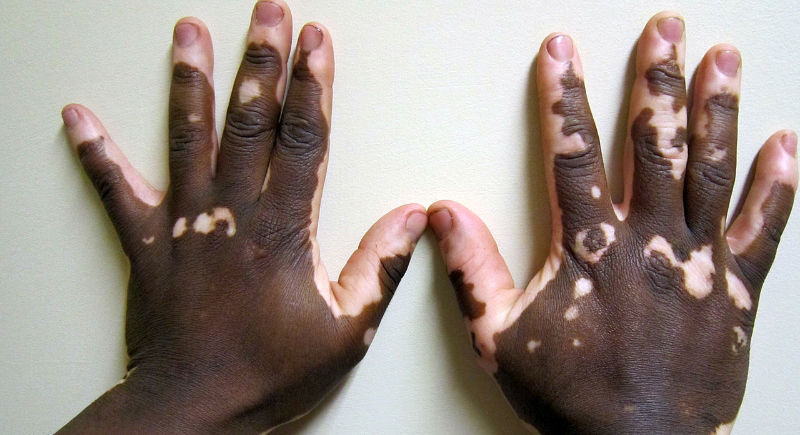
Image via Wikimedia Commons/James Heilman, MD
Veterinary sources consistently state that vitiligo in animals does not cause physical pain. The skin may look different; however, the condition itself does not typically affect energy levels, lifespan, or quality of life. Matt shared that during the transition, Buster briefly looked patchy while black fur fell out and white fur grew in, which matches what dermatology resources describe. Underneath the color change, he stayed the same playful dog, just with a coat that kept surprising everyone.
Buster’s photos hit a sweet spot for viral content: immediate visual impact, a genuine medical explanation, and a happy ending. Users on Reddit gave him nicknames like “Buster the Gray” and “Buster the White,” referenced Michael Jackson, and filled the comments with disbelief until they saw the full progression.
Articles that picked up the story helped correct a big misconception: a dramatic change in a pet’s appearance does not always mean a painful illness. For many readers, Buster became an easy way to understand vitiligo, a condition that also affects about one in 200 people worldwide. It also reminds pet owners that sometimes a surprising transformation is simply a cosmetic plot twist in a very normal dog’s life.