Dogs Don’t Just Watch the World, They Smell It
People often think dogs navigate the world the way we do, only with better hearing and a tendency to pause at every tree. We joke when they stare into what looks like nothing or insist on examining the same patch of grass, but those moments come from a sensory system that works on an entirely different level.
Once you realize how much scent shapes their understanding of things, their habits fall into place. It also raises a larger thought: if smell is their main way of interpreting life, then the world they move through might be far richer, and far stranger, than the one we notice.
A Nose Engineered For Precision
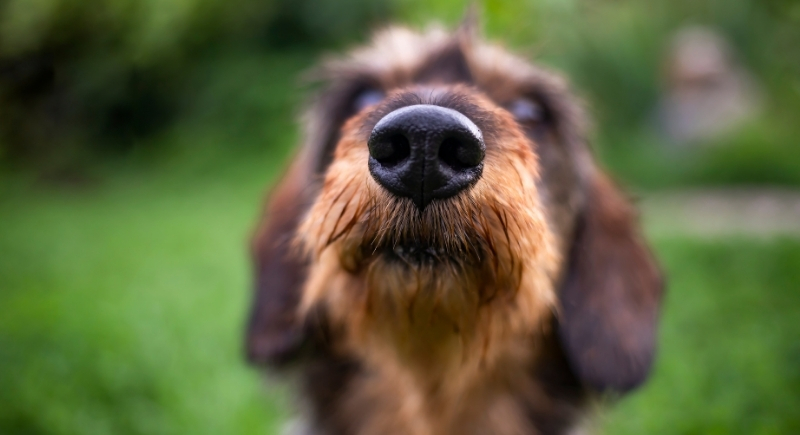
Image via Canva/AleksStudio
Scientific research makes one point clear: dogs detect scent on a scale we cannot approach. Many dogs have more than 10 million scent receptors. Humans reach about 6 million. Specialized detection dogs can identify 0.01 microliters of gasoline, a trace amount that shows how fine-tuned their detection system is. Their nasal structure increases this advantage.
Instead of routing everything through a single passage, dogs separate breathing airflow from scent processing. Airflow analyses combining MRIs and computer mapping showed how odor molecules move quickly toward the area with olfactory receptors while regular breathing continues uninterrupted.
Rapid sniffing adds another layer of efficiency. Dogs may take around seven sniffs per second when focusing, and those small outward puffs help pull more odor into the nose. Humans inhale once and disrupt the scent with the exhale. Dogs run a fast, continuous loop designed for information gathering.
Scent Gives Shape To Their Environment
Humans build mental maps with lines, shapes, and clear edges. Dogs build theirs with layers of scent. Odors drift through the air, cling to surfaces, blend with older traces, and shift over time. A dog walking into a room processes a wide set of cues that tell them who passed through, how long ago, and what else changed.
This is why a random corner of the yard or sidewalk stops them in their tracks. They’re picking up cues that carry meaning based on personal scent history, not visual interest. What looks blank to us often holds plenty of information for them. It’s not guesswork for them.
Smell Helps Them Gauge Time
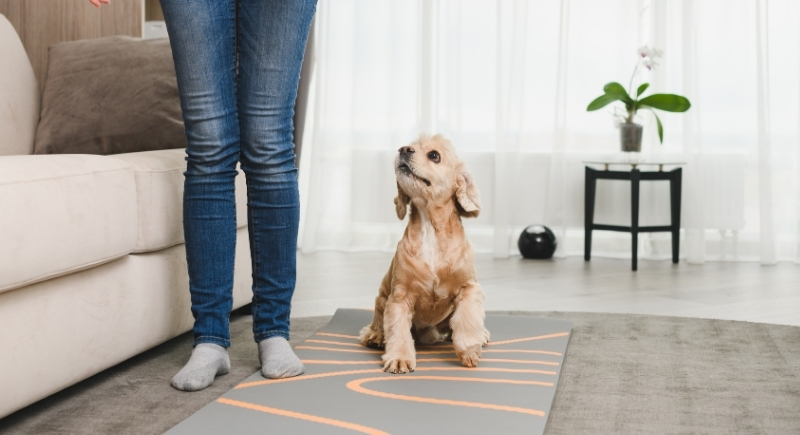
Image via Getty Images/O_Lypa
Studies monitoring canine brain responses show that dogs track time through changes in scent strength. When you’re at home, your scent saturates the space. After you leave, it fades gradually. Hours later, your scent remains but carries a different intensity. That’s enough to give dogs a sense of how long you’ve been gone.
When you come back, they gather new scent data right away. Clothing, skin, and belongings pick up chemical traces that tell them where you’ve been. This is how they create their version of a timeline, without relying on clocks or routines the way humans do.
Scent Links To Emotion And Memory
Newer research using laser-based speckle analysis shows that scent stimulates regions associated with emotion and memory in addition to the olfactory bulb. Areas such as the amygdala and hippocampus respond strongly to odor cues, suggesting that dogs can form emotional associations with smells.
This helps explain why returning to a veterinary office makes many dogs nervous before anything actually happens. That location carries a recognizable odor pattern. On the other hand, familiar human scents can reduce tension almost immediately.
Because scent plays into emotion, training that aligns with positive scent exposure tends to produce better outcomes. When odors are linked to rewards, dogs learn faster and stay more comfortable.
Sight Still Adds Its Own Information
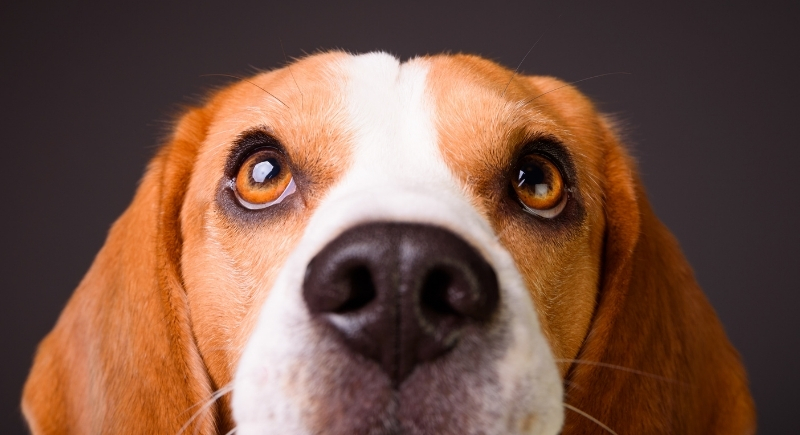
Image via Canva/przemyslawiciak
Dogs still use vision, but in different ways. They see fewer colors, detect motion slightly faster than we do, and notice subtle changes before humans catch them. That’s why they sometimes stop and stare at something you cannot identify.
They may be reacting to a combination of faint movement and scent that doesn’t register with human senses. Their sensory picture works as a full system, with smell setting most of the context and sight adding extra details.
Making Room For A Scent-First Perspective
When you remember how much dogs rely on scent, many of the habits people find confusing start to feel logical. Shoes carry the smell of the person they follow everywhere. A couch holds a full “family record.” The yard is layered with chemical notes left by animals, people, and plants.
Supporting that sensory world doesn’t require big changes. Small adjustments make a real difference:
Give them extra sniffing time on walks so they can gather information.
Add simple scent-based games or hide-and-find activities at home.
Pay attention to their body language – posture, ears, tail – especially in new places.
Build positive associations early on and keep reinforcing them as they grow.
Dogs make sense of life through their nose. Giving them room to do that helps them feel grounded, informed, and comfortable in the spaces they share with us.