10 Incredible Facts About Atlantic Puffins
Atlantic puffins spend much of their lives beyond human view, scattered across the cold waters of the North Atlantic. They only return to land during breeding season, and even then, only in remote coastal colonies.
While they often appear in tourist photos for their bright beaks, their behaviors tell a deeper story. Puffins exhibit remarkable endurance, complex parenting behaviors, and survival strategies that enable them to thrive far from shore. What appears to be a simple seabird is actually shaped by life at sea.
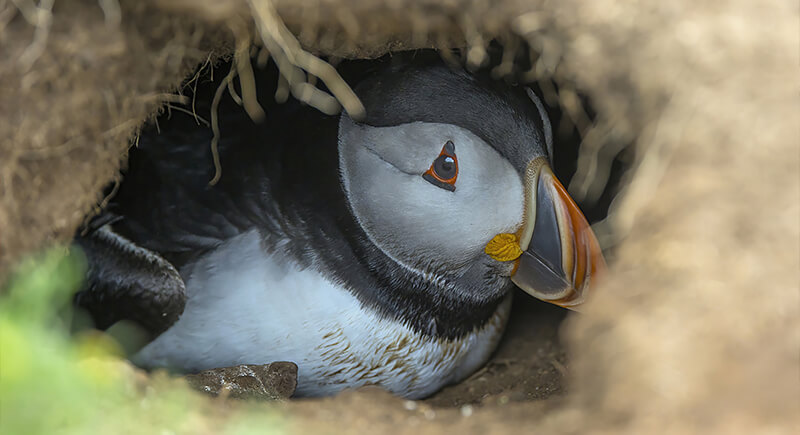
They Go Back to the Same Burrow Every Year
Credit: Wikimedia Commons
After months at sea, many puffins head to the exact burrow they used the year before. These nests, typically dug into soft coastal soil or tucked into cliffsides, can last for several seasons. Some pairs reuse the same tunnel for more than 20 years. However, the birds clean and repair the space before laying a single egg.
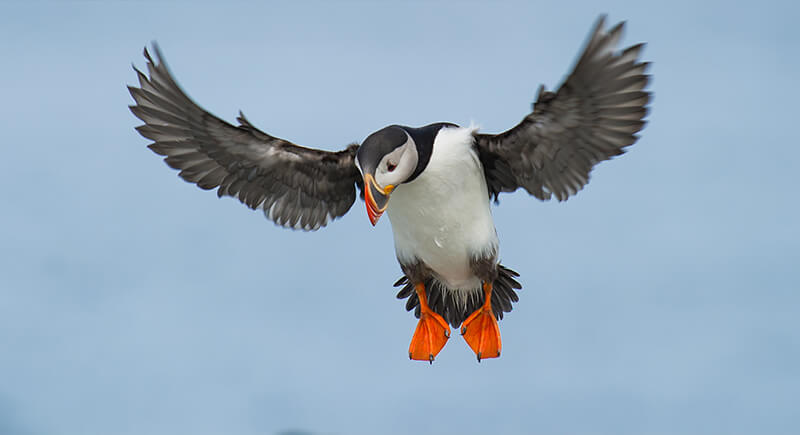
Flying Takes Serious Energy
Credit: Wikimedia Commons
These birds, with short wings and heavy bodies, work hard just to stay airborne. A study showed they flap their wings up to 400 times per minute to maintain flight. That energy use makes long-distance flying exhausting, but they do it anyway. Before landing, they must time their descent carefully, although many still crash awkwardly upon arrival.
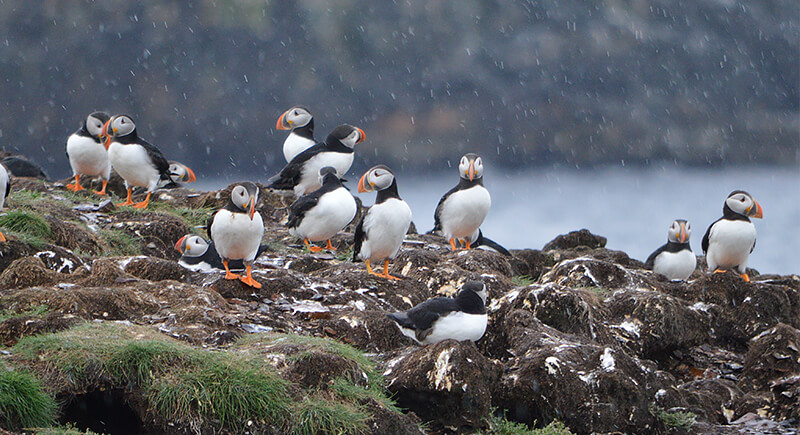
A Few Puffins Travel Far Off Course
Credit: Wikimedia Commons
Though puffins typically stay in northern waters, a small number end up far away. There have been rare sightings along southern U.S. coastlines, well outside their expected range. These accidental travelers usually arrive during or after severe storms. Many appear underweight or exhausted, which suggests they didn’t intend to take the trip, but were forced there by wind or weather.
They Stay at Sea Most of Their Lives

Credit: Wikimedia Commons
Once fledged, puffins leave land behind for years. Adults spend nearly all their time on the open ocean, feeding, sleeping, and resting entirely at sea. Their waterproof feathers and strong body fat help them handle cold temperatures. They only return to land briefly each year to raise a chick, then disappear again into offshore waters.
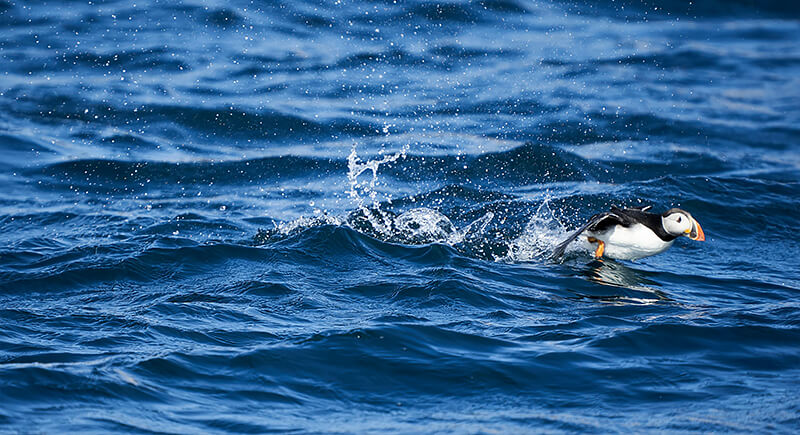
Puffins Use Their Wings for Swimming
Credit: pexels
Swimming with strong, fast strokes gives puffins remarkable control underwater. Their wings act as powerful paddles that push them forward in quick bursts, helping them pursue fish beneath the surface. Researchers have recorded dives that reach more than 200 feet. This method works well in cold waters where prey moves unpredictably.
Their Landings are Often Uncoordinated
Credit: pexels
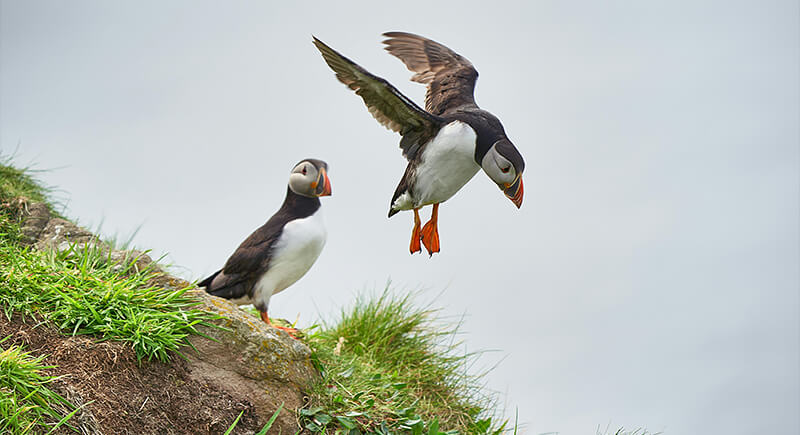
Birdwatchers notice how awkward puffin landings can look, especially when the birds approach the ground at full speed. Their short wings make slowing down difficult, so many arrive with abrupt impacts. Some slide across grass or bump into rocks before regaining balance.
One Puffin Can Carry Over Ten Fish
Credit: Wikimedia Commons
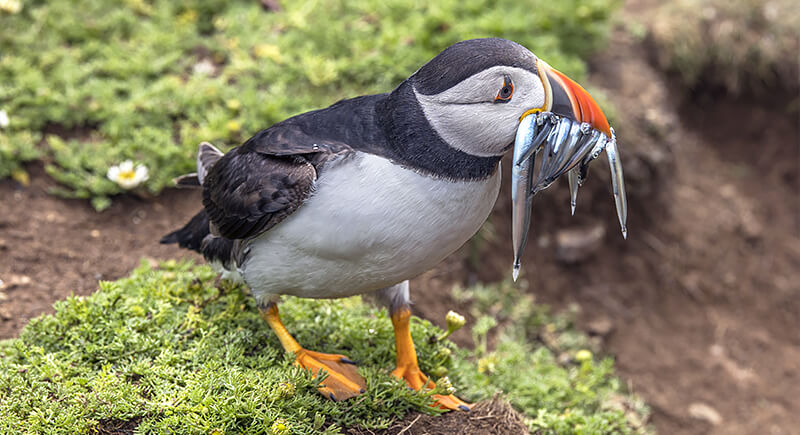
What most people don’t know is that puffins use a highly efficient method to transport several fish at once. Their beaks hold each fish lengthwise, and the tongue presses them against a small spiny area inside the mouth to keep everything secure. This system allows them to gather more food in one flight.
They Stay Silent on the Water

Credit: Wikimedia Commons
Researchers studying puffin colonies have described them as noisy and active, especially during breeding season. But on the ocean, puffins become quiet. Out at sea, they rarely make sounds. Scientists believe this silence helps avoid predators or simply reflects the solitary, spread-out nature of life offshore.
Their Bright Beaks Don’t Last All Year

Credit: Wikimedia Commons
The puffin’s vivid beak is only temporary. After the breeding season ends, the outer shell of the beak sheds off. What remains is smaller, duller, and more practical for life at sea. The bold colors come back the next year, likely used for attracting mates.
Chicks Hatch in Total Darkness
Credit: Wikimedia Commons
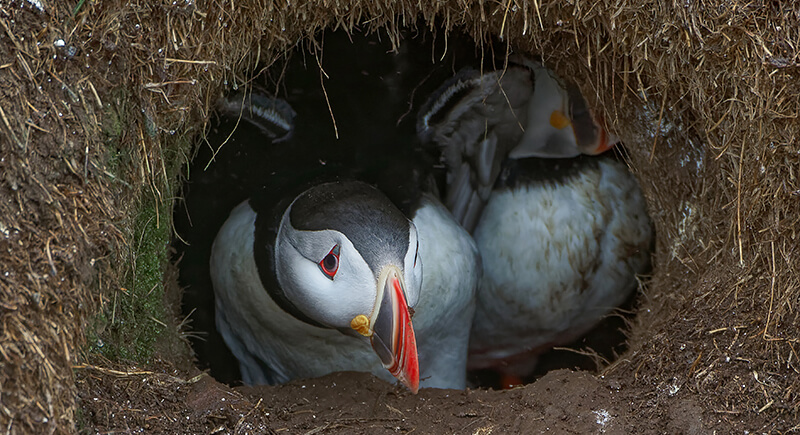
Growing up in complete darkness shapes the early life of a puffin chick. Deep inside the burrow, it stays protected from predators and wind. Both parents take turns delivering fish, which the chick depends on entirely. It remains underground for weeks before emerging for the first time.