10 Famous War Dogs That Changed Military History
Dogs show up in everyday life as companions, but their history goes far beyond that. For centuries, armies have trained dogs to carry messages, detect danger, track enemies, and stay steady under pressure in active war zones. Their speed, sharp senses, and ability to follow commands made them valuable on the front lines. Some of these dogs became known for actions that directly helped soldiers survive or complete critical missions.
Chips
Credit: Wikipedia
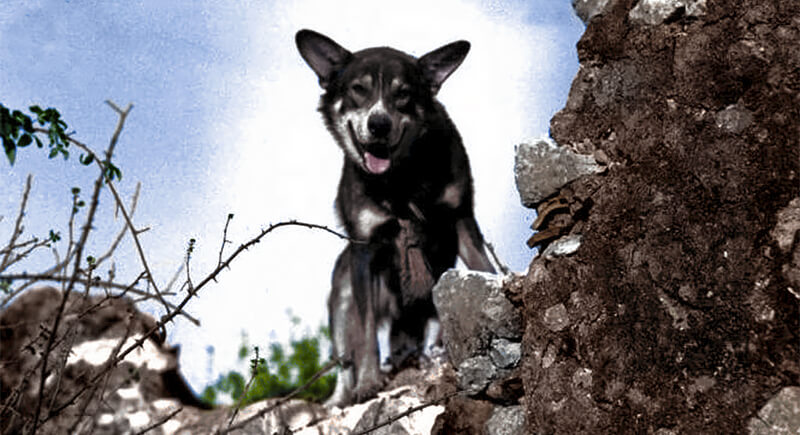
Military historians frequently mention a dramatic moment in the 1943 invasion of Sicily, when American troops faced heavy fire coming from a concealed machine gun position. The situation changed when a trained scout dog rushed the enemy nest. Chips attacked the gun crew and forced four German troops to surrender. Soldiers later treated the wounded canine and returned him to duty.
Nemo
Credit: okhistory
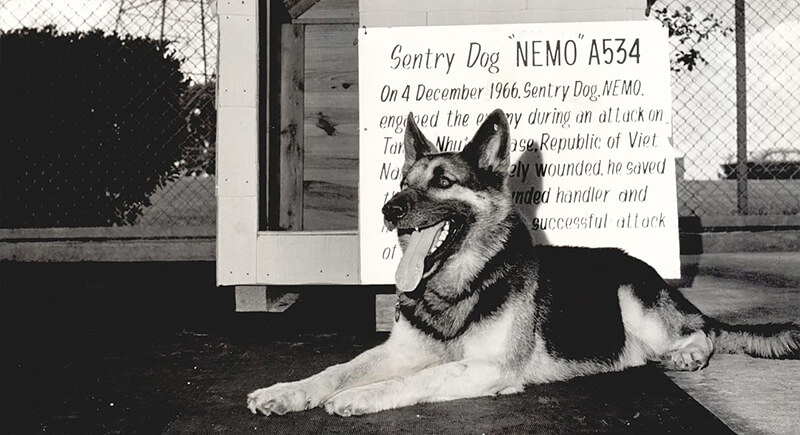
Air base security amid the Vietnam War depended on trained patrol dogs. Guards needed animals capable of sensing movement long before humans noticed a threat. One German Shepherd named Nemo demonstrated that ability throughout a nighttime attack at Tan Son Nhut Air Base in 1966. He detected approaching enemy fighters and charged immediately. Gunfire struck the creature and destroyed one eye.
Smoky
Credit: Wikipedia
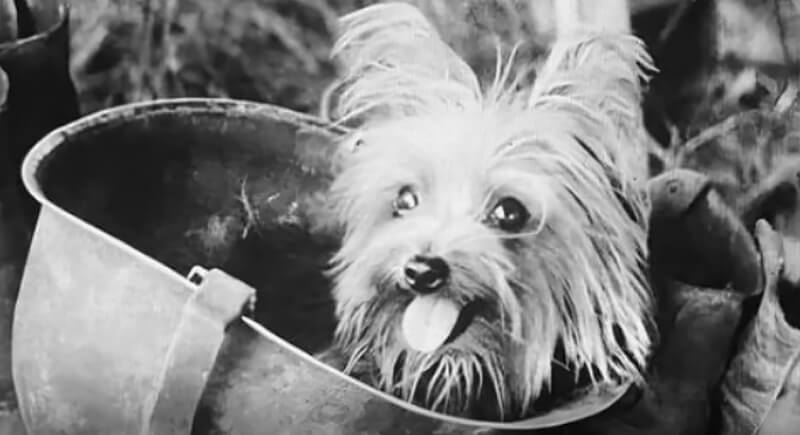
Weighing only about four pounds, Smoky entered military life after officials found her inside a foxhole in New Guinea as World War II unfolded. Engineers later faced a difficult challenge when they needed to install communication wires beneath an exposed runway. Smoky crawled through a narrow seventy-foot culvert with a guideline tied to her collar, which allowed workers to pull the wire through the pipe.
Sergeant Stubby
Credit: Wikipedia
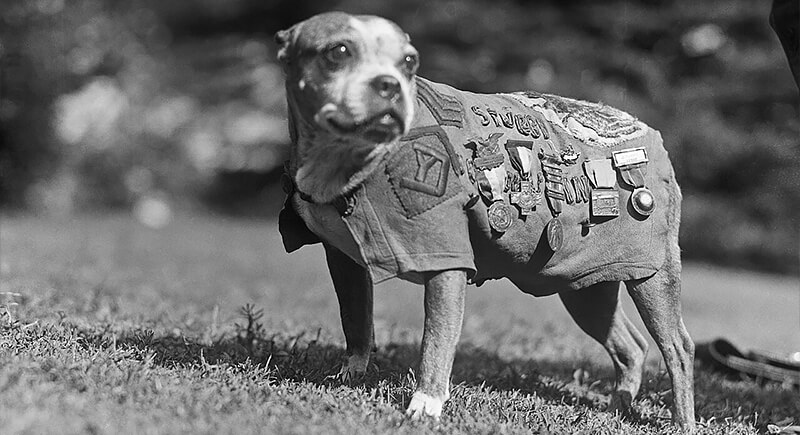
Stubby started out as a stray hanging around a U.S. training camp during World War I. One soldier took a liking to him and managed to bring him overseas, where the dog quickly proved his value in the trenches. He could sense incoming gas attacks before they hit, giving soldiers time to react. He also helped find wounded men on the battlefield, making him more than just a mascot.
Judy
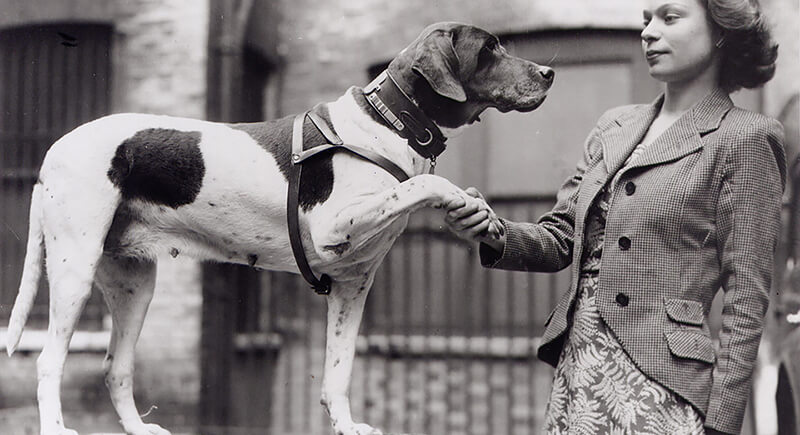
Credit: PDSA
After a Japanese attack sank her ship in 1942, Judy found herself stranded with surviving sailors on an island that lacked reliable drinking water. The English Pointer located a freshwater spring that helped the group make it out alive. Japanese forces later captured the sailors and sent them to prisoner-of-war camps. Judy stayed with the men throughout captivity and eventually received official prisoner-of-war status, an unusual distinction for an animal.
Rip
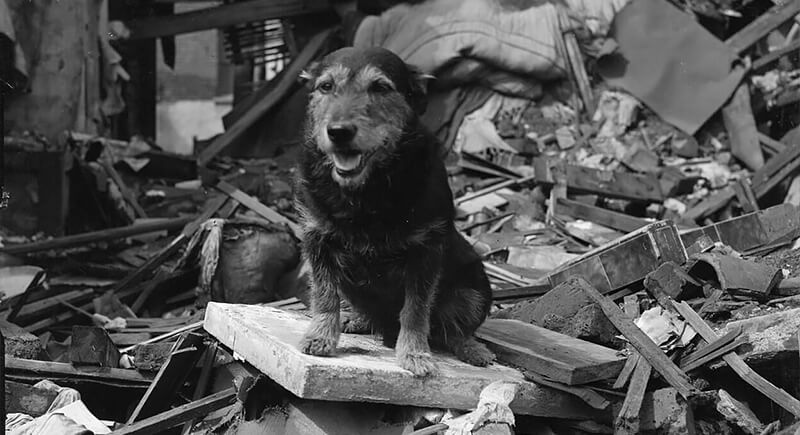
Credit: Wikipedia
During the Blitz in London, rescue teams worked through collapsed buildings to find people buried under debris. A warden named E. King noticed a stray dog hanging around the sites and saw how alert he was to what was happening. That dog, later named Rip, began working with the teams and learned to signal when he picked up signs of someone still alive under the rubble.
Gander
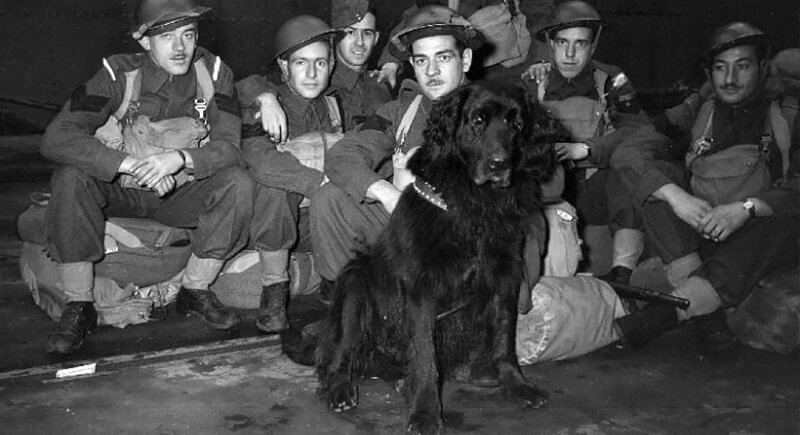
Credit: Wikimedia Commons
If you have ever heard of the Dickin Medal, it recognizes animals that have shown extraordinary bravery in war. One recipient was Gander, a Newfoundland serving with Canadian troops in Hong Kong during World War II. When a grenade landed near wounded military personnel, Gander carried it away and ended up sacrificing himself to save them.
Rifleman Khan
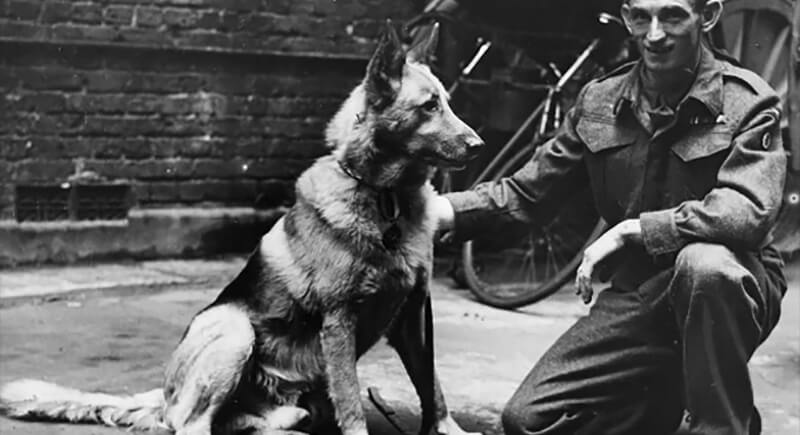
Credit: Bevrijdingsmuseum Zeeland
When artillery fire struck at the time of a coastal assault in World War II, a British soldier and his patrol dog were thrown into the water. The soldier could not swim and quickly struggled to stay afloat. Rifleman Khan grabbed his handler’s clothing with his teeth and began paddling toward shore until both reached safety.
Jet
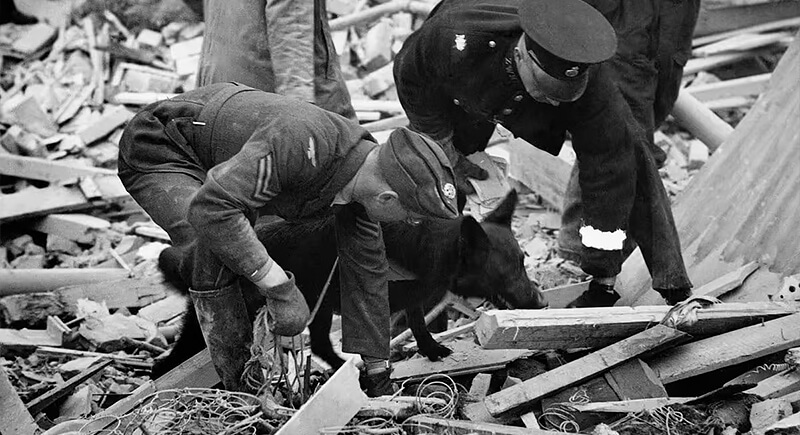
Credit: IWM
A sixty-three-year-old woman survived beneath the wreckage of a bombed London hotel after search teams followed a dog’s persistent signals. Workers had prepared to leave because they believed no survivors remained. Jet, a German Shepherd, kept signaling life under the debris. His handler ordered crews to continue digging, and rescuers reached the trapped woman after more than eleven hours.
Irma
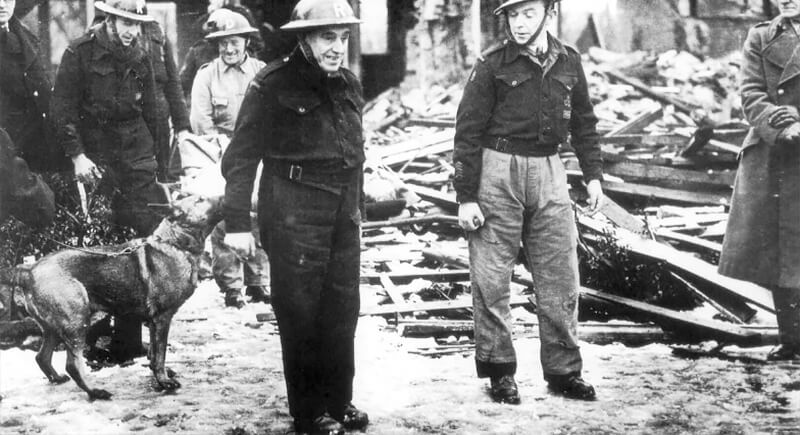
Credit: PDSA
Records credit Irma with helping emergency responders identify more than 200 buried victims in the bombing raids on British cities in World War II. 21 of those discoveries involved survivors who received help in time. The German Shepherd worked with civil defense teams searching collapsed buildings after air attacks.