Female Turtles Are Jumping Off Cliffs to Escape Aggressive Males
A wildlife study published on January 26, 2026, in the journal Ecology Letters uncovered behavior that caught experienced ecologists off guard. Researchers studying a dense tortoise population on a small island in North Macedonia began noticing a troubling pattern in their long-term data. Female deaths appeared unusually high, and several fatalities shared the same strange detail: the animals had fallen from cliffs!
A Population With A Severe Gender Imbalance
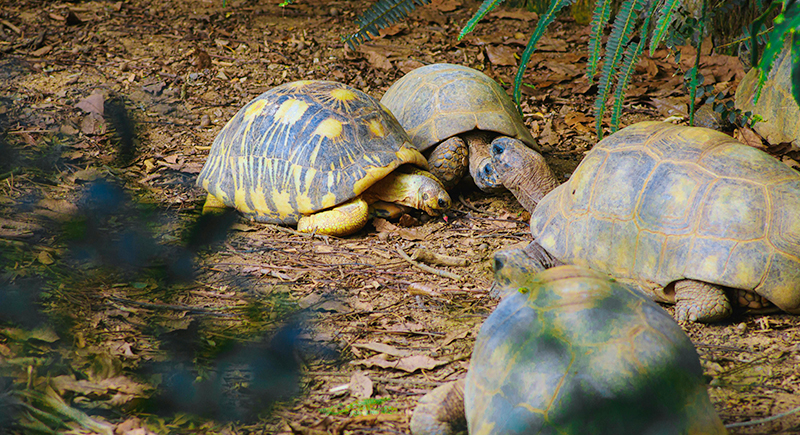
Image via Pexels/Lucas Pezeta
The research focuses on Golem Grad, an island in Lake Prespa that supports a large population of Hermann’s tortoises. These reptiles often live for decades and can approach 100 years of age. The island holds many tortoises, yet the numbers are uneven. In some parts of the island, researchers counted about 19 male tortoises for every single female.
Such a severe imbalance has created intense competition among males, and most of that pressure falls on the few females who remain. The research team, led by ecologist Dr. Dragan Arsovski of the Macedonian Ecological Society, spent more than a decade studying the population. Their long-term observations show a pattern that places constant stress on female tortoises.
What Happens When Multiple Males Chase One Female
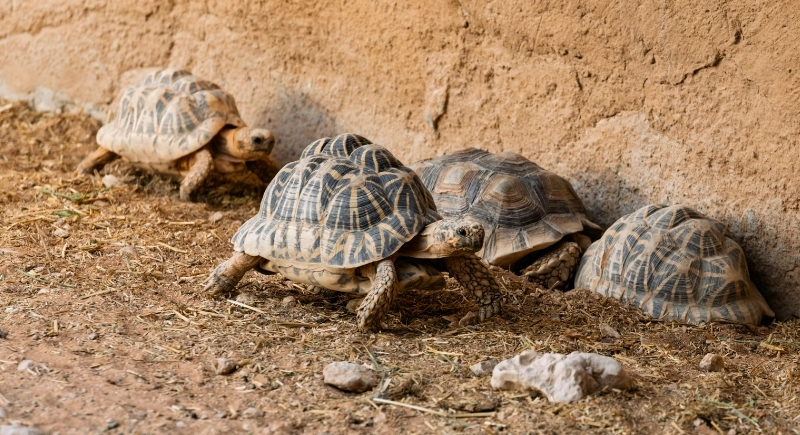
Image via Pexels/Kirandeep Singh Walia
Field observations showed that mating attempts often involve several males targeting a single female simultaneously. Dr. Arsovski described moments when a female became surrounded by competing males trying to mount her. In some cases, the female ended up trapped beneath a pile of tortoises.
Male Hermann’s tortoises compete using physical contact. They bump rivals aside, bite at females, and mount repeatedly in attempts to mate. Researchers also recorded males jabbing females with the sharp tip of their tail while pursuing them, and these encounters frequently leave visible injuries.
Surveys of the island population found that many female tortoises carry wounds around their cloaca, the reproductive opening. Researchers reported that roughly three-quarters of the females showed signs of damage in that area. And the consequences extend past physical harm!
Stress Is Affecting Reproduction
Scientists examined the reproductive condition of female tortoises using X-ray scans. The results suggested that reproduction on the island has slowed significantly. Only about 15 percent of females examined were carrying eggs at the time of the study. Many showed empty abdominal cavities, which suggests reduced breeding activity compared with tortoise populations in nearby mainland areas.
Researchers also recorded lower survival rates among females living on Golem Grad. Evolutionary ecologist Jeanine Refsnider of the University of Toledo described the situation as an extinction vortex. A shrinking number of females leads to more aggressive competition among males, which places even greater strain on the remaining females. The cycle gradually pushes the population toward collapse.
The Cliff Behavior
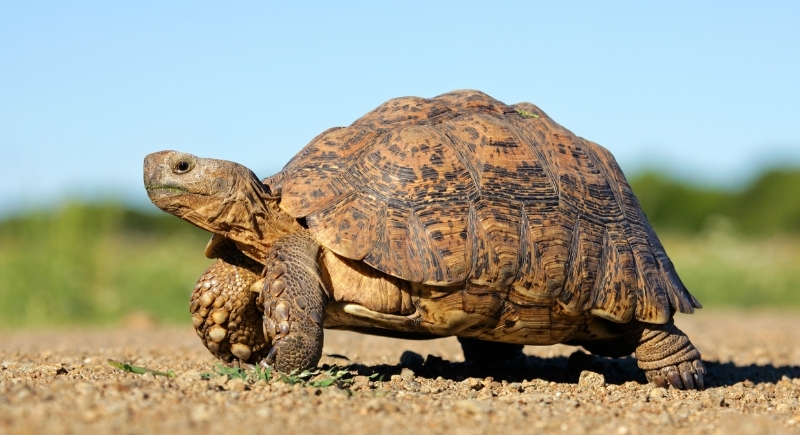
Image via Getty Images/EcoPic
The most unusual discovery involved the cliffs that ring parts of the island. During long-term monitoring, researchers began documenting female tortoises falling from these steep areas. GPS tracking devices and accelerometers attached to some individuals helped confirm several of the incidents. In one case, abnormal movement data sent researchers to a beach where they found a female tortoise with a shattered shell after a fall.
Both male and female tortoises occasionally move near cliffs. However, the proportion of females dying this way is far higher. To understand the behavior, researchers conducted controlled experiments in fenced enclosures with a small opening leading to a steep drop.
The results revealed a striking pattern: female tortoises that normally lived on the island frequently crawled toward the exit when aggressive males were present. Females brought in from mainland populations rarely approached the opening under the same conditions. The findings suggest the cliff behavior may act as an extreme escape response.
A Timeline Toward Disappearance
The research team used demographic modeling to estimate how the population could change in the future. If the current imbalance continues, scientists predict that the last female tortoise living on Golem Grad could disappear around 2083.
Habitat loss, pollution, and climate disruption often drive species toward extinction. On this island, the danger appears to come almost entirely from the population’s own internal dynamics. A group that once seemed stable now carries the seeds of its own disappearance, all because the balance between males and females tipped too far in one direction.