10 Forgotten Livebearers for the Aquarium Hobby
Long before fancy guppies filled store tanks, aquarium books regularly featured dozens of hardy wild species that thrived in small setups and bred without drama. Many of those fish slowly disappeared from the hobby as color strains took over shelves, even though the originals were often more interesting to watch. These 10 livebearers show why earlier aquarists relied on them, and why they still make sense for modern tanks that value behavior and personality as much as color.
Metallic Girardinus
Credit: Wikimedia Commons
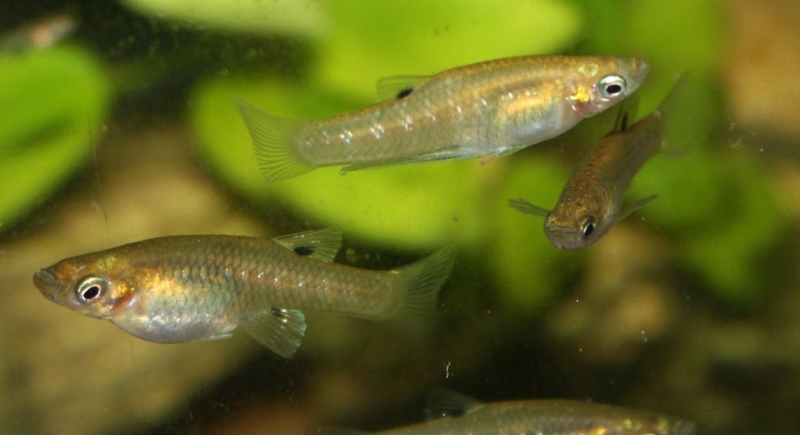
This Cuban livebearer carries a silver-to-gold sheen that shifts with lighting. Females reach close to 3 inches, while males stay around half that size and develop black markings on the head and fins. It tolerates freshwater well despite brackish roots, prefers hard alkaline water, and breeds readily when floating plants are present.
Dwarf Mosquitofish
Credit: Wikimedia Commons
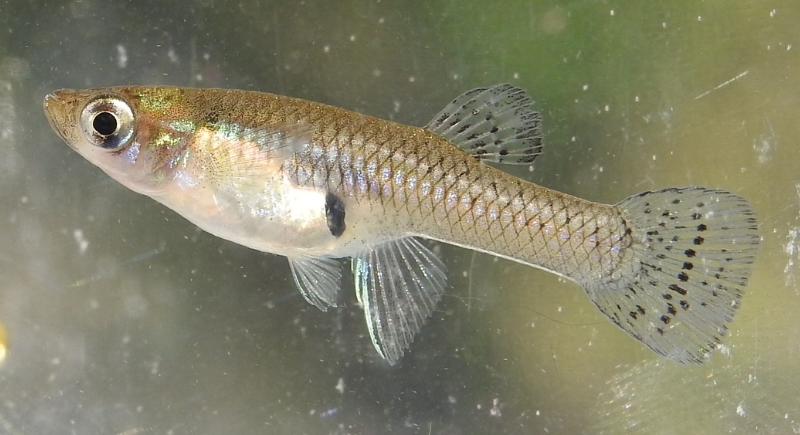
Barely larger than a paperclip, this species tops out under 1.5 inches and ranks among the smallest livebearers kept in aquariums. It prefers cooler water near 64°F, dislikes strong currents, and thrives in tanks under 10 gallons with dense plant cover. Fry arrive fully formed and survive best when adults are kept calm and well-fed.
Humpbacked Limia
Credit: Wikimedia Commons
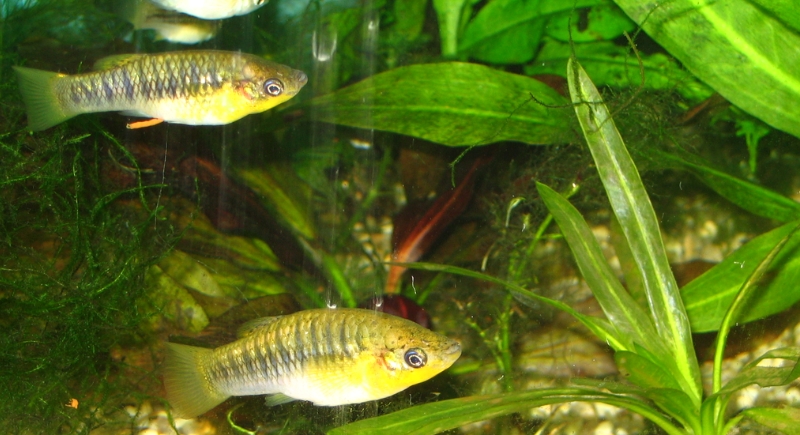
Males develop a pronounced hump as they mature, along with translucent yellow bodies and sail-like dorsal fins. Native to Haiti, this species prefers temperatures between 72°F and 82°F and gentle water movement. Group living suits it well, with small sparring behavior that rarely causes damage.
Black-Bellied Limia
Credit: Wikimedia Commons
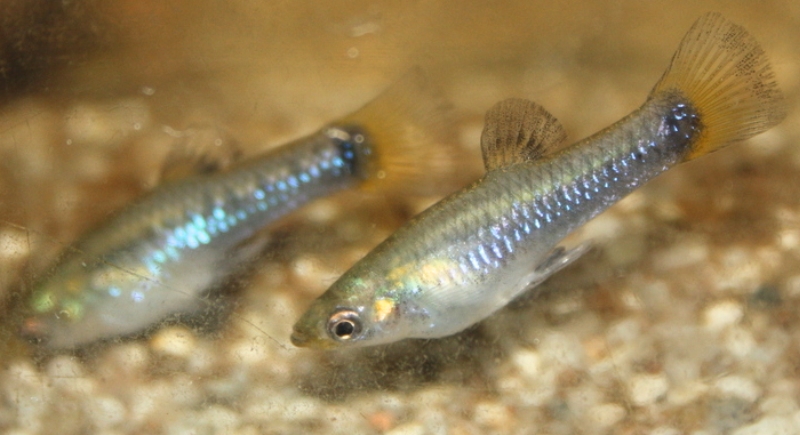
The variable species of the Black-Bellied Limia shows neon-blue scales along the lower body in females and black or yellow accents in males. Adults grow to less than 2 inches. Hybridization happens easily, so single-species tanks prevent unwanted mixing.
Liberty Molly
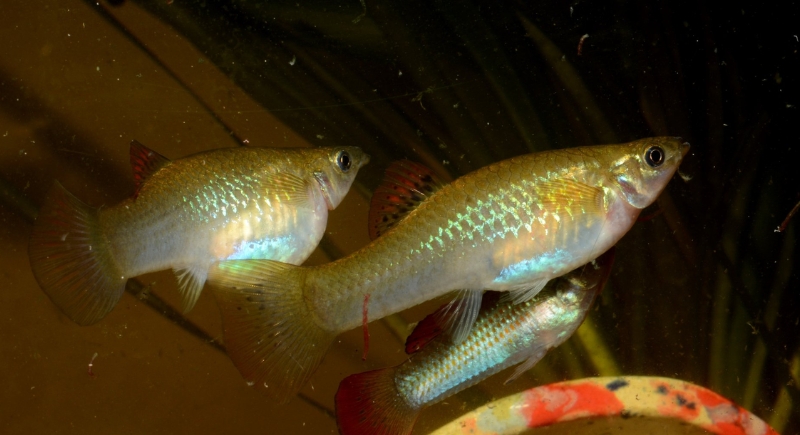
Credit: Facebook
Recognized as distinct only in recent years, this molly displays red, white, and blue coloration that intensifies with age. Males become aggressive in confined spaces and require careful ratios, usually 1 male per 2 females. Tanks of 30 gallons or more help reduce conflict, and tight lids prevent jumping.
Wrestling Halfbeak
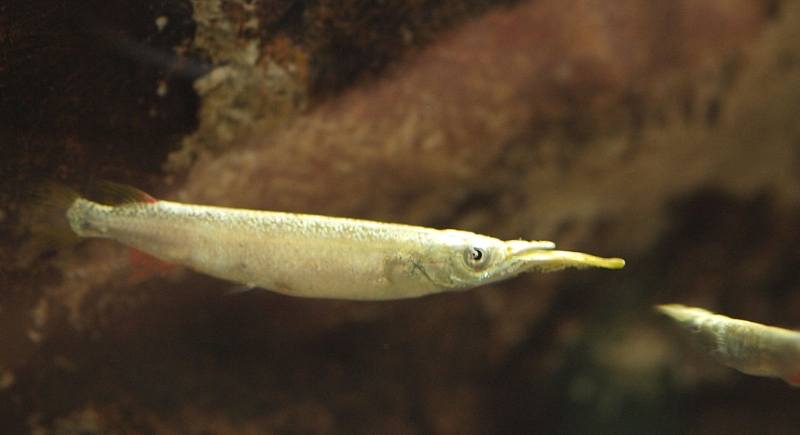
Credit: Wikimedia Commons
As a surface-dweller, Wrestling Halfbeak feeds almost entirely at the waterline using an elongated lower jaw. Males lock mouths during dominance contests, which explains the common name and the need for space. Floating plants and covered tanks matter, since this species readily jumps and prefers alkaline water at 75°F to 82°F.
Butterfly Goodeid
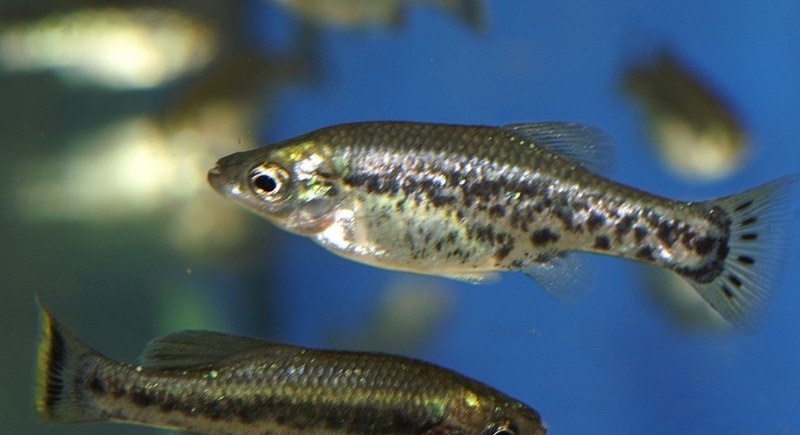
Credit: Wikimedia Commons
Wild populations have nearly vanished, which makes captive groups especially important. Males develop metallic blue scales and bright yellow tail edges, while females remain silver with dark speckles. Fry emerge close to 0.8 inches long and are usually ignored by adults, which simplifies breeding in planted tanks.
Trout Goodeid
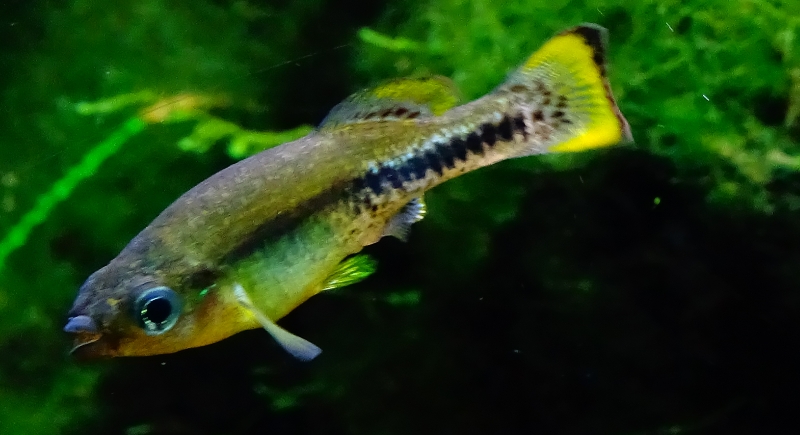
Credit: Wikimedia Commons
Trout Goodeid reaches 4 inches and carries dark speckling that resembles a stream fish. This Mexican species favors cooler water between 65°F and 75°F and feeds heavily on algae and plant matter. Females give birth to fewer fry than most livebearers, but each newborn is unusually large and ready to eat.
Least Killifish
Credit: Wikimedia Commons
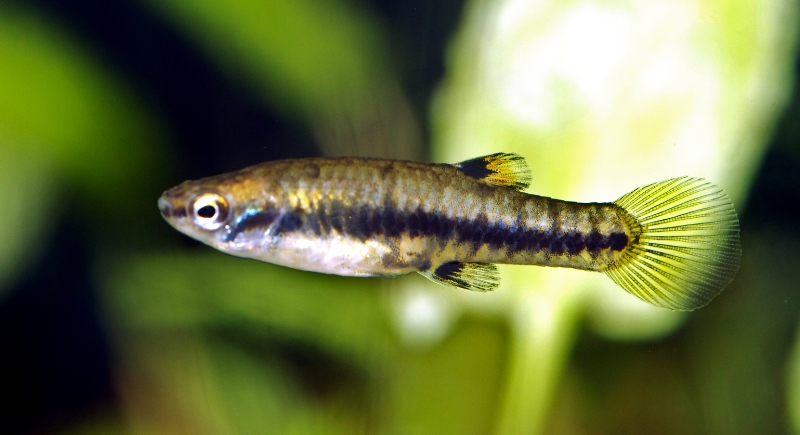
Despite the name, this fish belongs to the livebearer family and is the smallest native fish in the United States. Females release fry gradually over several days because embryos develop at different stages. The species tolerates fresh or slightly brackish water and grows to less than 1 inch in length.
Endler’s Livebearer
Credit: Wikimedia Commons
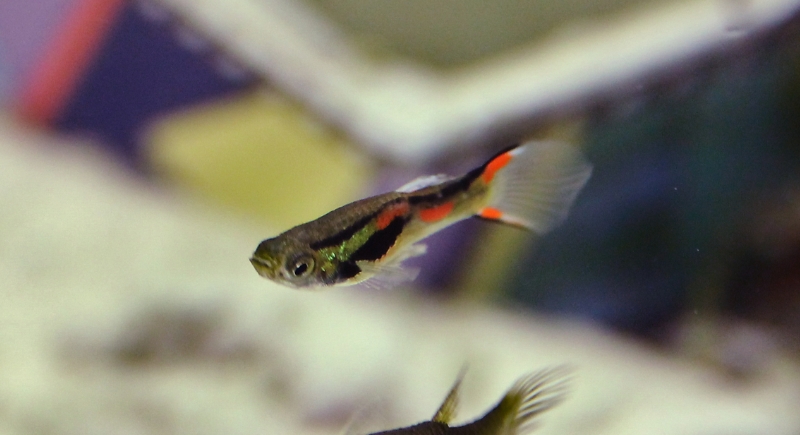
Wild-type Endlers remain hardier than many fancy guppy strains due to limited selective breeding. Males reach about 1 inch and display intense coloration, while females grow larger and stay plain. Broad tolerance for pH from 6.5 to 8.5 and temperatures up to 82°F makes them adaptable to many setups.