He Escaped Prison Three Times Just to Throw Rocks at His Enemy
On June 13, 1985, staff at the San Diego Zoo scrambled when a 250-pound captive scaled a retaining wall, crossed a public path, and wandered the grounds as if he knew exactly where he was going. Keepers eventually guided him back, tightened security, and assumed the problem was solved. It wasn’t. He escaped again that summer, then once more in early August. What unsettled staff most was his calm focus. He did not lash out or panic. He seemed to watch, wait, and choose his moment with care.
Who Was this Prisoner?
The escape artist was Ken Allen, a Bornean orangutan born February 13, 1971, at the San Diego Zoo. He was named after zookeepers Ken Willingham and Ben Allen, who helped raise him after his mother accidentally endangered him as an infant.
As a young animal, Ken removed cage bolts, slipped out at night, then rebuilt the enclosure before keepers arrived each morning. That level of planning shocked staff. By the mid-1980s, he had moved into a larger outdoor habitat, and it was then that his reputation exploded.
Ken weighed about 250 pounds as an adult, yet he relied on precision and patience more than strength. Reports described him calmly walking along zoo pathways during escapes, often stopping to watch other animals as if he were a curious visitor. Early encounters ended peacefully, with keepers guiding him back without force.
The Rival That Led to The Rock Attacks
For a time, Ken shared his enclosure with another orangutan named Otis, whom staff described as dominant and hard to handle. Tension between them was no secret. During one of his summer escapes, keepers found Ken near Otis’s enclosure, deliberately throwing rocks at him. It was not a random act. Staff had seen similar confrontations when the two were housed together.
That moment reshaped how the team understood the escapes. Ken was not simply roaming the zoo. He seemed focused on settling a score.
Security Upgrades And Smarter Escapes
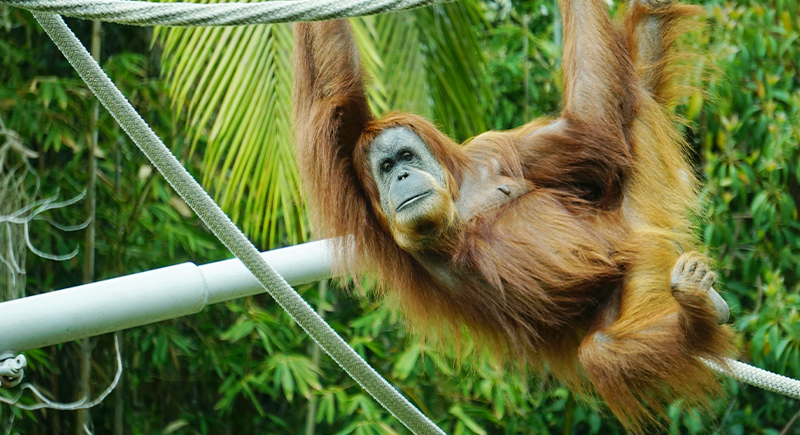
Image via Pexels/Cesar Aguilar
Zoo officials raised walls by about four feet, installed moats, and added electrified wires. They even hired professional rock climbers in the late 1980s to scan surfaces for grip points. The zoo eventually spent about $45,000 upgrading containment systems, but Ken kept adapting.
In one 1985 incident, workers accidentally left a crowbar inside the enclosure. Ken passed it to another orangutan named Vicki, who used it to pry open a window. In another case, two orangutans later used a five-foot squeegee to help climb a wall. Those events showed cooperative problem-solving. At one point, keepers switched to undercover observation because Ken recognized staff uniforms. He watched patterns closely and avoided acting when he knew he was being monitored.
The Escape That Nearly Went Wrong
Two years after his earlier escapes, a routine maintenance issue changed everything. Part of the moat around Ken’s enclosure was drained because of a pump problem. He noticed immediately. He crossed the dry stretch, climbed the outer rocks, and made it farther into the zoo than ever before. Staff caught up with him near the lion habitats and safely sedated him. After that day, response plans grew stricter and more serious.
What surprised officials was the public reaction. Instead of criticism, many people admired his determination. Local media called him “Hairy Houdini.” “Free Ken Allen” shirts and bumper stickers appeared around San Diego, and a small fan group even formed in his name.
Ken Allen died on December 1, 2000, at 29 after being diagnosed with B-cell lymphoma. The San Diego Zoo later installed a memorial plaque, closing a chapter that staff and visitors still talk about today.