
Dog ads in the 1980s weren’t just about kibble. They were art. Parody magazines like Canine Quarterly and Dogue took things to a strange and brilliant level. What started as a joke, ads for dogs dressed like British royalty or modeling Cold War fashion, ended up looking almost too real. And that was the point.
It started with a cheeky idea—make dogs look like high-society elites. But it was the execution that made people do a double-take. These weren’t just silly mockups; they had the sleek lighting, witty taglines, and editorial vibe of real fashion ads. So when a bowler-hat-wearing bulldog appeared in a spread titled “Hats Are Back,” the internet lost it—for good reason.
In Canine Quarterly, a Dalmatian wearing "military-grade underpants" looked straight out of a Calvin Klein shoot. The copy wasn’t just goofy. It was a full send-up of macho Cold War branding. “Reinforced crotch for durability…” could have come from a real 1980s defense ad. It mocked the era’s obsession with toughness, but through a spotted hound.
One of the most quoted ads from Dogue featured a sparkly diamond dog collar with the line: “She yearns for freedom and excitement. Collar her.” That sentence could have launched a perfume line or a lawsuit. But in the world of fake dog luxury, it played as both a joke and a critique.
Another fake ad showed a sleek doghouse, designed like a “Bavarian chalet.” It came with a price tag higher than some used cars. The text promised “alpine coziness” and “Swiss precision.” Of course, dogs don’t know what that means. They would probably chew the wood.
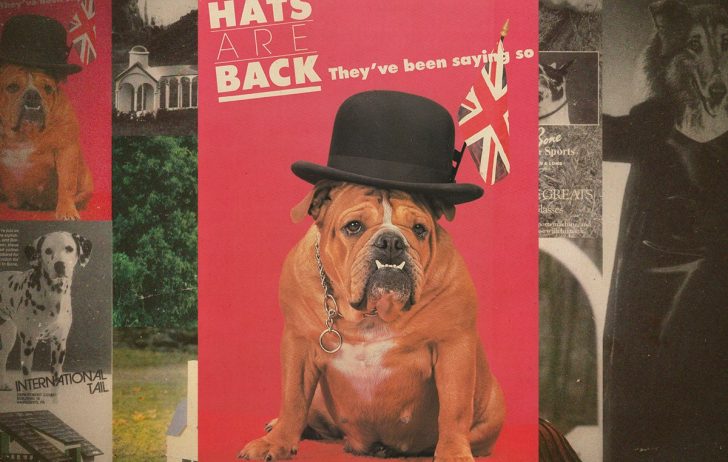
Dangerous Minds / Facebook / The weirdest part is that critics started comparing these fake dog ads to the work of actual artists. Plus, people loved them!
Barbara Kruger and Richard Prince used ad aesthetics to comment on consumerism. Canine Quarterly did the same, just with dogs. The comparison worked. This was not just a passing joke. These fake ads inspired a wave of other parodies. Titles like Vanity Fur and Good Mousekeeping popped up.
Back in the 1980s, dog ads weren’t just pushing pet food—they were weirdly beautiful. Satirical magazines like Canine Quarterly and Dogue took the concept of luxury to absurd, hilarious extremes. You’d turn the page and find a poodle in royal regalia or a bulldog in Cold War couture, shot like a fashion spread in Vogue. It was so convincing, it almost stopped being a joke. That was the genius of it.
You took it seriously because it looked serious. The lighting was flawless, the writing didn’t miss, and the whole thing had the confidence of a real campaign. These weren’t lazy punchlines—they were sharp and intentional. Laughing at a pug in designer frames was easy. Realizing you’d seen that look in an actual ad? That’s what stuck.
We trust dogs. We trust ads. But put them together, and suddenly you’re looking at a version of culture that feels a little too real—not because dogs are ridiculous, but because people are.