Hippos Are Actually Ripped and Have Less Body Fat Than You Think
Hippos are responsible for an estimated 500 human deaths each year in Africa, yet they are still widely described as slow, lazy, or overweight. Their wide mouths, round bodies, and short legs make them look built for lounging rather than power. That impression comes from watching them at rest, usually half-submerged and motionless for hours. In reality, adult hippos can weigh over 4,000 pounds and move with surprising speed and force. The real surprise lies beneath the surface, where their bodies are far leaner and more muscular than most people expect.
The Body Beneath the Bulk
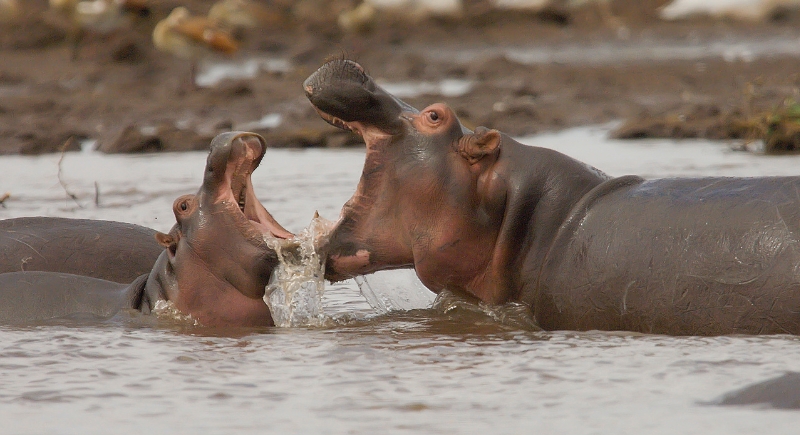
Image via Getty Images/webguzs
Knowing that a fully grown common hippopotamus can weigh around 4K pounds or 2K kilograms, encourages the idea that most of that mass must be fat, but it is not. Hippos carry thin subcutaneous fat, while the rest of that weight comes from dense muscle and thick skin that can measure around 2.4 inches or six centimeters.
That means the shape people read as softness is almost entirely functional tissue. Muscle supports territorial combat, sudden acceleration, and brute force collisions in shallow water. This also explains why hippos feel deceptively compact despite their size. Muscle packs tighter than fat. When a hippo moves, it moves as one solid unit rather than a loose one.
Muscle Is More Important Than Size
Hippos evolved for dominance in short bursts. On land, hippos can reach speeds of about 19 miles per hour or 30 kilometers per hour over short distances. That speed comes from powerful leg muscles driving a massive body forward with surprising efficiency. Acceleration matters more than distance in territorial defense, and hippos excel at it.
In water, the same muscle mass lets them push off riverbeds and lake floors with force. Hippos do not swim in the traditional sense. They walk and launch themselves forward, using momentum and strength rather than buoyancy. Muscle turns shallow water into an extension of land.
Herbivore Does Not Mean Harmless
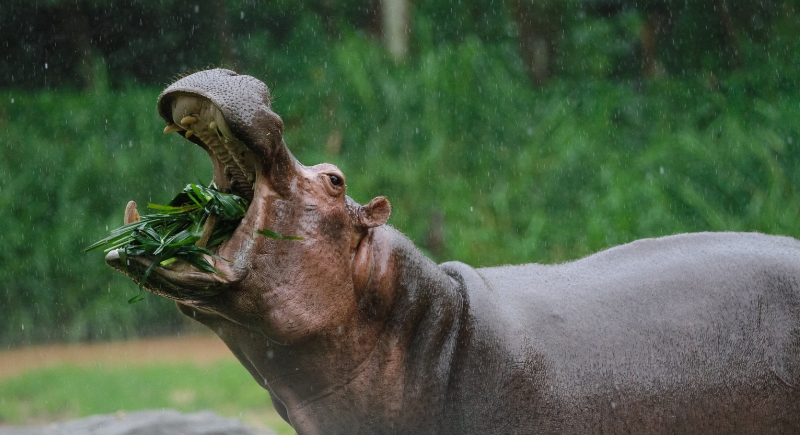
Image via Pexels/Mehmet Turgut Kirkgoz
Hippos eat plants, mostly grasses, and this often softens how people judge their physical build. Herbivory in hippos supports muscle maintenance rather than fat storage. Their digestive system fuels strength, not speed over distance. Territorial behavior then gives that strength purpose. Adult males defend space aggressively, reacting to intrusion rather than hunger. This explains why hippos kill without feeding. Muscle supports dominance, but fat would only slow the process down.
Every part of a hippo’s body favors confrontation. Thick skin protects muscle, low fat improves power transfer, dense bone anchors leverage, and short legs increase stability rather than grace. This build also explains why hippos rank among the most dangerous animals to humans in Africa, with estimates reaching around 500 human deaths per year. People misread the body, but the body never misfires. Under that rounded outline sits a land animal built less like a couch and more like a battering ram.