Horses Form Genuine Emotional Attachments to Soft Toys for Comfort
Horses depend strongly on social contact, and changes in routine often show up quickly in their behavior. Isolation, injury recovery, transport, and early separation can lead to signs of strain, such as pacing, repetitive movements, and uneven rest. Caretakers closely monitor these shifts because prolonged stress can slow healing, disrupt digestion, and impact overall health.
Across barns and sanctuaries, caregivers have noticed a recurring behavior during these vulnerable periods. Some horses choose to stay close to soft, plush objects when regular companionship is missing.
These objects tend to appear during recovery, early development, or temporary isolation. Orphaned foals often settle beside them, while injured horses keep them close during rest. In some cases, horses even move them around their stalls. The behavior is observed across various environments and care routines. Care teams frequently observe calmer behavior, more consistent rest, and fewer stress-related habits when a soft object remains nearby. Limited heart rate data also aligns with these observations, showing lower resting levels.
Why Social Animals Seek Substitutes
Horses evolved to live in herds, and constant proximity to others helps regulate stress and maintain awareness of surroundings. Separation interrupts that system. Stalling alone, travel, injury recovery, or loss of a companion can trigger pacing, repetitive movements, and heightened alertness.
A stuffed toy does not replace another horse, and caretakers remain clear about that. The value sits in familiarity and texture. Soft objects provide physical contact and a predictable presence. For a horse confined to a stall, that consistency can ease tension during rest. Handlers describe it as a small anchor that reduces restlessness.
Some facilities use other animals as companions when possible, such as goats or ponies. When that option does not exist, a plush object becomes a viable alternative that still offers tactile contact and routine.
How Attachment Shows Up in Real Life
The bond goes beyond simple comfort. Some horses gently mouth or nudge their toys, brushing aside shavings or repositioning them before settling down. Others carry them across the stall, leaving them near hay, water, or familiar resting spots. The object becomes part of the horse’s space, handled with intention rather than treated as background clutter.
Caretakers also note that this attachment rarely appears overnight. A toy might sit untouched for days or weeks. Over time, especially during periods of stress or change, the horse begins to return to it on its own, choosing its presence rather than being directed toward it.
The Role of Smell and Familiarity
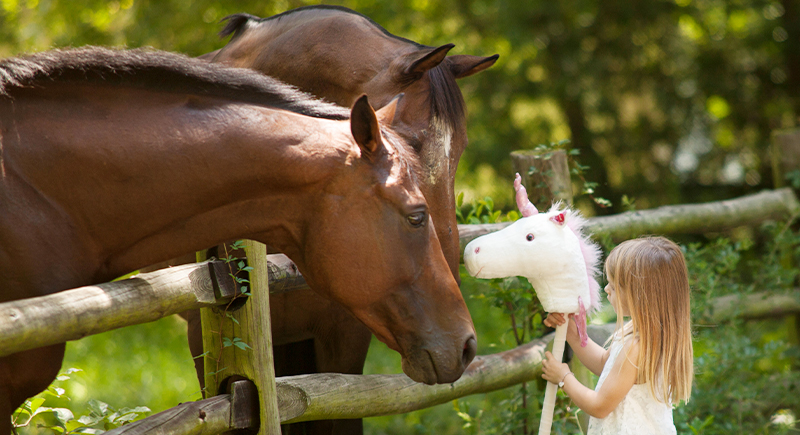
Image via iStockphoto/photo_Y
Horses depend strongly on scent to recognize both companions and surroundings. Handlers often see better acceptance when comfort objects carry familiar barn smells. Toys kept near bedding, feed areas, or regular resting spots tend to be embraced more quickly, especially during travel or relocation. This follows the same logic as using familiar blankets or feed tubs, but with one key difference. A soft object allows physical contact. Touch, pressure, and closeness help support relaxation during rest.
The growing use of soft toys reflects an awareness of emotional needs without assigning human traits to animals. Many caretakers say they wish they had introduced comfort objects earlier, particularly during long recoveries or end-of-life care. Small changes like this can ease daily stress without altering routines. A soft toy cannot replace a herd, but it can provide something steady when social contact is limited.