How Google AI Is Trying to Decode What Dolphins Are Saying to Each Other
Since 1985, the Wild Dolphin Project has been recording Atlantic spotted dolphins in the Bahamas using underwater audio and video. Researchers began matching specific sounds with behavior. Signature whistles are used by mothers and calves to reconnect, burst-pulse squawks appear during fights, and rapid click buzzes show up in courtship or while chasing prey like sharks.
That dataset gave Google a rare advantage: consistent, real-world recordings with clear context. Instead of building from scratch, the company trained a model called DolphinGemma on this archive. It builds on Google’s Gemma architecture and focuses on identifying recurring sound patterns, sequences, and structures across thousands of interactions.
How DolphinGemma Tries To Make Sense Of Sound
DolphinGemma works like a language model, but it processes audio instead of text. It listens to dolphin vocalizations and predicts what sound is likely to come next. In this way, it groups similar sounds and forms clusters that may function like words or short phrases.
This matters because manual analysis cannot keep up with the scale. Decades of recordings would take far too long to review by hand. The model can process the same data quickly and flag patterns.
Google also uses its SoundStream technology to convert raw dolphin sounds into a format the model can understand. Clean input is critical, so Pixel phone audio systems help filter out background noise like waves and boat engines. Without that step, overlapping sounds would blur the patterns the model is trying to detect.
Testing Communication In The Ocean
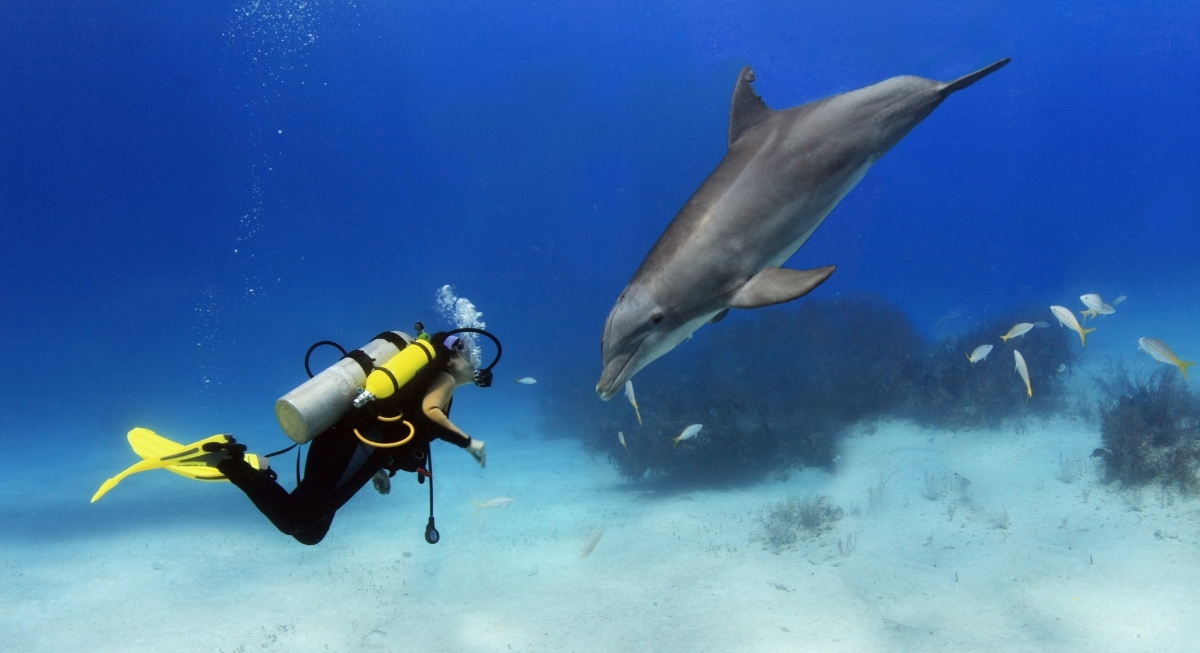
Image via Getty Images/Flicketti
The project also moves into real-world testing with a device called CHAT, short for Cetacean Hearing Augmentation Telemetry. Researchers use it while swimming alongside dolphins, producing artificial whistle-like sounds linked to specific objects such as seagrass or sargassum.
The idea is to create a shared reference point. A diver produces a sound linked to an object, then passes that object back and forth. If a dolphin repeats the sound, the diver responds by offering the same item. Over time, the system could build a basic exchange in which a dolphin uses a sound to request something.
The hardware behind CHAT runs directly on Google Pixel phones, including earlier models like the Pixel 6 and newer versions like the Pixel 9. These devices run both deep learning models and template-matching systems simultaneously. This setup lets researchers process signals in real-world conditions rather than relying on lab analysis.
The Line Between Learning And Understanding
This is where the project gets complicated. Repeating a sound does not automatically mean a dolphin understands it. Training animals to associate actions with rewards is common across species, and researchers have to separate conditioned behavior from actual communication.
Some scientists point out that variation in dolphin sounds does not always equal a distinct meaning. A different whistle might reflect context or emotion rather than a clear “word.” Others argue that true language requires a level of structure and flexibility that goes far beyond labeling objects.
Even so, the system continues to improve as more data is fed into it. DolphinGemma continues to organize sounds into patterns, and those patterns can be compared with real-world behavior to test possible meanings.
A Larger Push To Decode Animal Communication
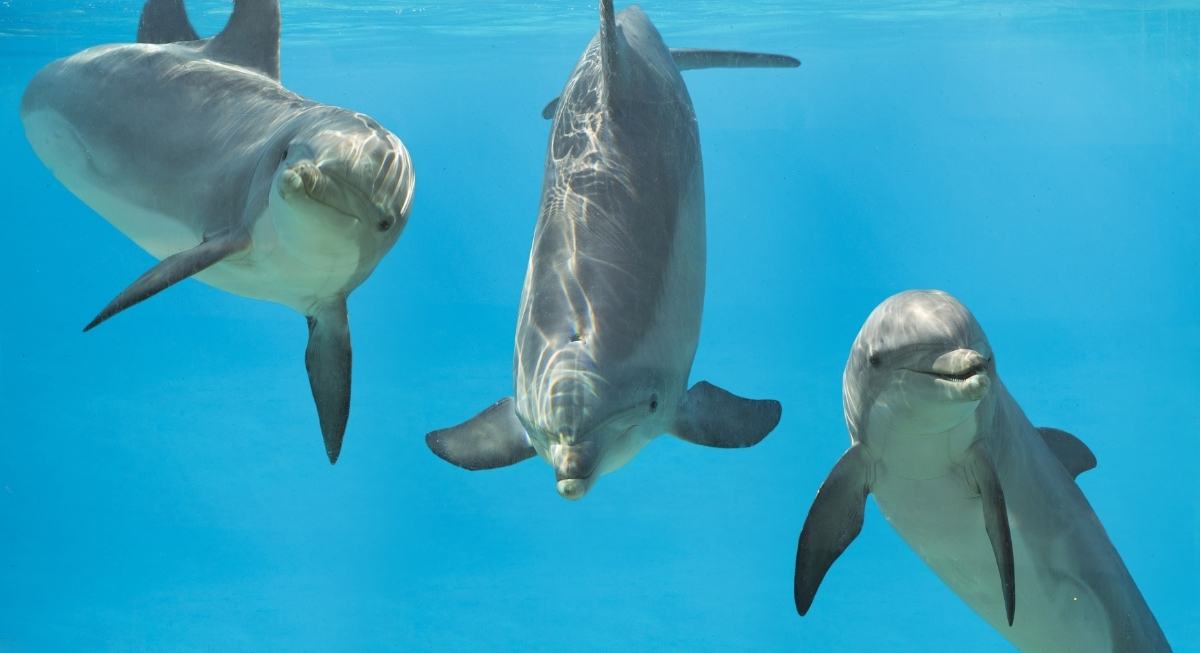
Image via Getty Images/Schnapps2012
AI is now being used to study animal communication across species. Projects like the Cetacean Translation Initiative focus on sperm whales, while other systems analyze sounds ranging from rodent squeaks to broader cross-species vocal data.
Google released DolphinGemma as an open model in the summer of 2025, giving researchers wider access to the system. This could extend research beyond Atlantic spotted dolphins to species like bottlenose and spinner dolphins with further training.