
Three routine moments your cat hijacks on the mat, and how I stop fighting it and still finish the flow.
My cat turns Down Dog into a scent inspection
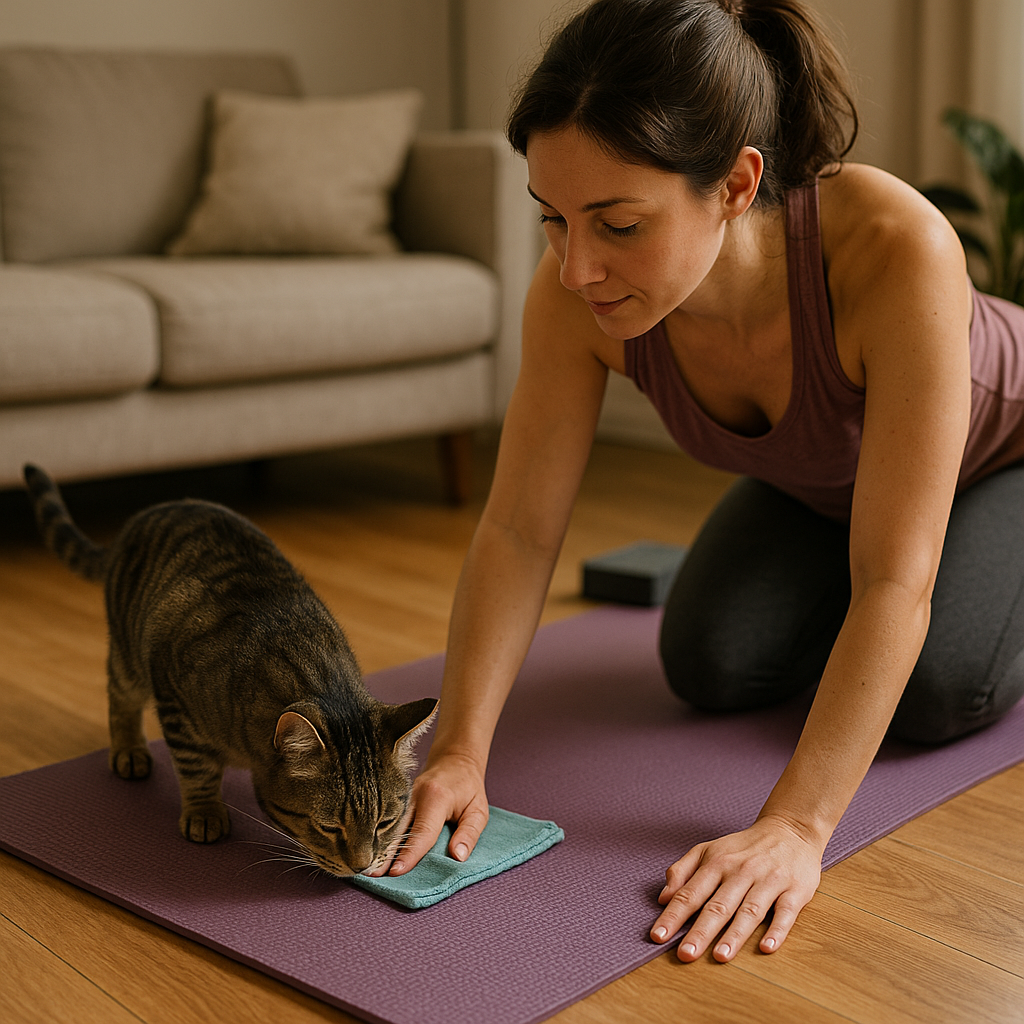
I used to roll out my mat like I was entering my sanctuary. My cat sees it as a fresh bulletin board. As soon as the mat hits the floor, she puts her nose down and starts sniffing. If I try to shoo her off right away, she doubles down. And then my "down dog" turns into me hovering, waiting for the inspection to end.
So I started treating the first minute as her minute on purpose. I unroll the mat, then I kneel next to it and do two boring things that somehow make the rest of the session possible: I wipe one edge with a damp microfiber cloth (mostly for my own sanity), and I offer a decoy texture right next to the top corner. A folded bath towel works, but my favorite is one of those cheap rubber jar opener pads because it grips the floor and gives her another texture to explore. She'll rub her cheek on it, step-step-step in place, and then loaf right there.
Now, when I go into the down dog, I can still hear the sound of her sniffing when I move through a vinyasa, but it doesn't derail me. It's also pretty consistent: if I skip the opening sniff window and jump straight into sun salutations, she follows me from pose to pose, tapping the mat with one paw.
My cat's purr became my cue to slow down
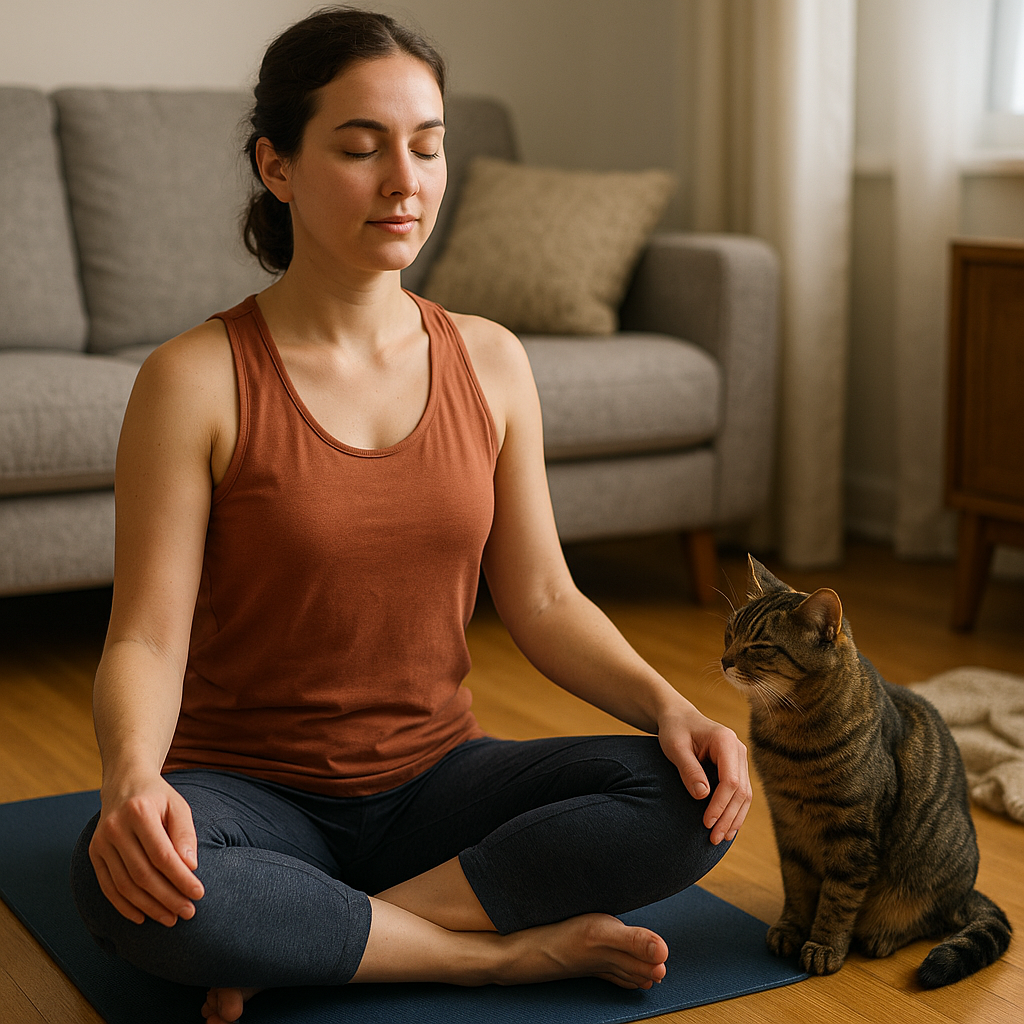
There's a very specific moment in my morning routine when the whole house goes from clumsy to steady: I sit cross-legged at the top of the mat, close my eyes, and my cat chooses a spot nearby. Then the purr starts. I used to interpret it as something sweet and supportive, like she was cheering me on, but it's not always encouragement. Cats purr for different reasons, including when they're comfortable, stressed, or in pain.
If you do yoga at home, you know how easy it is to rush the first few breaths because your brain is already making coffee lists. When the purring is happening, I can't rush. I use the steady purring as a reminder to slow my breathing.
I also stopped fighting where she lands. If I try to place her bed on one side of the mat, she'll pick the opposite side and sit with her back to me. What works better is setting a small, washable blanket near my right hip (always the right, I don't make the rules) and leaving it slightly rumpled. She seems to prefer a blanket she can knead. Once she starts kneading, the purr ramps up, and I can move into seated twists without a surprise headbutt to the ribs.
I stopped fighting her for space on the mat
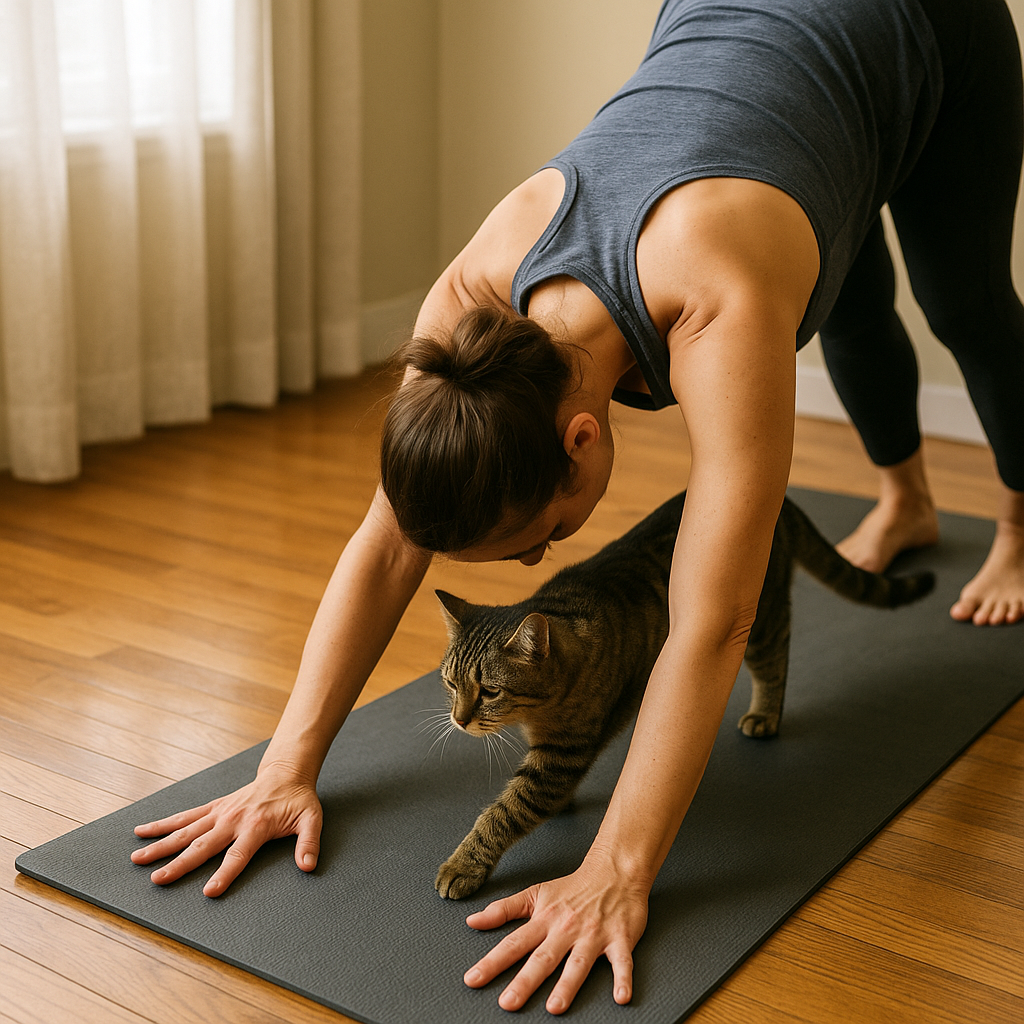
For a long time, my big goal during morning yoga was simple: keep the cat from stepping on my hands. It felt like a reasonable boundary. But the harder I tried to keep her away, the more I noticed myself tensing my wrists and shoulders, especially in plank and downward dog. I'd splay my fingers extra wide and press down like I was trying to glue myself to the mat. My wrists would complain before I'd even made it to the second side of a flow.
The switch happened by accident on a morning when she was determined to be involved. She walked straight through my down dog, paused, and gently put one paw on the back of my right hand like she was testing a bridge. Instead of jerking away, I paused and gave her room to move past me. Once she left, I noticed I wasn't gripping the mat as hard.
Now I plan for the paw-traffic. I set up on a grippy mat (mine's a Manduka, but any decent sticky one works), and I adjust my position when she comes near my hands. In tabletop, I keep my knees a touch wider than hip-width so I can rock back if she cuts across. In plank, I don't lock my elbows, and I think more about pushing the floor away through the heel of my hand than death-gripping with my fingers. If she comes close, I pause in a controlled way, shift to forearms for a breath or two, then pop back up when she loses interest.