
If you live with multiple pets, it can be hard to tell which one is most attached to you. Instead of focusing only on cuddles, watch where each pet chooses to stay when you move around the house, how they respond to you, and which routines they associate with you.
The baby gate shows how pets choose their space
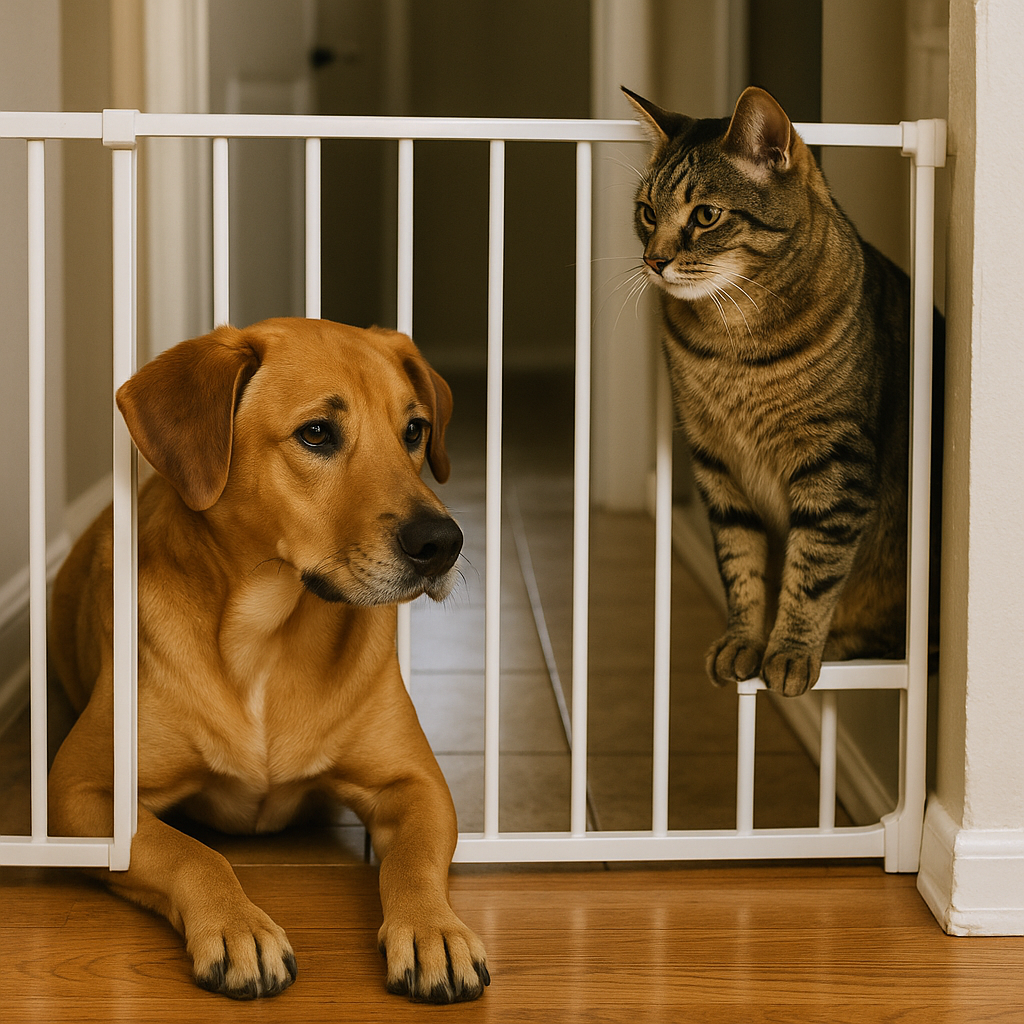
I didn't understand how much a baby gate changes the whole social map until I lived in a place where we used one constantly: laundry room closed off, hallway open, cat-only room behind it at night. A gate creates a predictable place to watch how the animals move around each other. In a busy household, everyone assumes the favorite person is the one the pet cuddles with, but in multi-pet homes, you may notice which pets choose to stay close to you when the route gets narrow.
Stand back and just notice the little stuff. A pet that is especially attached to you may choose a spot where it can stay close or keep you in view. They'll lie parallel to the gate, shoulder aimed at the opening, because it keeps eyes on you and keeps an escape lane if the other animal rushes in.
Couch corners and armrests: where pets choose to stay
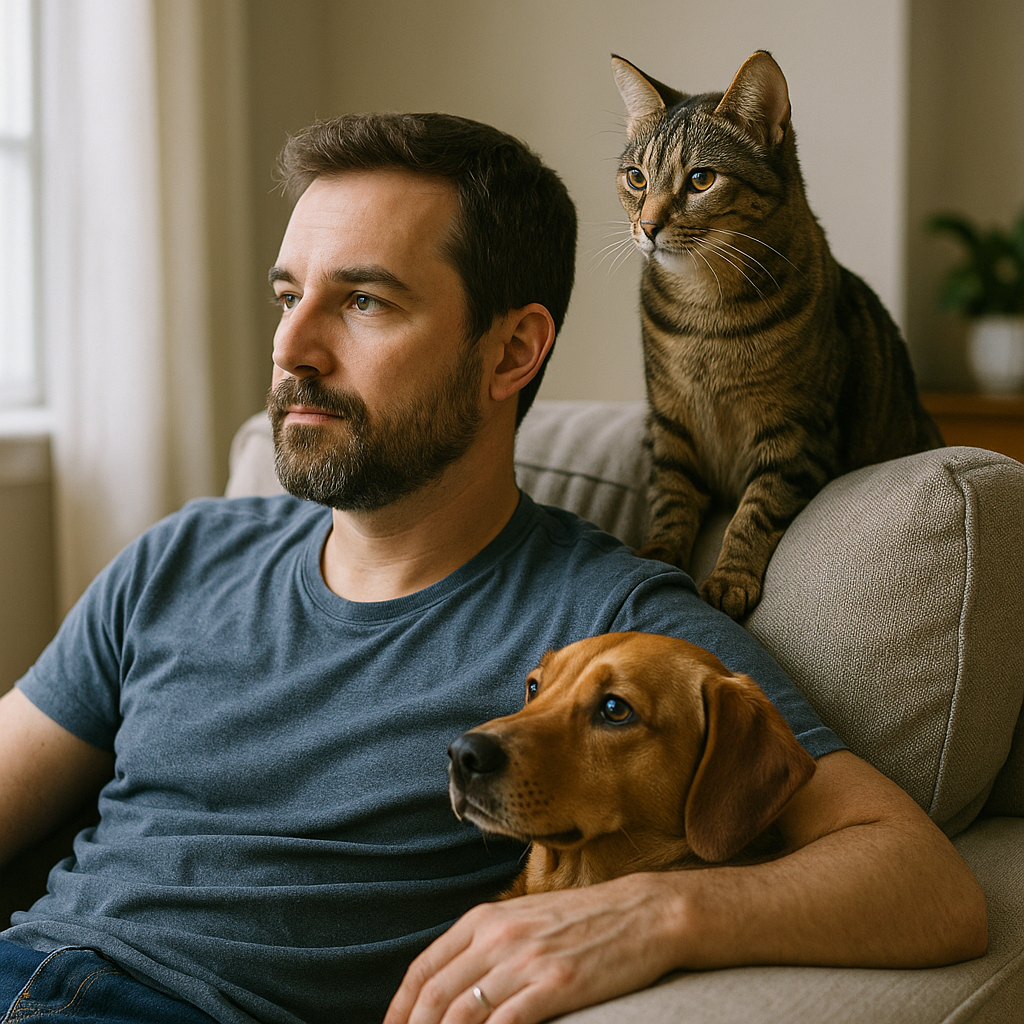
If you want the fastest shortcut to who your pet prefers in a loud, full house, watch how each animal chooses its spot on the couch. In a multi-pet home, those spots can show which animals prefer to stay close to you. An animal that prefers being close to you may choose a spot that keeps you within easy reach.
For cats, it's often the armrest or the back of the couch behind your head. That position may be about both affection and access to space. From there, they can rub your hair when they want contact, bop your shoulder when they want you to move, and keep an eye on the dog without being at dog level. If there are two cats, you'll usually see one take the head-adjacent real estate while the other settles for the foot zone or the adjacent cushion. Those patterns can be interesting to watch.
For dogs, especially in mixed-size households, it's the tight wedge between your thigh and the couch arm, or the little triangle formed by your bent knees when you're half-reclined. I've had a dog who'd pretend he was just tired, then slowly inch until his back was pressed against my shin. It looked like comfort. It was also a choice: the second dog can't slide in without stepping over him, and most won't. A dog may use its body to maintain its spot without showing obvious aggression.
Here's the part I didn't notice for years: some pets look toward their preferred person when something unexpected happens, particularly if they've learned to rely on you for security. It's a weirdly practical form of trust, and it shows up most clearly when the room has multiple animals making multiple predictions.
If you want to observe this more closely, try this once: stand up mid-show, walk to the other side of the room, and sit down. Don't call anyone. If a pet repeatedly repositions to stay close to you, that may be one sign of a preference for proximity. Those spots can be useful clues if you notice the same pet repeatedly choosing to stay close to you.
The water bowl can reveal pet routines
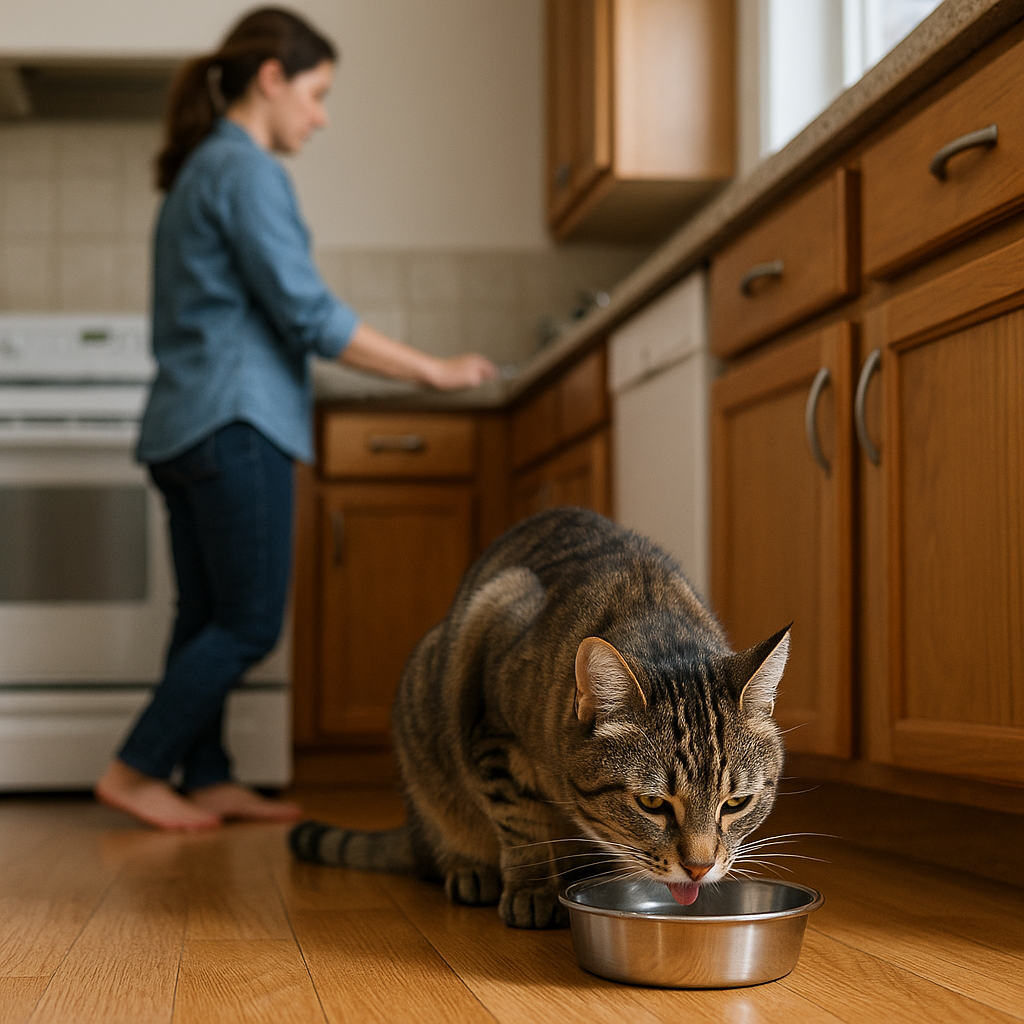
You may also notice patterns around the water bowl, especially if your pets have different routines. I started noticing it because one of my cats would only take a long drink if I was standing near the sink. If I walked away, she'd take a couple of quick laps, look up, and then leave.
Also, watch who uses the bowl as a social buffer. Some cats will approach, drink for three seconds, then sit facing outward, basically using the bowl area as a polite excuse to hold a spot near you. Dogs do a version of this, too. They'll wander over, take a few gulps, then park themselves between you and the hallway, like they just happened to end up there.
If you have a fountain, the sound adds another layer. Some animals love the trickle and will drink whenever, but the cautious ones will wait until the room is quiet or until you're present.
One simple thing to try for a week: keep the bowl in the same place, but be consistent about who refills it. The pet may start associating that routine with the person who refills the bowl. Over time, those repeated routines may become part of a pet's relationship with a particular person.