If Koalas Can’t Find a Mate, They Just Give Up and Nap
Koalas have built a reputation as low-key animals. While other species compete for territory or put on elaborate courtship displays, koalas often seem to call it a day and go back to sleep instead.
Their lifestyle makes that understandable. Koalas survive on eucalyptus leaves, which are tough, fibrous, and highly toxic, requiring specialized digestion. Even after all that effort, the energy they gain from the leaves is limited.
Because of this, koalas operate on a strict daily energy budget. They sleep between 18 and 20 hours a day, not out of laziness, but because resting helps them conserve the small amount of energy their diet provides.
Breeding Season Is Loud, Competitive, and Short
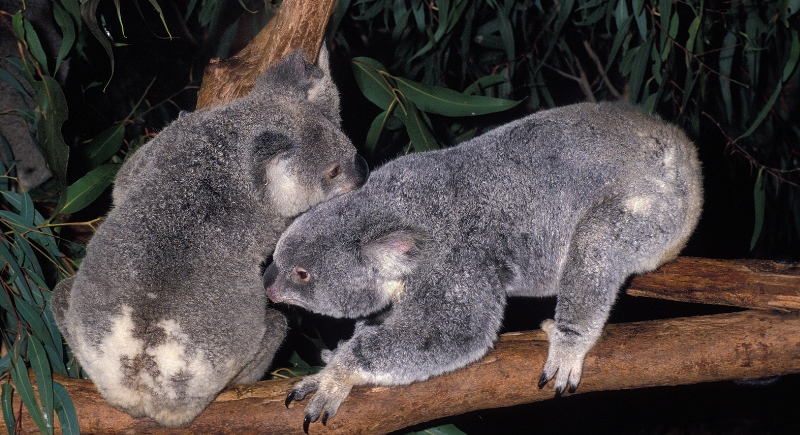
Image via Getty Images/slowmotiongli
Most of a koala’s year is spent alone, but breeding season changes the rhythm. In Australia, mating season usually runs from about September through March. During this time, male koalas produce deep bellows that can travel more than half a mile through the forest canopy. These calls serve two jobs at once. They attract females and warn rival males to keep their distance.
Females do not accept every suitor. They evaluate males based on call strength, size, and overall condition. If a female rejects a male, she may ignore him or become aggressive toward him. Males often avoid pushing the situation because fights burn energy and can lead to injuries.
What Happens After Rejection
If a male koala fails to attract a mate, he usually reduces movement and activity. Some shift to quieter edges of their territory to avoid competition. Others simply return to their normal resting cycle. From the outside, this can look like giving up, but biologically, it makes sense.
Koalas do not process rejection the way humans do. There is no evidence they feel disappointment about failed mating attempts. What researchers see instead is instinct-driven adjustment.
Moving across tree ranges, calling repeatedly, and searching for females all cost energy. When success does not come quickly, continuing to search nonstop can drain the reserves needed just to survive. Resting helps stabilize the body condition so the animal can remain healthy for future breeding opportunities. Later in the season, males often resume loud calls once energy reserves stabilize.
Females exhibit similar patterns in response to unwanted attention. They often stay within familiar feeding trees and reduce movement. This lowers stress and limits unnecessary energy loss.
The Bigger Picture
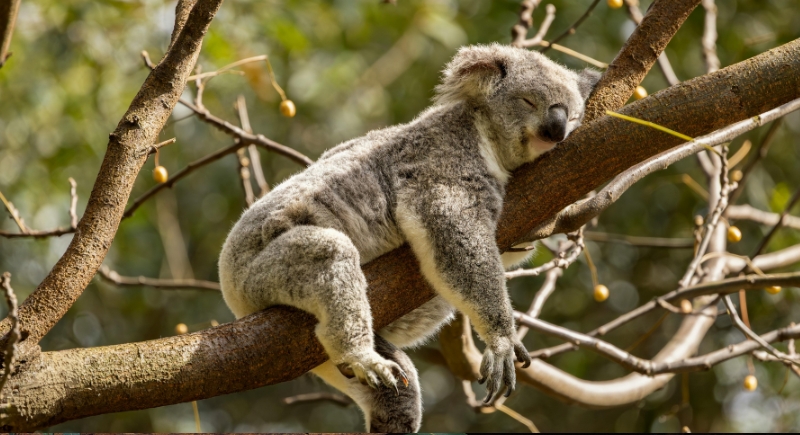
Image via Pexels/Stuart Robinson
The idea of a koala choosing sleep over romantic stress connects easily with people. It fits modern humor about burnout and emotional exhaustion. It can sound like life advice, but the real explanation comes down to biology.
Koalas live in conditions where food provides limited usable energy. Every decision ties back to maintaining body condition. Their daily rhythm, movement, and breeding behavior all reflect that constraint.
If a koala does not find a mate, it may appear to simply return to sleep. What it actually does is maintain balance in a system shaped over millions of years to prioritize survival first.