
Dogs and cats often share sleeping spaces, and dogs can pick up behaviors from animals they live with. If your dog starts adopting the cat's favorite resting positions or spots, it may be a combination of imitation, comfort, and learning what works in that household.
The Loaf Position
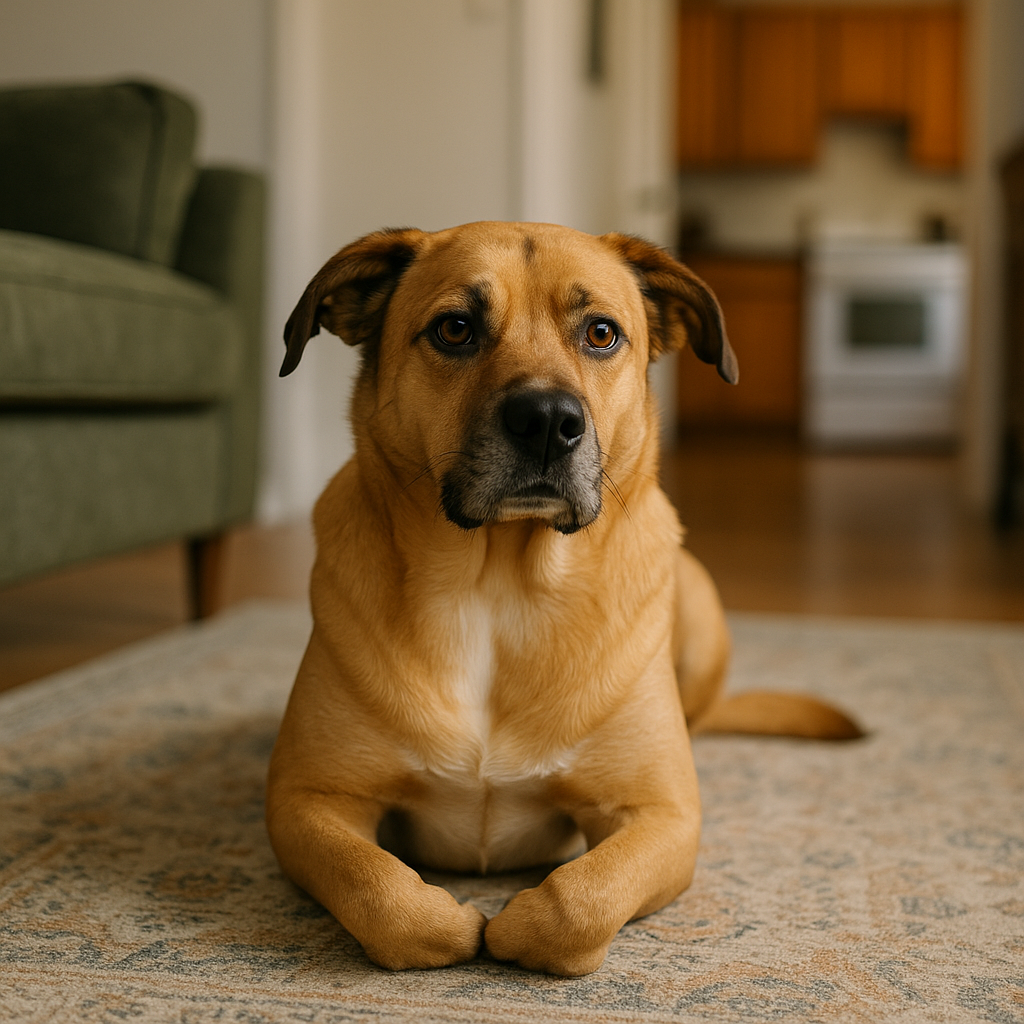
I didn't notice my dog's loafing until I realized he had started using the same tucked-paws-under, chest-up position I usually saw my cat use. He's not built for it. His elbows splay, his back end never quite disappears, and he looks mildly insulted by gravity. But the point isn't elegance. The position lets him rest while keeping his head up and ready to respond if something catches his attention.
Cats are masters at this. They'll park themselves in a doorway or at the edge of the couch and loaf there like they're not watching anything, while their eyes follow every bag crinkle and every footstep. Dogs have their own resting positions, but some may adopt positions they see other animals using. They may sprawl, curl up, or settle into several other resting positions. When a dog starts loafing after living with a cat, the cat may be one influence, although comfort, temperature, and simply discovering a new resting position can also explain the change.
The location can offer another clue that the cat may be influencing the behavior. If he also starts choosing the cat's usual spots, he may be following the cat to spots that are comfortable, cool, sunny, or useful for keeping an eye on the household.
The Belly-Up Sleeping Position
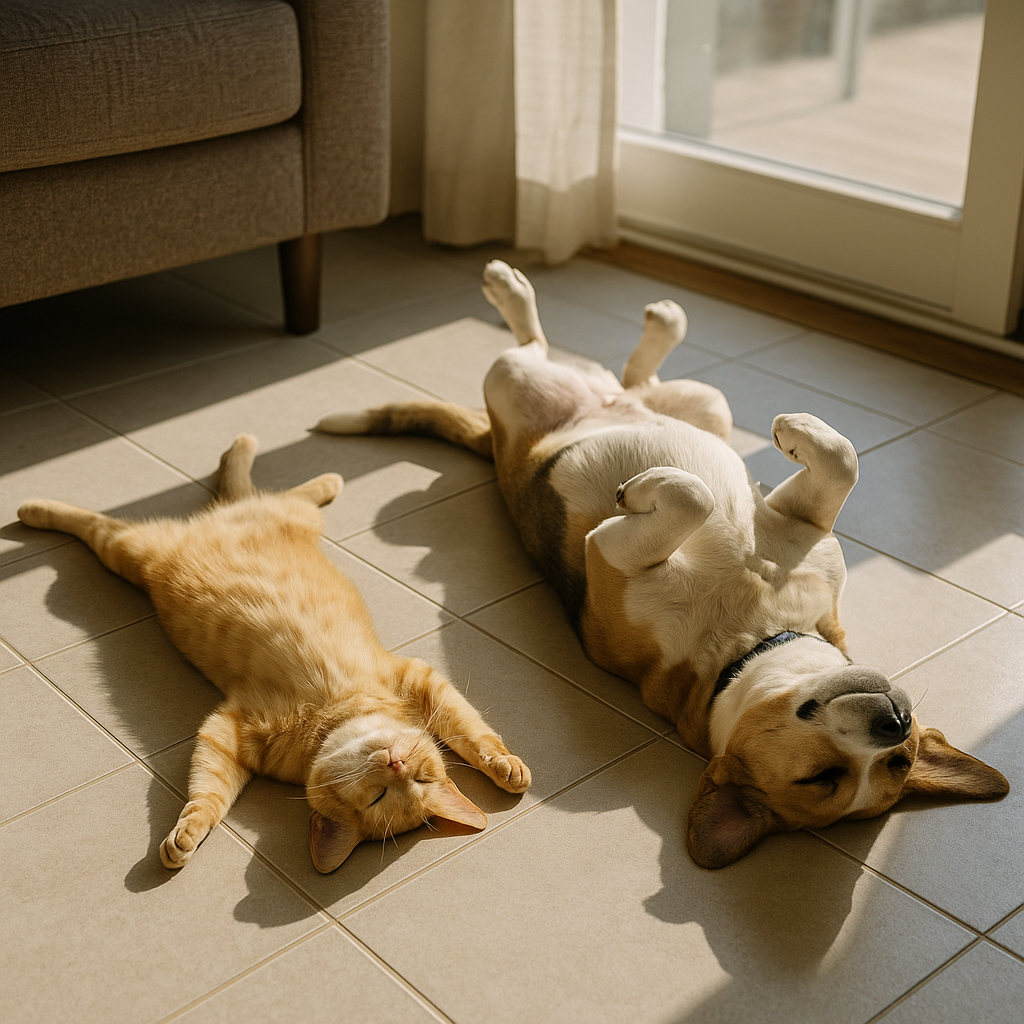
People love to say, "A belly-up dog is showing trust." Sometimes. But when the belly-up habit shows up right after your cat starts doing those shameless, legs-everywhere sunbathing sessions, I think it's often simpler: your dog just watched a small animal successfully run the thermostat with body language.
Cats may stretch out or expose their bellies when they're comfortable, and they may also choose different positions depending on temperature and where they want to rest. They may stretch out on a cool surface when they're warm, or choose an exposed position when they feel comfortable in their surroundings. Dogs can learn by watching other animals, so they may notice that the cat repeatedly chooses a particular spot and appears comfortable there.
The dog version is usually a little clunkier. You'll see the roll happen in stages: shoulder drops, hips follow, then the legs go up like he's trying to remember where they belong.
The Curled-Up Position
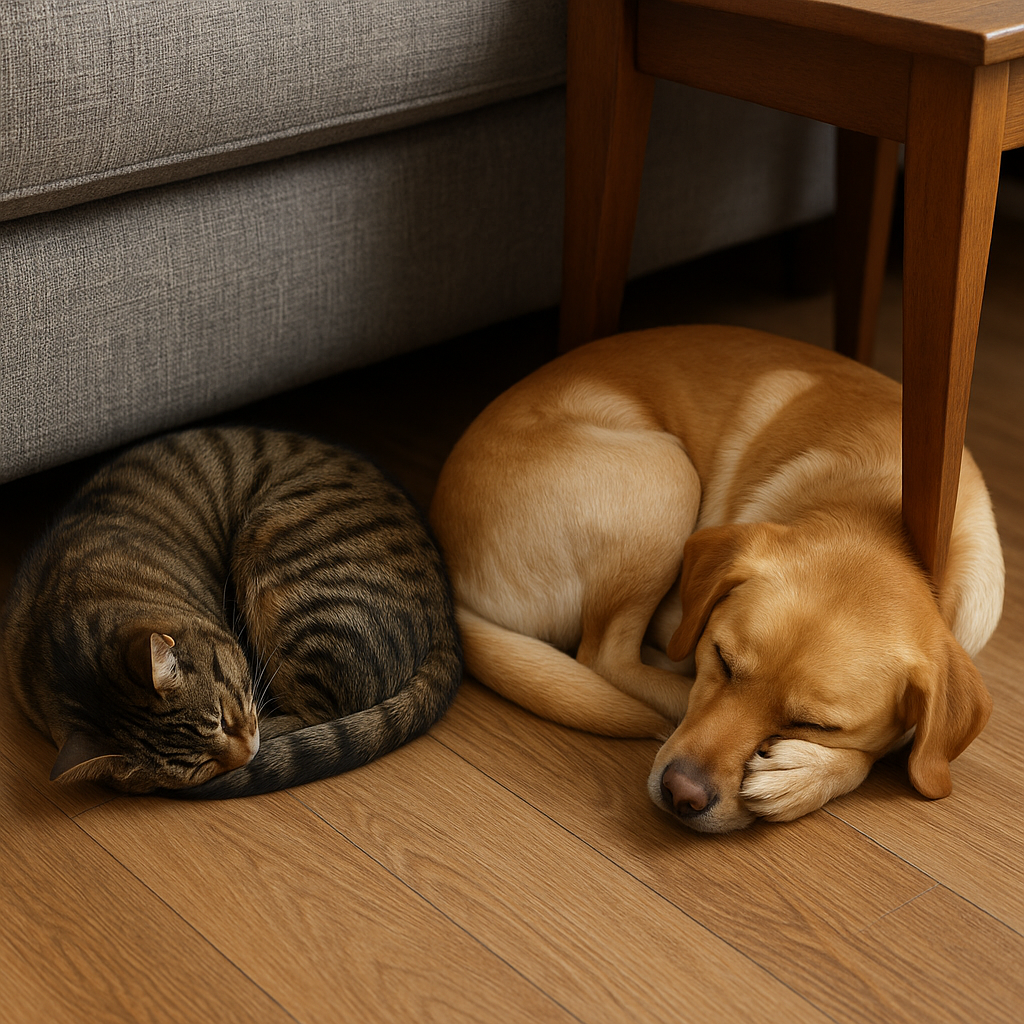
Every animal curls up sometimes. The cat does it like origami. The dog does it like he's trying to pack a sleeping bag with a body still inside it. When a dog starts mimicking the cat's tight donut, what changes isn't the curl itself. It's the timing and the extras that come with it.
Cats curl up to conserve heat, sure, but it can also be a way of settling down while blocking out some of the activity around them. My cat does it when the dishwasher is running or when the TV gets turned up during a game. The dog used to just leave the room. After a couple of months of watching her curl and stay, he started trying the same thing.
The tell is where the head goes. A dog may curl more tightly for warmth, comfort, or simply because that position feels familiar. I've watched mine wedge his snout under his tail when the vacuum comes out because he's trying to reduce input without relocating.
If you think the cat may be influencing the behavior, look for patterns that occur alongside the new sleeping position, such as choosing a tighter space, rotating so his back faces the busy part of the room, or settling with his body pressed against the couch base like it's a wall.