
Three body-language tells I watch for: how they blink, how they choose distance, and what their tail does when nothing is happening.
The slow blink, the half blink, and the stare
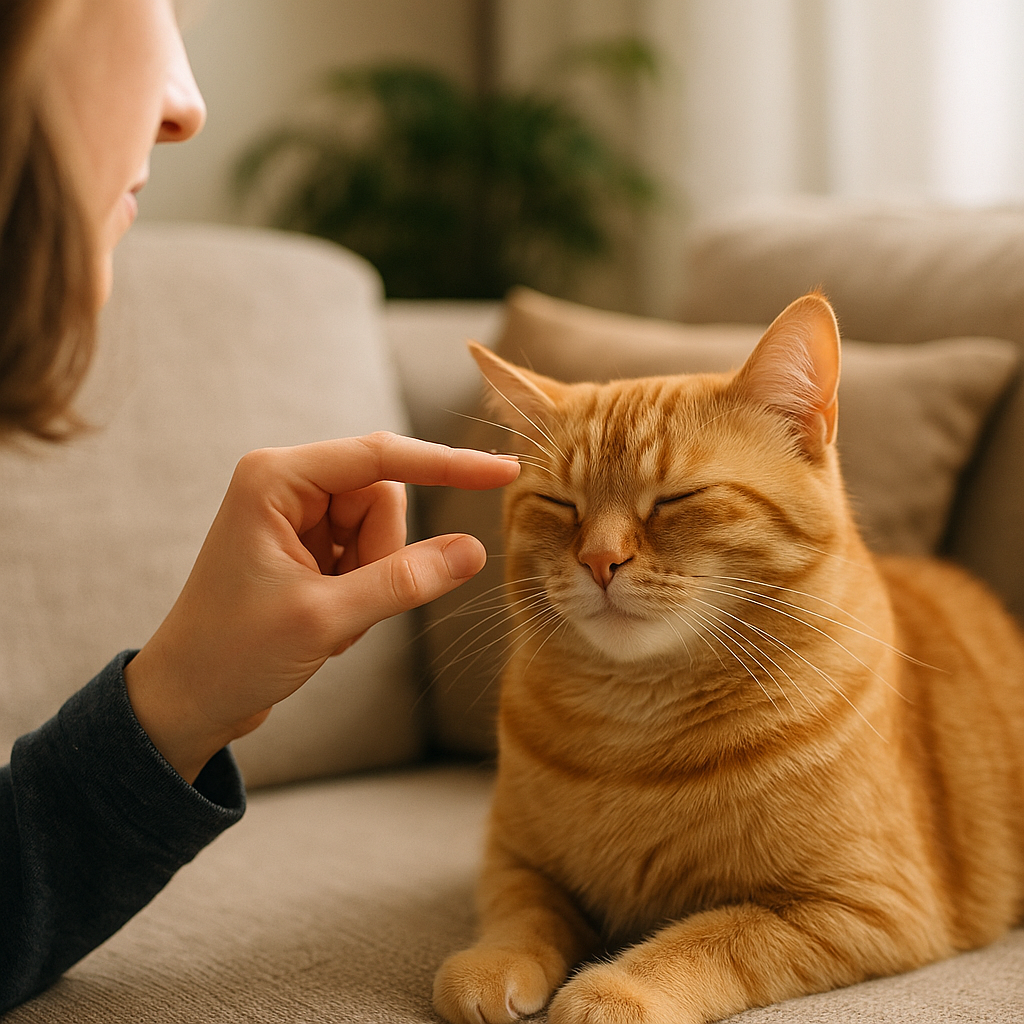
I started paying attention to eyes because they change before anything else does. The body might still be doing the same routine, but the face gives it away. With my cat, a true slow blink looks like this: the eyelids lower all the way, pause for a beat, then open in a lazy, unhurried way. Sometimes the whisker pads soften at the same time, and the whole expression turns a little squishy. If I slow blink back, he either mirrors it or does that tiny half-close that says, yeah, fine, you can exist in my space. That is comfort.
A half blink can mean something else, though. If the lids are at half-mast but the rest of the face stays tight, I look for other tension cues: ears angled sideways, mouth closed into a straight line, whiskers pushed forward as if he is bracing. That combination, in my house, usually shows up when the Roomba is docked but not quite forgotten, or when a visitor is talking too loudly. He is trying to look casual while staying on alert.
And then there is the stare. Dogs can do it too, especially when they are tracking a squirrel outside, but the stare I care about is the unblinking, fixed look that happens indoors when nothing exciting is happening. If my dog locks eyes and holds it, I glance at her mouth. Soft mouth with a loose tongue and easy corners, fine. Closed mouth, still forehead, eyes wide enough that you start seeing the whites, that is not a cuddle invitation. Taken together, those signs tell me she's uncomfortable enough that I should give her more space. It sounds dramatic, but it is one of the cleanest signals you can learn because it repeats. Once you notice it, you can't unsee it.
When they choose distance (and when they keep checking it)
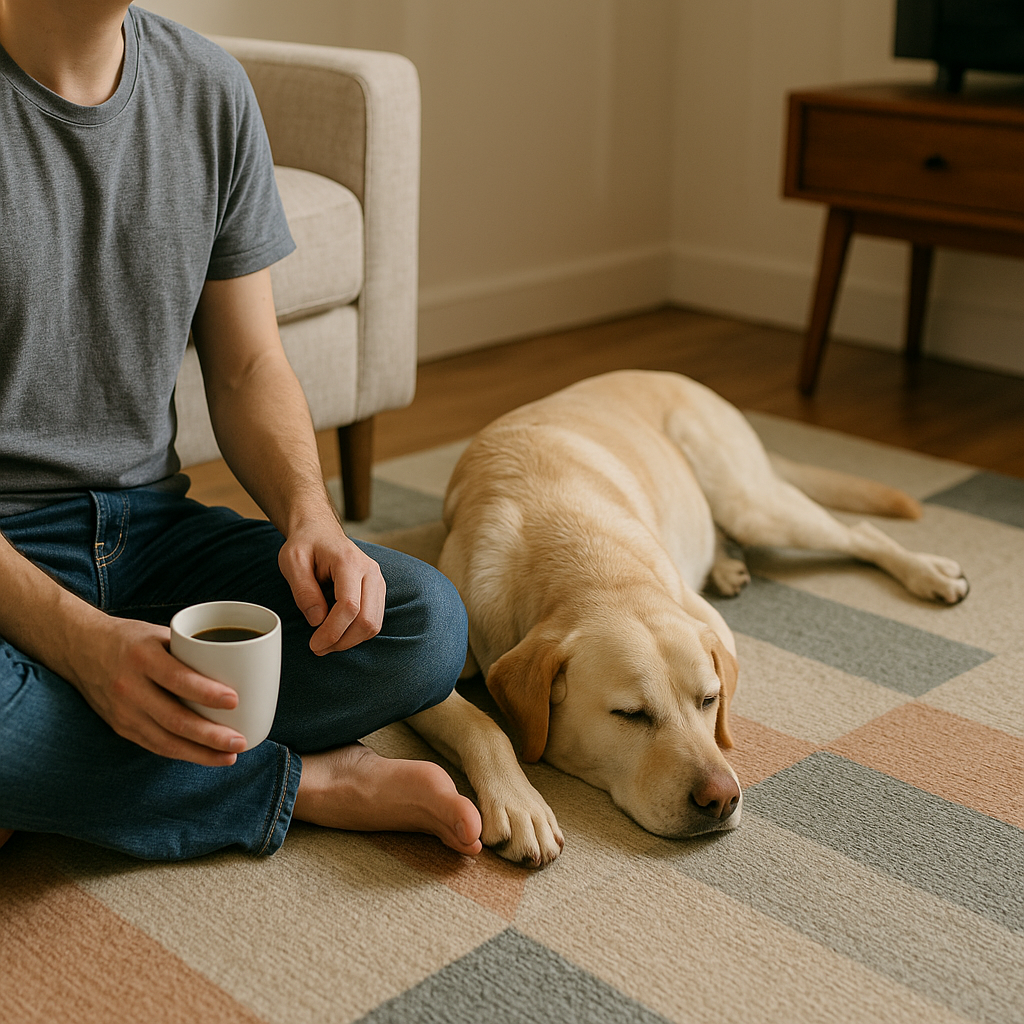
People talk about clingy versus independent as if it's a personality quiz, but what matters in a home is whether your pet can pick a distance and stay there. When my dog is settled, she does this perfect, boring move: she flops down on the rug, angled so her back is to the wall and her front paws are pointed toward the room, and then she stops adjusting. Not a lot of head lifts. Not a lot of scanning. If I stand up to refill my coffee, she might glance, but she doesn't have to follow the motion like it's her job.
When she is not fully at ease, the distance becomes a yo-yo. She'll choose a spot, then pop up and reposition by two feet. Then again. Sometimes it's subtle, like she is just trying to find the cool patch of floor, but the giveaway is the checking: head up every time the fridge clicks, ears flicking at every tiny noise, eyes tracking whoever is walking through the room. It's the same dog in the same house, but she is acting like she is on call.
Cats do their own version. Mine will sit on the arm of the couch like a gargoyle when he wants to be involved but doesn't trust the vibe. He is near us, but he is not in it. If he is comfortable, he chooses a spot that looks almost inconvenient, like the middle cushion where he could be bumped, and then he lets his body go heavy. You can see it in the way his shoulders drop, and his paws stop gripping the fabric.
If you want a quick check that doesn't require you to be a mind reader, watch what happens when you change levels. Sit on the floor. If they approach and settle with loose, relaxed body language, I take that as one encouraging sign. Repeated approaches and retreats are harder to interpret, so I look at the ears, eyes, posture, and tail before deciding what the behavior means. I don't try to fix it in the moment. I just stop reaching for them. The distance they choose tells you what they can handle, and it's usually more accurate than what you want.
The tail in neutral moments (no, not the greeting wag)
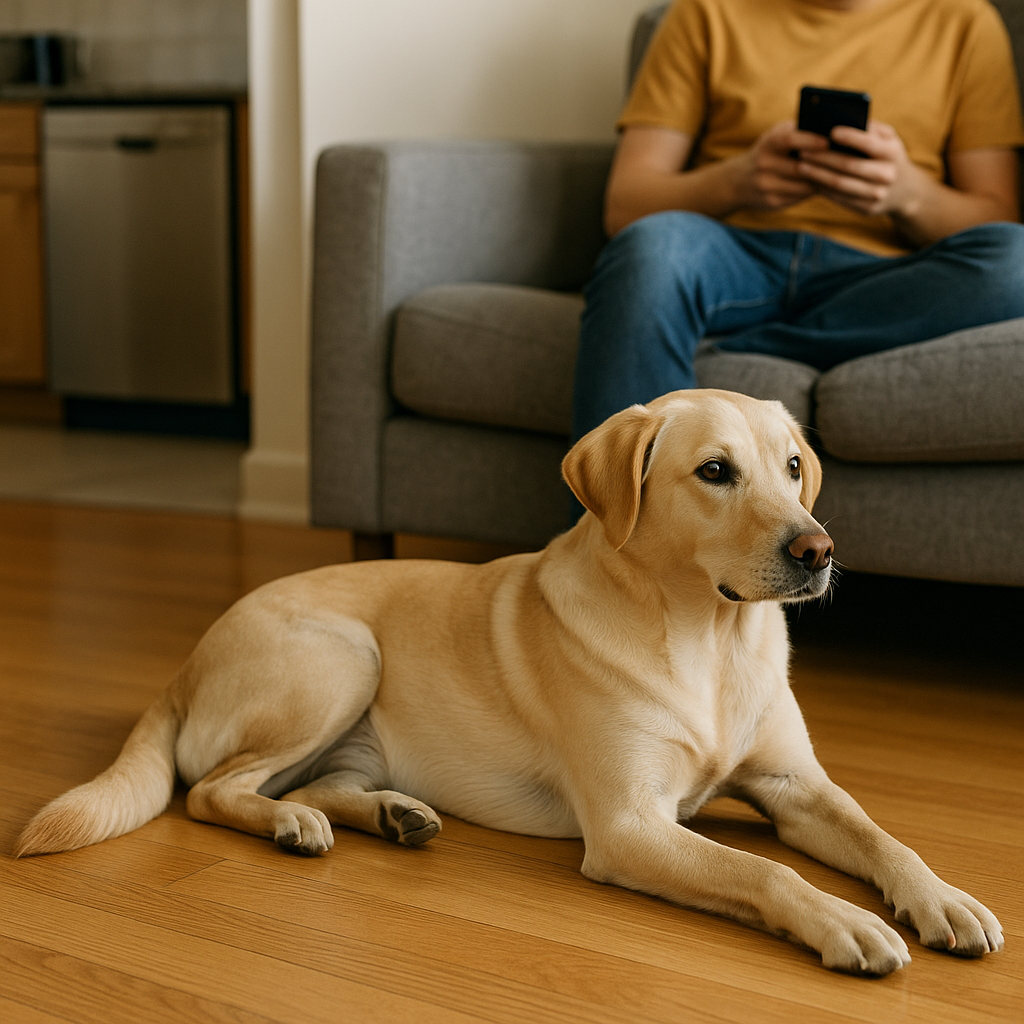
If you only look at tails during hellos, you miss the useful part. Plenty of dogs wag at the door, but the wag alone doesn't tell you whether they're happy, nervous, or worked up. Even a dog that's nervous will often wag, and it can fool you into thinking the emotion is pure happiness. I learned to watch tails when nothing is happening: mid-afternoon, dishwasher humming, someone scrolling on the couch. Neutral moments are where you see whether your place feels safe or just manageable.
For my dog, a relaxed tail is basically a non-event. It hangs in its natural curve, maybe a small thump when I say her name, then it goes still again. If she is lying down, the tail isn't tucked tight under her body, and it isn't stiff like a stick. It is just there, along for the ride.
Stress shows up as motion that doesn't match the scene. A slow, steady wag while she is staring at something across the room isn't automatically a friendly signal. Depending on her posture and tail position, it can accompany uncertainty, alertness, or heightened arousal. A high tail held up and vibrating in quick little buzzes, even if the rest of her body looks frozen, usually means arousal. That arousal can come from excitement or tension, but either way, she is not in chill mode. My rule is simple: if the tail is busy and the room is boring, something is going on.
Cats are trickier because their tails are basically mood punctuation. When mine is comfortable, the tail is loose and draped, or it's wrapped around his feet like he forgot it exists. If the tip starts twitching like a metronome while the rest of him stays still, I treat it as a warning light. People mistake it for a cute annoyance. In my house, it is the moment right before he decides he has had enough petting, enough noise, enough of whatever you are doing.
One small thing that helped me read this better was filming 20 seconds on my phone in a normal moment, not a cute moment. Later, you can spot the tail patterns without the distraction of your own hands reaching in. It is humbling. Also useful.