
From wobble bases to rigid silicone, these small design tweaks change how long dinner holds your pet's attention.
The wobble base that turns kibble into a project
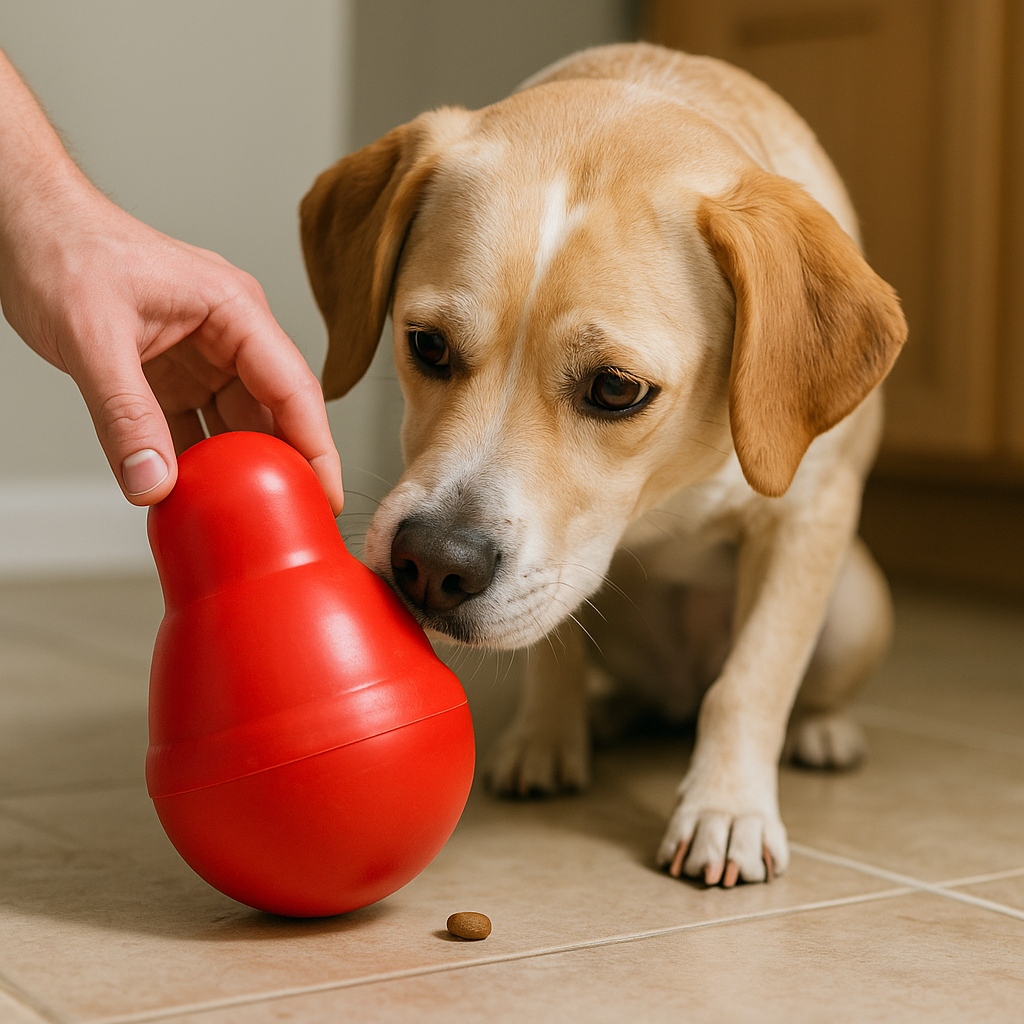
A standard bowl lets a fast eater finish quickly. A wobble feeder makes my dog work longer for the same meal. The first time I put a KONG Wobbler down, my dog did that little head tilt like I’d swapped dinner for a physics quiz. Then the nose tap happened, the toy scooted, and a single piece of kibble clacked out like a slot machine. Hooked. That clack gives my dog immediate feedback that another nudge may release more food.
What makes the KONG Wobbler useful is its weighted lower section and rounded shape, which allow it to return upright when a dog noses or paws at it. It self-rights and keeps the game going. I’ve tried wobble-style toys that are too light, and they get punted across the kitchen like a hockey puck. The better ones have enough mass that the motion stays tight, more rock than roll, which means the pet can work the problem in one spot instead of chasing it under the couch.
If you’re using kibble, size matters. Small kibble can come out quickly, so I use pieces large enough that the feeder does not empty too easily. For cats, choose a food puzzle specifically sized and designed for feline use. Also, floor choice is part of the design. Tile makes everything faster and louder; a rubber-backed mat slows the skid and takes the edge off the noise if you’ve got a skittish eater. For my dog, it stretches dinner out and adds some problem-solving to the meal.
Whichever feeder you use, supervise the first few sessions, stop using damaged products, and make sure treats and spreads are safe for your pet.
A good lick mat needs to stay put
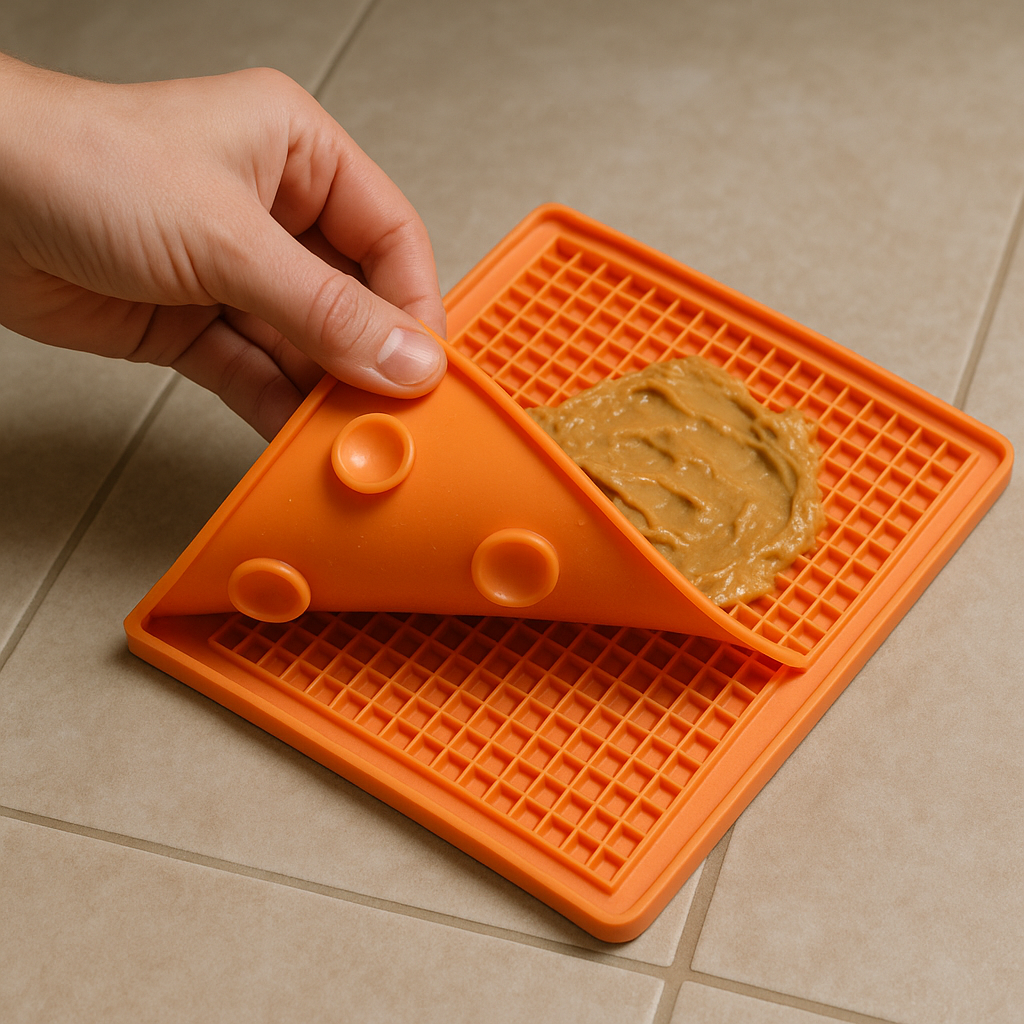
I used to think a lick mat was just a flat square you smear with xylitol-free peanut butter and hope for the best. The first decent one I bought (a silicone lick mat with suction cups) corrected me immediately. The engineering is on the underside. When the suction holds, the top texture can do its job: the textured surface spreads soft food across the grooves, so my dog has to lick around the pattern instead of clearing a single pile.
Texture patterns aren’t all interchangeable either. A shallow grid is a quick win for a beginner. The deeper maze-style grooves make your pet work laterally, not just lap straight through the middle. On nights I need a longer settle, I’ll press something soft into the grooves so it sits below the surface. Plain canned food works. Plain, unsweetened yogurt can work for some dogs, provided the ingredients are pet-safe and it does not upset their stomach. For cats, I’ve used a little Churu-like puree thinned with a splash of water so it spreads without turning into cement.
Two hands-on notes that only came from messing this up: first, clean it right away. Silicone holds oily residue in the corners, and if you let it sit, it gets that stubborn film that makes you question your life choices at the sink. A stiff dish brush gets into the grooves faster than a sponge. Second, match the mat to the surface. Dry tub wall or smooth tile equals strong suction. Textured floor equals disappointment. If the mat scoots, some pets may start pawing or chewing at the edge instead of licking.
One design feature I now look for is a firmer border. Floppy mats fold when a dog paws at them, which breaks the suction. A firmer rim keeps it flat, keeps the tongue working, and keeps the whole thing from turning into a tug-of-war. It’s a small change, but it’s the one that made lick mats go from gimmick to repeatable tool in my house.
Slow bowls work better when the maze fits the eater
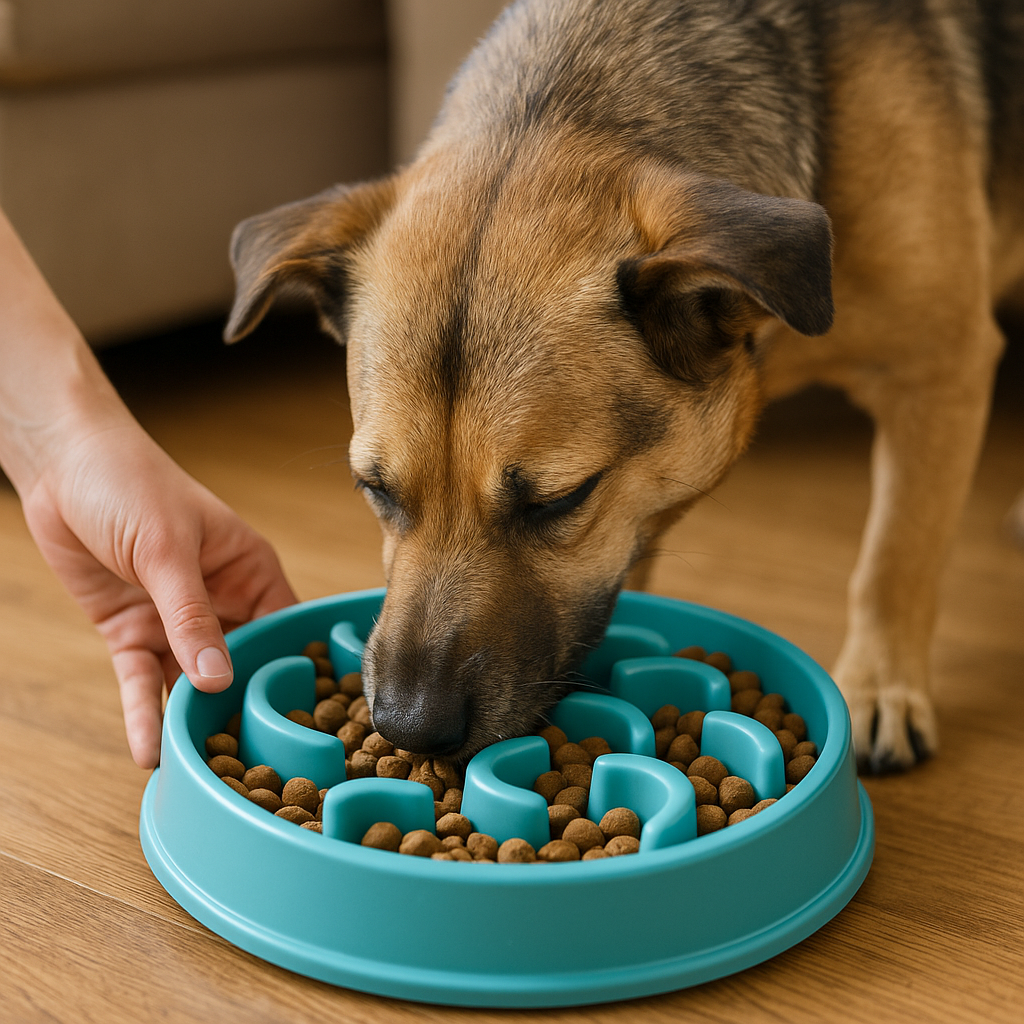
Early slow bowls loved novelty. They had spirals, paw prints, and little cartoon bones molded into the plastic. Some of them slowed my dog down, sure, but they also created dead zones where kibble wedged so tightly I’d hear the nails-on-plastic scraping and then the dramatic sigh. The designs I prefer use wider channels and rounded obstacles that leave fewer hard-to-reach pockets.
For me, the useful part comes down to the maze's shape. You want channels that are narrow enough to block a full-mouth scoop, but not so tight that the last 15 pieces become a frustrating ritual. I prefer rounded ridges because kibble is easier to reach, and there are fewer tight corners for a dog to press its muzzle against. The base matters too. A wide, grippy bottom keeps the bowl from skating. If the bowl moves, a fast eater just chases it and stays fast, only louder.
I also pay attention to depth now. Dogs with short muzzles, mobility limitations, or difficulty reaching into deep channels may do better with a shallower feeder chosen with comfort in mind. A lower-profile slow bowl often does the job without forcing an uncomfortable eating posture. For cats, I prefer a wide, shallow feeder that gives the face and whiskers more room around the edges.
One more thing I check is whether the bowl is dishwasher-safe and easy to clean around the ridges. I also avoid textured interiors that are harder to scrub clean, especially around narrow ridges. A sleek interior cleans faster, and it keeps the bowl from turning into the thing your pet sniffs and walks away from. When a slow bowl is designed well, it doesn’t feel like a trick. It just quietly turns eating into a longer, more deliberate process.