Living With Coyotes in the Suburbs: How to Keep Your Pets Safe Without Panic
Coyote sightings in suburban areas have become a regular part of neighborhood updates. Experts have been tracking their movement into cities for years, largely due to expanding development and easy access to food. When reports of pets being chased or taken spread, it can make the risk feel constant, even if actual encounters are still limited.
Coyotes adapt quickly, which is why they do well in these environments. They eat whatever is available, from rodents and fruit to garbage and, at times, small pets. As housing spreads into green spaces, overlap increases. Unsecured trash, pet food left outside, or fallen fruit can easily draw them in. In most cases, they are not targeting neighborhoods randomly. They are responding to reliable food sources.
When Pets Are Most at Risk

Image via Getty Images/chendongshan
Risk often comes down to timing. Coyotes are most active during early morning and evening, when light is low, and neighborhoods are quieter. Their behavior can also shift in spring and early summer, when they are raising pups and become more protective of their territory.
Pet size plays a role as well. Small dogs and cats can look like natural prey, similar to rabbits or squirrels. A fenced yard helps, but it is not a guarantee. Coyotes can jump fences around six feet high or slip through gaps if there is a way in.
What Actually Triggers an Encounter
Most incidents tie back to small habits that seem harmless. Letting a dog roam alone in the yard, walking at twilight, or using a long retractable leash can all create openings.
Dogs can also make the first move. Some will chase or approach a coyote out of curiosity, which quickly changes the situation. Once that interaction starts, the risk increases fast, especially if the dog gets too far from its owner.
How to Handle a Close Call
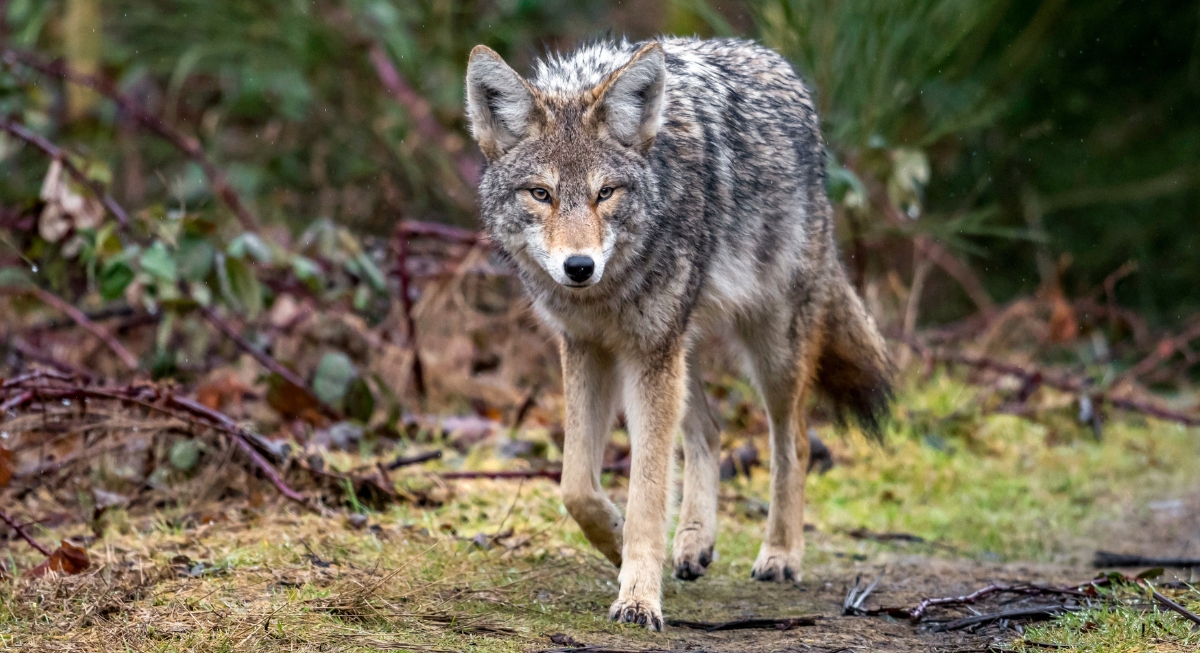
Image via Getty Images/Harry Collins
A coyote encounter feels intense, but the response is more important than the moment itself. Running can trigger a chase instinct, so staying grounded is key.
Stand tall, keep your pet close, and make noise. Yelling, clapping, or whistling often prompts a coyote to back off. If the dog is small, picking it up removes the easiest target. Moving forward with confidence instead of retreating helps reinforce distance.
Simple tools can also help. A flashlight at night, a noise maker, or even tossing small objects nearby can shift the situation without escalating it.
Everyday Habits That Lower Risk
Most of the real work happens long before any encounter. Keep pets supervised outside, especially during early morning and evening hours. A standard six-foot leash offers better control than a retractable one, which can leave too much space to manage quickly.
Feeding pets indoors removes a major attractant. Trash bins should stay sealed, and leftovers should never sit out overnight. Even birdseed or fallen fruit can attract rodents, which in turn attract coyotes.
Smarter Yard Setup

Image via Getty Images/NATALIA NOSOVA
A yard can either invite wildlife or quietly push it away. Fencing helps, but it works best when paired with deterrents. Rollers along the top can stop a coyote from gaining traction.
Motion-activated lights or sprinklers add another layer by disrupting their approach. Trimmed shrubs reduce hiding spots, while covered areas give small pets a place to stay out of sight from both ground and aerial predators, such as hawks and owls.
Training Gives You an Edge
Training often gets overlooked in safety conversations, but it can make a real difference. A strong recall command can quickly pull a dog out of a risky moment. Teaching a dog to stay close rather than chase movement adds another layer of control. Even in off-leash areas, that responsiveness can change how a situation unfolds. When a dog checks in instead of sprinting off, the dynamic changes in your favor.
Coyotes are part of the environment now, and experts continue to stress coexistence over fear. The goal isn’t to eliminate every possible risk, but to remove the easy opportunities that lead to problems in the first place.