Meet the 150-Pound Rodent That Eats Its Own Poop for Survival
A capybara looks almost too calm for its size. At close to 150 pounds, it lounges by the water with an expression that rarely changes, a blank stare that people can’t seem to get enough of. Videos and photos have pushed it into unexpected fame, even catching the eye of a few pop idols. That popularity hides a detail most fans don’t see right away. Capybaras survive with a habit few animals share: they eat their own waste. For them, it isn’t odd at all. It’s the way their bodies get what the grass and plants can’t offer the first time around.
The World’s Largest Rodent

Image via iStockphoto/Wirestock
Capybaras grow to about four feet long and hold the title of the planet’s biggest rodent. Water shapes their lives. Their feet are webbed for swimming, and their coarse coat doesn’t stay wet for long once they climb out. They spend their days in rivers, swamps, and wetlands across South America, always within reach of cover. Up close, they appear calm, even blank-faced, though that quiet look is deceiving. Predators like jaguars and caimans keep them alert, even while they sit still at the water’s edge.
A Strange Survival Strategy
Capybaras live on grasses, leaves, bark, and aquatic plants, but their digestive system isn’t built to pull every nutrient out of those tough, fibrous meals. To make up for it, they rely on a habit that catches most people off guard: they eat part of it twice.
Not all droppings are the same. The ones that matter are called cecotropes—soft, nutrient-rich pellets that hold vitamins and bacteria the body didn’t absorb the first time. By eating them, capybaras reclaim what they missed and keep their system running efficiently. It’s not a quirk; it’s survival.
Social Creatures With Big Needs
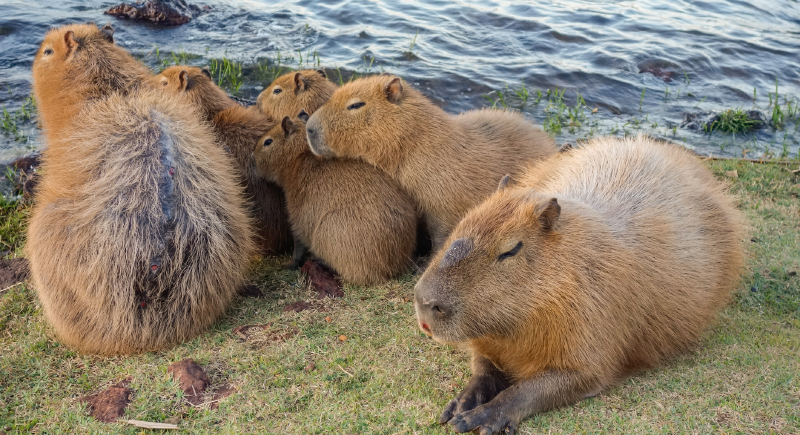
Image via iStockphoto/Caio Acquesta
Despite their tough exterior, capybaras are social animals. In the wild, they live in large groups, sometimes as many as 30 individuals. That’s why it’s not a great idea to adopt them as pets. They need companionship to stay happy and healthy. These animals are also highly sensitive to their environment, and they must have access to water at all times.
These animals need plenty of space to roam and a large pool to swim in. After all, they’re semi-aquatic and can live up to 12 years in captivity. Plus, capybaras eat a lot, up to eight pounds of vegetation a day, needing a steady supply of high-quality food, like hay and fresh veggies.
Voices Behind the Calm
Capybaras have more to say than their blank expressions suggest. Within a group, you’ll hear a mix of low purrs, sharp squeals, and high whistles, each sound serving as a thread that keeps the animals connected. These calls travel through the reeds and across the water, helping them stay in step with one another.
Their quiet presence has carried them far outside their natural range. Clips and photos turned them into internet fixtures, while their unexpected cameos in pop culture only deepened the fascination. The appeal isn’t just their steady faces at the water’s edge but the mix of traits that defy first impressions. What looks simple from a distance turns out to be layered, and that complexity is part of why people keep coming back to them.