The 10 Weirdest Octopuses Found in the Ocean
Octopuses already exist in a strange corner of the animal world, with soft bodies, problem-solving brains, and the ability to change color in a blink. Even within that group, a handful of species push things much further. These octopuses rely on venom, tools, extreme parenting, or wild body shapes to survive. Each one below stands out for a specific reason grounded in biology, behavior, or recent discovery.
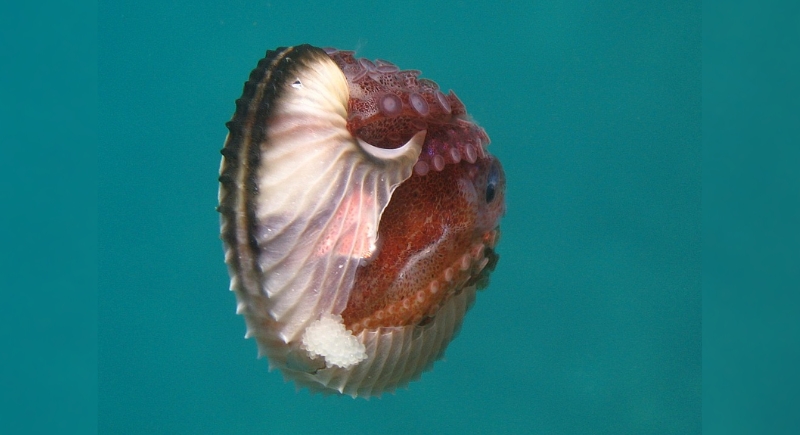
Argonaut Octopus (Paper Nautilus)
Credit: Wikimedia Commons
This octopus solves buoyancy with architecture. Females produce a paper-thin calcium carbonate egg case that works as both a nursery and a flotation device. Without it, they sink. Females reach about 12 inches long, while males stay under an inch. During reproduction, the male releases a detachable arm that continues moving inside the female.
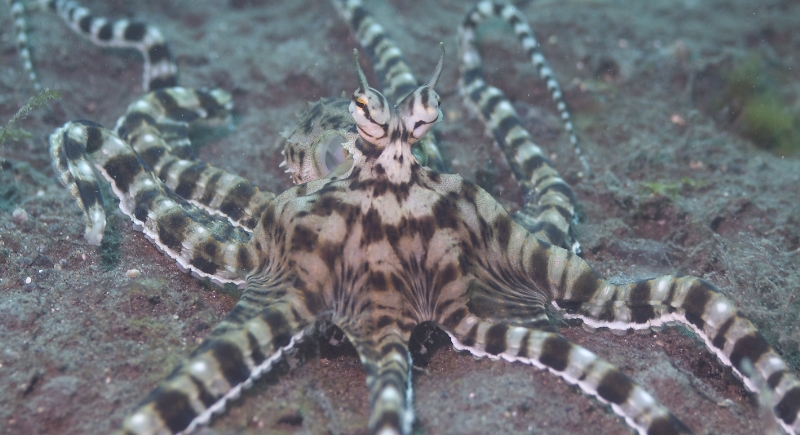
Mimic Octopus
Credit: Wikimedia Commons
True to its name, this octopus lies convincingly. It reshapes its body to resemble venomous animals, such as sea snakes and lionfish, adjusting its posture, movement, and color. Its six arms can be hidden to sell the illusion. The species lives in murky Indo-Pacific waters where visibility favors deception over speed.
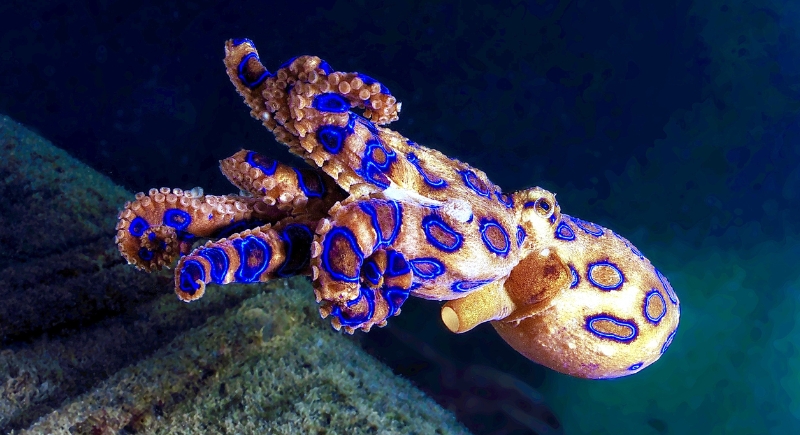
Blue-Ringed Octopus
Credit: Wikimedia Commons
The blue-ringed octopus’s bright rings act as a warning system. When stressed, about 60 neon-blue circles flash across the body. The venom contains tetrodotoxin, which causes paralysis and respiratory failure. One individual carries enough toxin to kill multiple adults. The venom comes from bacteria living in the salivary glands, not the octopus itself.
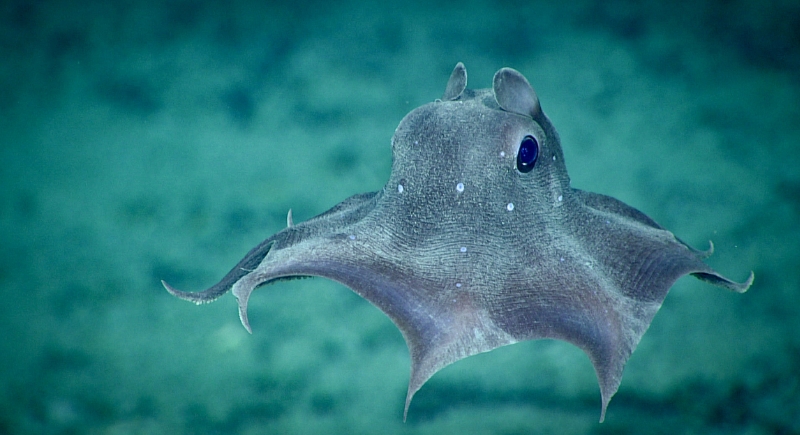
Dumbo Octopus
Credit: Wikimedia Commons
Life at 13,000 feet calls for a different travel style. Instead of jet propulsion, this octopus uses ear-like fins to flap through deep water. Its arms are joined by webbing, creating a rounded shape. Hatchlings emerge with fins already formed. The genus Grimpoteuthis includes around 15 species adapted to extreme depth.
Coconut Octopus
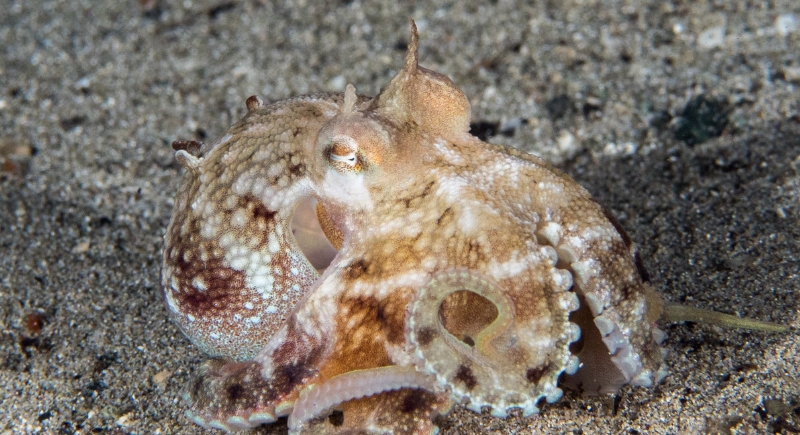
Credit: Wikimedia Commons
This species carries coconut shells or similar debris across the seafloor to assemble portable shelters. It prefers walking to swimming during transport. The behavior involves planning ahead, since the shelter is often carried long before it is needed.
Blanket Octopus
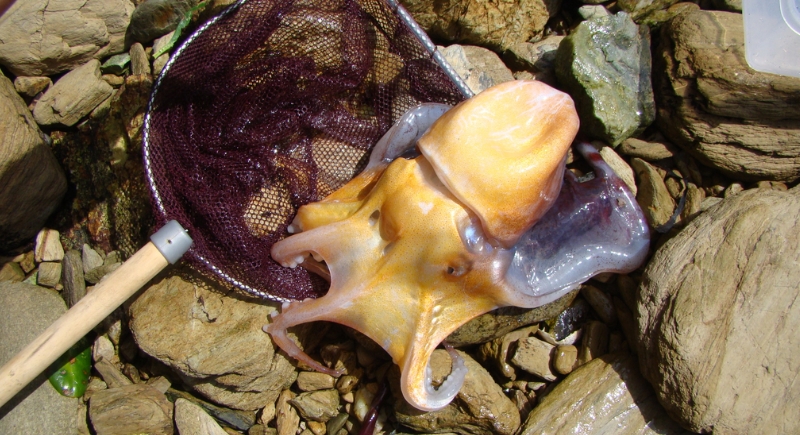
Credit: Wikimedia Commons
The size gap between male and female blanket octopuses is extreme. Females reach up to 6 feet long, while males stay under an inch and weigh tens of thousands of times less. Large webbing between the arms can be spread to make the arms appear larger. Pieces of that webbing can be released as distractions. Females also wield stolen Portuguese man-o’-war tentacles for defense.
Ghost Octopus
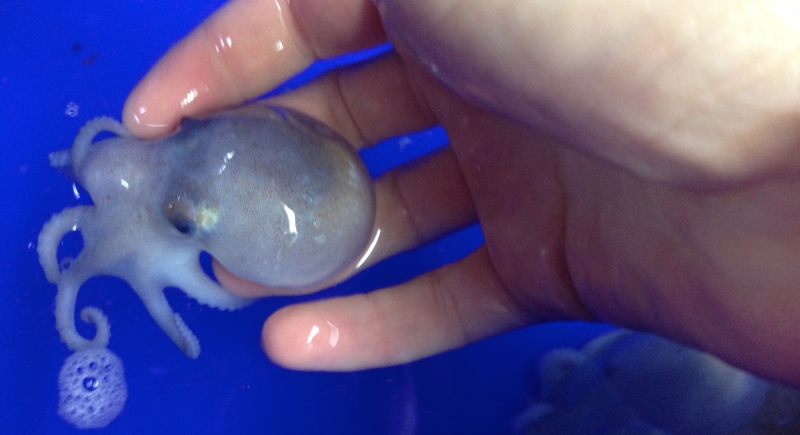
Credit: Wikimedia Commons
The pale ghost octopus was first documented near Hawaii in 2016 and still lacks a formal scientific name. It lives in deep water and broods eggs attached to dead sponges. The female wraps her body around the clutch and does not feed for years. Death follows shortly after the eggs hatch.
Star-Sucker Pygmy Octopus
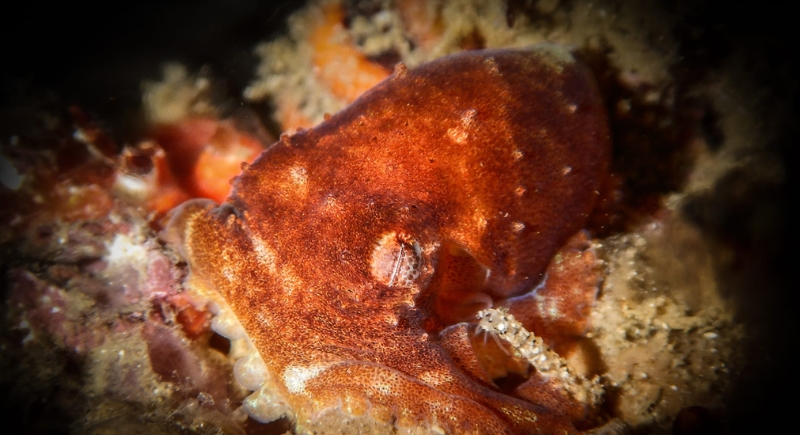
Credit: Wikimedia Commons
Measuring under an inch and weighing less than a gram, this octopus species holds the title of smallest known octopus. Despite that, it has a complex nervous system similar to that of its larger relatives. Shallow Pacific waters provide it with small crevices that act as built-in hiding places.
Dorado Octopus
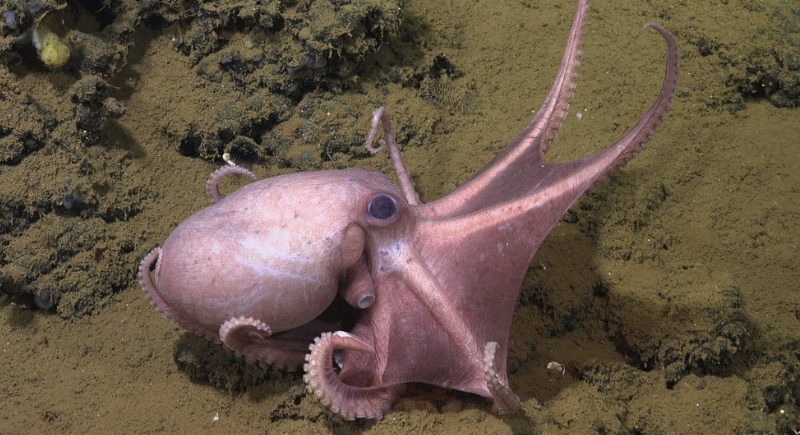
Credit: Facebook
This is a recently identified deep-sea species off the coast of Costa Rica. It broods eggs close to hydrothermal vents, using the heat to speed development. Its body is compact with short arms and double rows of suckers. The habitat includes chemical extremes that few animals tolerate.
Hairy Octopus
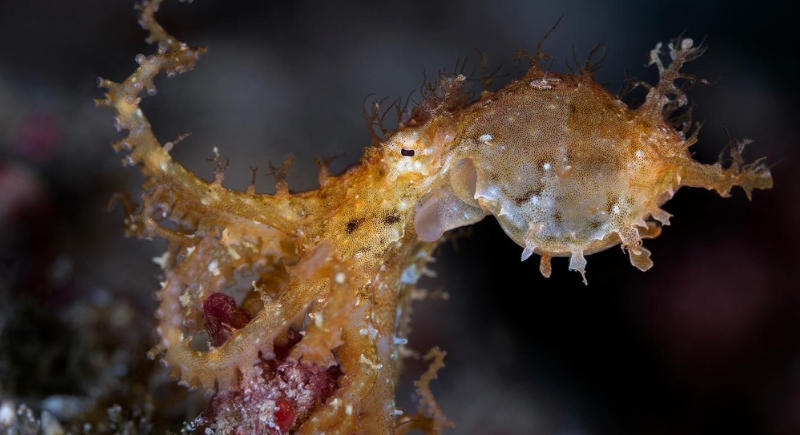
Credit: Instagram
This small species is found near Indonesia and Okinawa. Its skin flaps resemble algae or seaweed, helping it blend into rubble and seagrass beds at depths of roughly 26 to 65 feet. Adults reach about 2 inches long. Color shifts between white, red, and brown improve concealment in changing light.