Ostrich Farmers Have a Huge Problem Because the Males Are Attracted to Humans
There is a surprising situation happening on ostrich farms where male birds perform their courtship moves for the humans standing nearby instead of the females in their pens. Farmers first noticed this in the early 1990s and thought it was odd until researchers confirmed it through structured observation on farms in the United Kingdom.
The study was published in British Poultry Science and even won an Ig Nobel Prize in 2002 because it showed that human presence triggered more courtship displays. Charles Deeming, the scientist behind the study, explained that people can unintentionally kick start flirting between birds because females responded to a person walking by and males took the chance to mate.
The Art of Imprinting
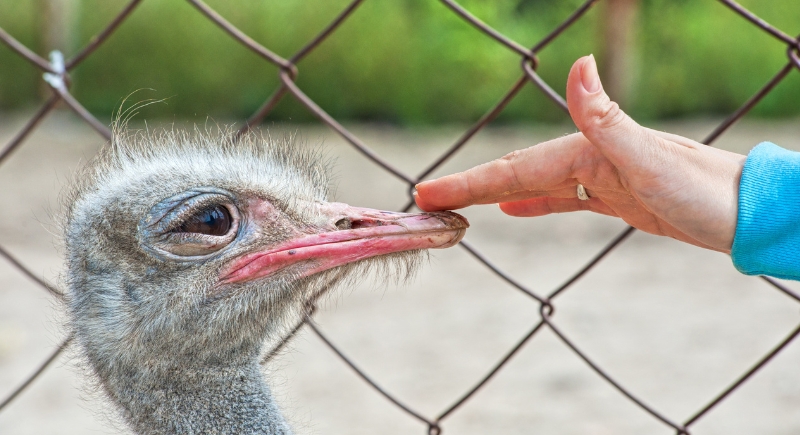
Image via Getty Images/rusak
The logic behind this attraction comes from imprinting, a process where young birds bond with whoever they see most during early development. On farms, that often means people carrying feed buckets, cleaning enclosures, and tending chicks, so the birds later find humans appealing.
Research showed that around 70% of ostriches in one study directed these displays toward humans, while another farm recorded 68% doing the same thing. A control male raised in Africa acted differently and ignored people unless they came too close, which led to aggression instead of attraction and highlighted how upbringing shaped behavior.
When Attraction Gets in the Way of Actual Breeding
Farmers who observe this behavior report that it can disrupt normal breeding routines, since birds may appear interested only when people are present and less responsive to each other at other times. A male distracted by a person at the fence does not focus on the female nearby and a female that only responds when someone walks past the pen does not align with natural mating cycles.
Studies highlighted through reporting on the Ig Nobel Prize noted that ostriches on some farms sometimes direct courtship displays toward nearby humans rather than toward other ostriches, which farmers say can make breeding more difficult, although the exact impact on breeding success has not been scientifically measured. One rare pair managed to use the situation because the female responded to humans and the male acted quickly, but most birds did not match up that way.
Not every farm has this challenge and some avoid it by limiting early human contact during the critical imprinting window. Others make sure chicks grow up among other ostriches so they learn what a mate looks like long before breeding age.
Farmers who do not understand the pattern often assume the birds dislike each other because they avoid mating when no people are nearby, but once they learn the cause they can adjust their practices. Managing early exposure helps keep attraction directed toward other ostriches rather than workers wearing hats and holding feed scoops.
A Future With Tamer Ostriches
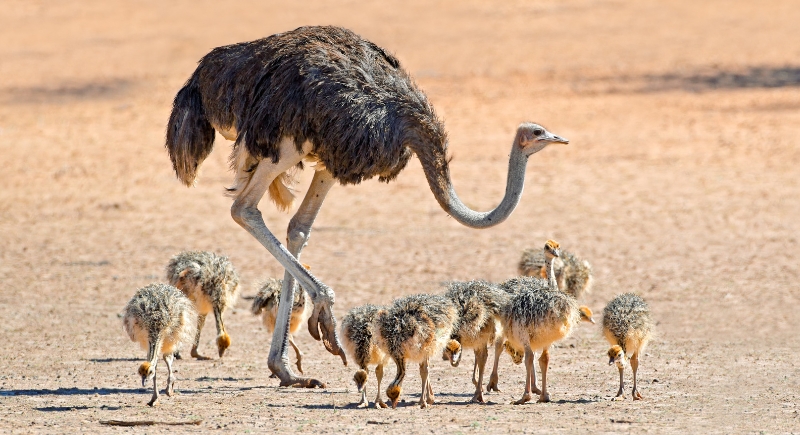
Image via Getty Images/nicosmit
More recent research added another layer by showing that controlled human contact can be helpful when handled at the right stage of development. A 2018 study found that gentle contact, calm voices, and regular handling reduced stress in young ostriches and made veterinary care easier later without shifting attraction away from their own species.
Then a 2023 study showed signs that birds raised with positive human interaction became calmer, allowed touching, and approached familiar people more readily, and some of these traits could be inherited. That suggests ostriches might be slowly moving toward domestication, but farmers still need to avoid imprinting that leads birds to see humans as possible partners.
Caretakers have learned that ostriches can recognize individual humans and respond differently based on familiarity, which means bonding is real and must be managed with timing and awareness. The aim is not to create pets, but to raise birds that stay calm around people while still seeking mates within their species.
Farmers want smooth handling, safe breeding, and eggs laid on schedule without having a male drop into a dance routine whenever someone walks by. It turns out that the real key to a peaceful ranch is helping the birds stay interested in each other instead of falling for the person delivering breakfast.