Santorini Implements Weight Limit for Tourists Riding Donkeys
On the Greek island of Santorini, donkey rides have long been part of how visitors move between the old port and the clifftop town of Fira. The route is steep, narrow, and built around hundreds of stone steps carved into volcanic rock. In recent years, growing tourism and animal welfare concerns pushed officials to introduce stricter rules. Today, riders must weigh under 100 kilograms (220 pounds) to ride the animals.
The rule comes from national guidelines governing how much weight working equines can carry. Under Greek regulations, donkeys cannot be loaded with more than one-fifth of their body weight. The policy is part of broader animal welfare measures introduced through the country’s agriculture authorities.
Why The Weight Limit Was Introduced
The regulation followed repeated reports of working donkeys suffering spinal strain, saddle injuries, and exhaustion. The climb from the harbor to the main town rises roughly 1,300 feet, and includes more than 500 to 600 steps depending on the route. During peak travel months, donkeys often make multiple trips each day carrying tourists or supplies.
Animal welfare groups began documenting injuries and working conditions during site visits. Investigations found animals working in high heat while carrying heavy loads uphill. International pressure and petitions helped push the issue into national policy discussions, eventually leading to formal guidelines on weight limits and animal care.
Additional Welfare Rules Beyond Rider Weight
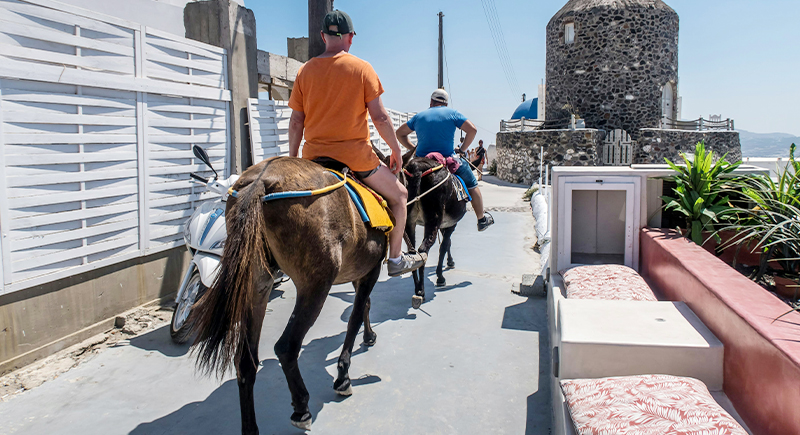
Image via Unsplash/Stephen G
The updated rules extend beyond weight restrictions. Working donkeys must have regular access to drinking water and scheduled periods of daily movement or exercise outside of carrying loads. The guidelines are designed to protect the animals from dehydration, muscle fatigue, and long-term joint damage.
These regulations also form part of a wider effort to improve tracking and care standards for working equines, including identification systems used to monitor animal health and working conditions.
The Role Donkeys Play In Santorini
Donkeys have been part of Santorini’s infrastructure for generations. Before roads and cable systems connected the harbor to the towns above, donkeys transported building materials, supplies, and people up the steep terrain. Even today, the animals remain part of the island’s transport system, especially in areas where vehicles cannot operate.
Santorini receives millions of visitors each year, including large numbers arriving by cruise ship. The steep terrain means travelers usually reach the upper town by walking, riding a cable car, or taking a donkey up the stepped path.
How Tourism Growth Changed The Conversation
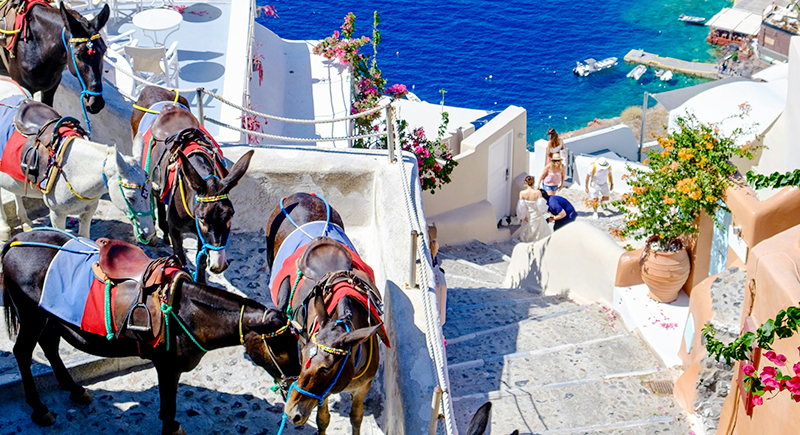
Image via Pexels/Diego HG
Tourism numbers grew sharply over the past two decades. In one recent pre-pandemic year, the island saw more than two million visitors, with hundreds of thousands arriving by cruise ship. The increase placed a heavier demand on transport routes linking the port to the main town, including donkey routes.
Local officials also introduced limits on daily cruise arrivals to reduce pressure on infrastructure and public services. Animal welfare became part of that broader conversation about how tourism impacts the island’s environment and daily operations.
Where The Policy Stands Today
The weight limit remains part of Greece’s broader animal welfare framework for working equines. The goal is to set clear physical limits on how much animals can carry while preserving the historical role donkeys continue to play on the island.
Visitors still have multiple ways to reach the top of Santorini’s cliffs. Some choose the steep walk, which takes roughly 30 minutes. Others use the cable car system that connects the port to the town in a few minutes. Donkey rides remain available, but under stricter rules designed to reduce injury risk and improve long-term care standards for the animals.