Science Says Cats Have a Dominant Paw Just Like Humans Have a Dominant Hand
Researchers studying everyday cat behavior noticed a small but consistent detail. During routine activities at home, many cats relied on the same front paw when stepping into a litter box, moving down stairs, or reaching for food. The preference appeared repeatedly across weeks of observation, even though the situations themselves stayed ordinary.
What makes the pattern notable is how it emerged. The cats were not trained or tested in lab conditions, and no rewards guided their choices. The behavior showed up during normal movement, suggesting that paw preference in cats may reflect underlying brain organization rather than habit or randomness.
A Clear Split Between Males and Females

Image via iStockphoto/w-ings
The pattern became more defined when researchers looked at gender differences. Female cats tended to use their right paw during tasks that required control, while male cats more often relied on the left. This tendency was evident across several activities, rather than in just one setting.
The contrast echoes a well-known trend in humans, where left-handedness is more common among males. While the biology is not the same, the overlap suggests broader principles governing how brains organize movement, even across different species.
Not a General Bias Like Humans
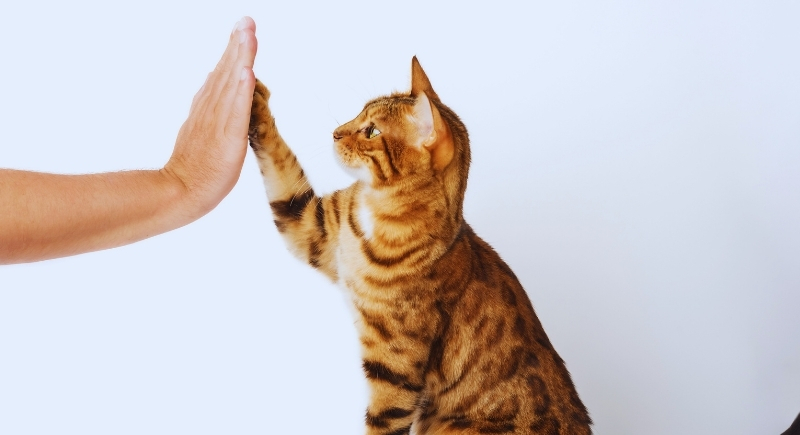
Image via Canva/Изображения пользователя Svetlana Rey
Humans show a heavy skew toward right-handedness. About 90 percent of people rely on their right hand for skilled tasks, but cats operate differently. As a group, cats do not lean left or right overall. However, without a visible majority, the behavior hides in plain sight. Only repeated tracking at the individual level reveals the pattern.
Why Brain Wiring Keeps Entering the Conversation
Movement preference is directly connected to how the brain processes information. Each side of the brain controls the opposite side of the body. That relationship explains why researchers see paw preference as more than a motor quirk.
Studies across various animals have linked left-sided limb use to stronger fear responses and increased sensitivity to stress. Right-side dominance often corresponds to steadier responses in unfamiliar situations. These links do not label cats as anxious or calm by default, but offer context. A dominant paw reflects how the brain prioritizes information.
What Paw Preference Does Not Explain
Image via Canva/Gumpanat Thavankitdumrong
Paw preference did not appear in every part of a cat’s life. When resting or sleeping, cats showed no consistent side, shifting positions freely. That contrast suggests the preference matters most during movement and choice rather than comfort.
Differences between males and females initially raised questions about hormones, but every cat in the study had been spayed or neutered. With that factor ruled out, researchers turned their attention to deeper structural features of the brain as a possible explanation.
Understanding paw preference opens practical doors. Shelters, veterinarians, and cat owners seek ways to minimize stress in cats, particularly during transitions. A quick paw preference assessment could add another tool for reading vulnerability before stress escalates.
It also reframes how people see everyday cat behavior. A paw reaching into a bowl stops looking random, and a first step down the stairs becomes a data point. The behavior stays subtle, yet once noticed, it repeats with striking reliability. Ultimately, cats did not change; it was observation that changed. What initially appeared to be symmetry revealed a preference once attention was sharpened.