Science Says Cats Have to Meow Harder at Men Because They Don’t Listen
People who live with cats have joked for ages that felines crank up the volume whenever a man walks in. Now researchers say there might be something to that. Their latest study suggests that cats push their meows harder around men, almost as if they expect to be ignored unless they turn the sound up. It’s a small but funny window into how pets read us and adjust their behavior depending on who they’re trying to reach.
What Researchers Found
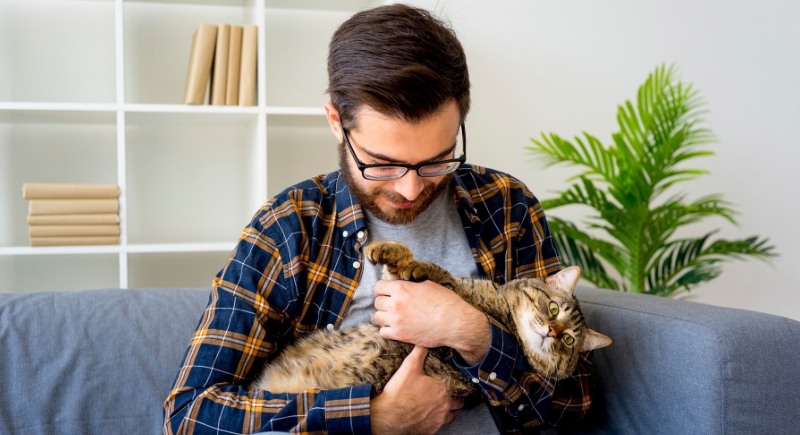
Image via Getty Images/Elena Nichizhenova
A study published in the journal Ethology recorded cats greeting their primary caregivers at home. Participants wore small cameras and acted like they normally would after returning home. The researchers analyzed the first 100 seconds of each interaction.
The results showed a clear split. Cats greeted male caregivers with an average of 4.3 vocalizations during the time window compared with 1.8 directed at female caregivers. The team counted meows, trills, chirps, and other sounds, giving a full picture of each greeting.
The pattern held across different types of households. Age, pedigree status, and the number of cats in the home did not shift the outcome. The only factor that lined up with the vocal increase was the caregiver’s biological sex.
Does This Pattern Make Sense?
The researchers suggested that cats adapt their communication style based on how people behave. Earlier studies show female caregivers tend to speak more to their cats and may catch subtle cues with greater ease. If a person responds quickly to light vocal signals, the cat keeps things simple. If the person misses those signals, the cat tries a stronger approach. Many people insist their cats get louder around men, and now have data to back the observation.
What The Critics Point Out

Image via Getty Images/Alesmunt
Some experts suggest treating the findings with caution. Cultural behavior plays a role in communication styles, and differences in how men and women speak in that region could influence the results. Future studies in other countries may reveal more nuance.
Other questions remain. The study did not track how long each cat was alone before the recording or whether hunger influenced vocal intensity. This could shape the results in ways the data cannot fully separate.
Still, the study highlights something important. Most people think cats act on instinct alone, yet research continues to show they track human patterns with surprising accuracy.
What This Means For Cat Owners
Anyone who lives with a cat knows the animal pays closer attention than it lets on. It picks up household rhythms, associates sounds with outcomes, and forms expectations about each person in its orbit.
The cat could be trying a proven tactic to make sure its message lands. Food, affection, routine, or simple acknowledgment often sit at the center of that message. Understanding these patterns helps people respond more effectively to their pets. Cats do communicate. The challenge lies in learning the format.