Scientists Discover Octlantis: An Underwater Octopus City Off the Coast of Australia
Octopuses are widely known for their intelligence, including problem-solving, tool use, and complex hunting behavior. For years, that intelligence was thought to operate almost entirely in isolation, with most octopus species spending their lives alone. That view started to change when marine researchers recorded gloomy octopuses repeatedly living side by side off the coast of Australia.
Researchers began noticing that dens were packed far closer together than chance would suggest, with piles of shells accumulating instead of dispersing. Over time, these sites showed repeated use, shared shelter, and regular encounters between individual octopuses. The pattern suggested sustained interaction rather than coincidence, prompting scientists to reconsider the long-held belief that octopuses typically live alone.
A Discovery That Changed the Narrative
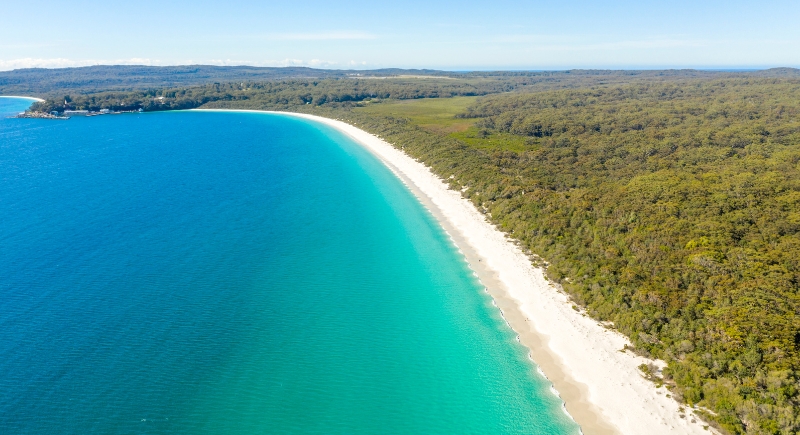
Image via Getty Images/Veni
The site is located in Jervis Bay, along the southeastern coast of Australia. Marine biologists first observed it in 2009 and later confirmed its significance through repeated studies. The area became known as Octlantis, a dense settlement occupied by gloomy octopuses living far closer together than expected.
Researchers observed between 10 and 15 octopuses sharing a relatively small patch of seafloor. These animals did far more than tolerate each other’s presence. They mated, fought, communicated through physical contact, and pushed rivals out of dens. The interactions occurred often enough to rule out coincidence. This was noteworthy because gloomy octopuses were long believed to interact only during brief mating encounters. Octlantis proved that assumption incomplete.
How Shells Built the City
The layout of Octlantis formed through a chain reaction driven by daily behavior. Octopuses hunted for food in nearby waters, dragged prey back to their dens, and discarded shells outside after eating. Over time, those shells piled up.
That shell bed stabilized soft sediment that usually collapses under movement. With a firmer base, octopuses could carve out more dens, and more dens attracted more occupants. Shelter also played a vital role. Predators often cruised the area, and solid dens provided protection. Food remained plentiful, but safe hiding spots stayed limited. Living close became a tradeoff that favored survival, even with constant friction.
Life Inside Octlantis
Close quarters came with tension. Researchers recorded frequent aggression, including den evictions and physical restraint. Some octopuses appeared far more active than others, regularly leaving their dens to interact or assert control. Others stayed tucked away, avoiding conflict when possible. Despite the risk, the octopuses continued returning to the same dens. That consistency suggested the benefits outweighed the costs. Shelter security mattered more than solitude.
This behavior also allowed scientists to observe octopuses interacting repeatedly over time, something that is rarely possible in the wild. Octopuses change color and pattern constantly, making long-term tracking difficult. At Octlantis, proximity made recognition easier and behavior patterns clearer.
The site also confirmed that Octlantis was not a fluke. A nearby settlement called Octopolis showed similar traits years earlier. Together, the sites suggested a repeatable pattern rather than a one-time anomaly. Scientists still debate why these cities form and how often they appear. Continued research aims to determine how long these settlements persist and how they impact learning and behavior across generations.
What remains clear is that octopuses respond to their surroundings with flexibility and problem-solving abilities that rival those of many vertebrates. Octlantis offered proof that even creatures known for solitude adapt when survival demands it.