Scientists Say This Animal Could Rule the World After Humans Go Extinct
Mass extinction is not just a theory; Earth has already gone through five of them, including the event about 65 million years ago that wiped out the dinosaurs. New research continues to warn that another large biodiversity collapse is possible. A 2023 paper in PNAS linked human activity to major species loss, and a 2022 ‘Nature’ paper suggested up to 50 percent of species could disappear by 2080 if emissions and deforestation stay high.
Scientists are now asking a strange but serious question. If humans vanished, which animal has the biological toolkit to rise to the top? One candidate keeps showing up in scientific discussions, and the reason is fascinating and slightly unsettling.
The Animal With The Right Biological Toolkit
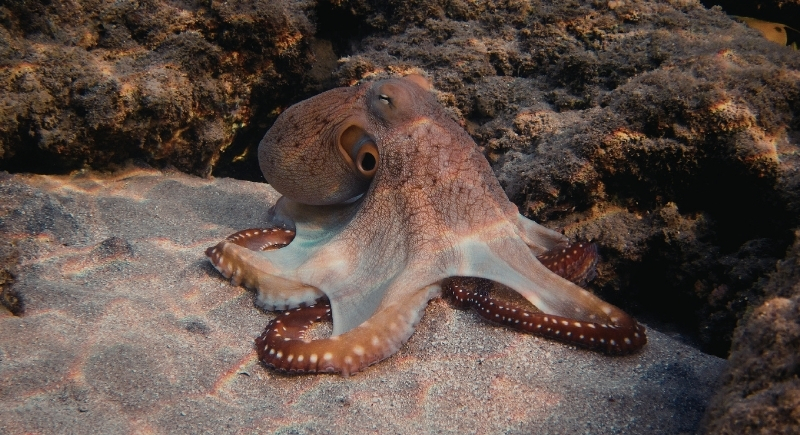
Image via Canva/Eugen Gheorghiu’s Images
Octopuses already display abilities that stand out even among smart animals. Some species use coconut shells as portable armor, while others solve maze puzzles in lab tests. There are verified cases of individuals escaping tanks and moving across floors to reach other tanks.
Their nervous system also works uniquely. Instead of a single central brain handling all processing, neurons spread across their limbs. Princeton ecologist Andy Dobson has compared this setup to a large data processing system. Each arm can handle complex tasks while still working with the central brain.
Dexterity gives them another advantage. Eight flexible limbs can grip, twist, and manipulate objects in ways birds or insects cannot. Even highly intelligent birds like crows still rely mainly on beaks. Octopuses also communicate by flashing colors across their skin. This is important because communication is a key ingredient for complex societies.
The Civilization Problem
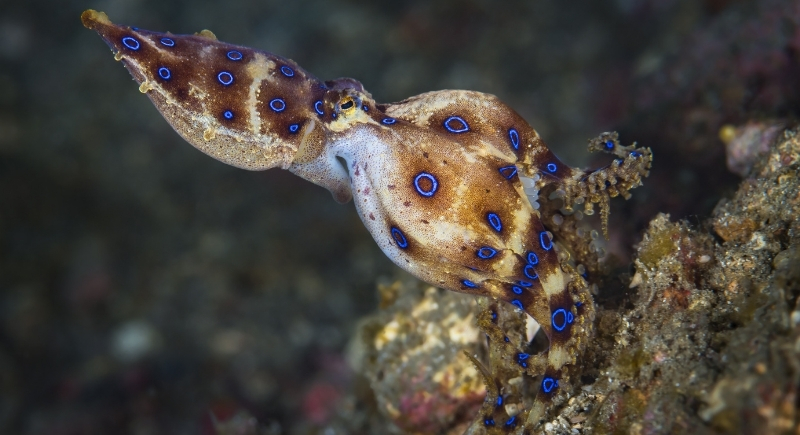
Image via Getty Images/RibeirodosSantos
Intelligence alone does not create civilizations: culture and social learning matter just as much. Professor Peter Godfrey-Smith at the University of Sydney has explained that octopuses raise young with almost zero parental teaching, whereas human societies rely heavily on passing knowledge across generations.
Lifespan is another barrier. Many octopus species live about one to five years, and some survive only around six to twelve months. Biologist Culum Brown at Macquarie University has pointed out that such short lifetimes limit long-term social development.
Social behavior adds another complication. Many octopus species live solitary lives and sometimes attack each other. Researchers have observed small-group living in certain species, suggesting that social behavior can shift over long evolutionary periods.
The Energy And Environment Reality Check
Any advanced society needs steady energy. Tim Coulson has suggested possibilities such as tidal power or energy from hydrothermal vents. These ideas are theoretical, but they underline a simple limit. Intelligence does not matter much without the power to sustain it.
Human impact complicates things. Pollution, warming oceans, microplastics, and overfishing already strain marine life. Andy Dobson has warned that environmental damage could narrow evolutionary paths before long-term adaptation has time to unfold.
Octopuses live in deep and shallow waters, mature quickly, and adapt well. Those traits support survival during instability. Still, without a skeleton, fast land movement would be difficult, so any complex development would likely stay underwater. Coulson treats this as a thought experiment, not a forecast. Evolution does not follow a set script.