
A three-bin rotation, a scent refresh, and a toy quarantine shelf that stops the pile from turning into background noise.
The three-bin rotation that doesn't collapse by day four
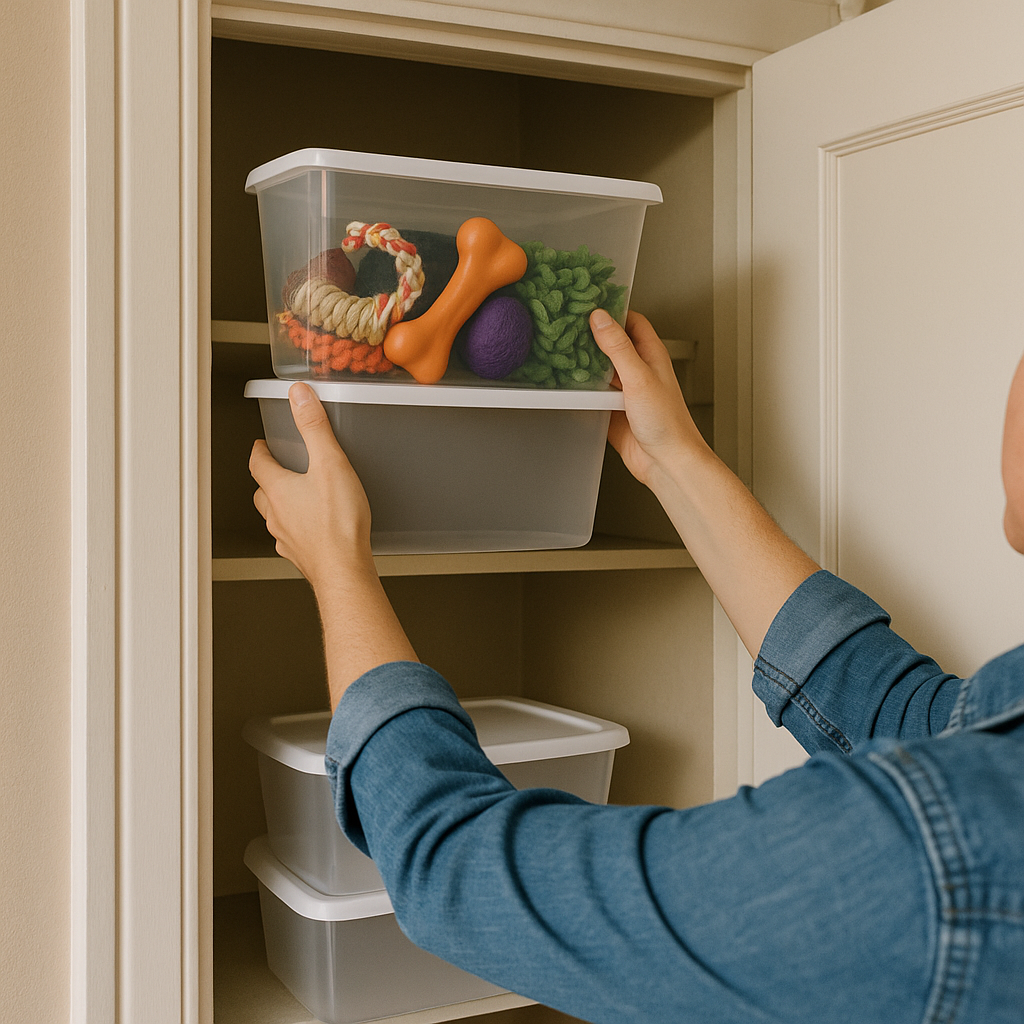
I used to tell myself I'd rotate toys, then I'd blink, and there'd be twelve things on the floor, and my dog would still be whining at me like I'd brought home nothing. The fix, for my house, was to make the rotation almost comically physical: three lidded bins (shoebox size works, a plastic tote works, even a clean cardboard box if you're not dealing with a shredder) labeled A, B, and C with a Sharpie. Only one bin lives out. The other two go up high, not because it's precious, but because the whole point is that your pet can't self-serve the entire inventory.
Here's what goes in a bin when I'm doing it for sensory enrichment: one chew with a different texture (rubber like a KONG or West Paw, plus something fabric like a crinkle toy), one item that moves differently (a ball that rolls cleanly, or a wobble toy), one nose-work piece (a snuffle mat or a lick mat), and one "tiny" thing that scratches an itch like a braided rope or a single plush. For cats, I swap in a kicker, a wand attachment, and something they can bat that won't rocket under the stove. I don't pack each bin with five versions of the same sensation. If everything squeaks, nothing squeaks.
Rotation day is always the same moment: I pick up the current bin, and it goes straight into the closet, lid on. No sorting, no "but he loves this one." Then the next bin comes out like I'm dealing cards. The odd part is how quickly it changes behavior. The same old rope becomes something my dog carries room to room, and my cat will suddenly re-notice the scratchy sisal mouse she ignored for a month. If you want a schedule, rotate toys often enough to keep them interesting, adjusting the timing to your pet, but honestly, you'll know it's time when the toys are treated like furniture again.
Two rules keep it from collapsing. First, anything broken or gross doesn't go back in any bin, period. Second, I keep one empty spot in each bin so I can drop in a new texture when I feel like it, like a cardboard tube for the cat (supervised) or a new rubber chew. That little bit of flexibility is what keeps the rotation from feeling like another chore you failed at.
The scent reset: why the "new" smell matters more than you think
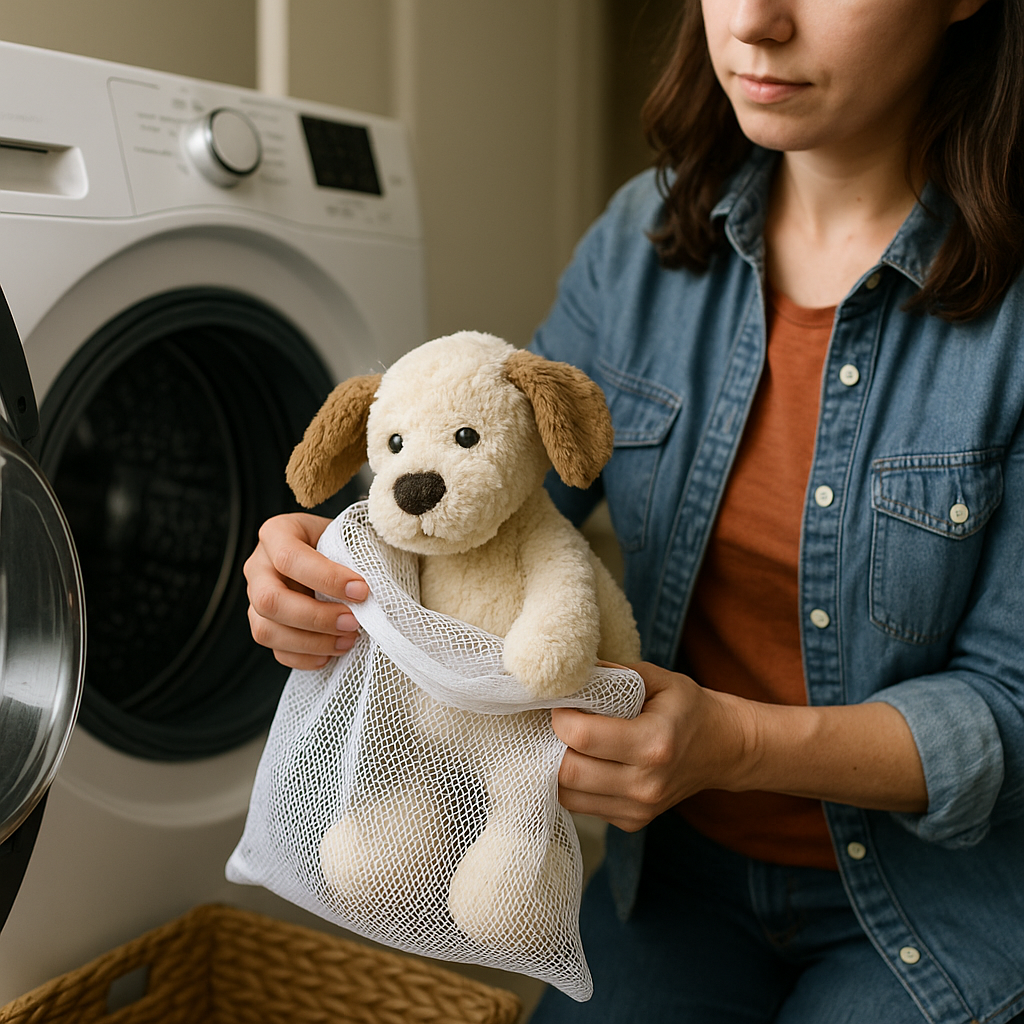
When a pet loses interest in a toy, novelty and scent may be part of the reason, but boredom and individual preference also matter. That plush you swear your dog loved? It smells like the same living room, the same mouth, the same laundry detergent, the same everything. Rotation helps, but pairing rotation with a scent reset is where the magic happens, especially for dogs that live through their nose and cats that get picky about anything that smells off.
I do a tiny refresh when a bin comes out of storage. Fabric stuff goes into a mesh laundry bag and gets washed on cold with a free-and-clear detergent. No fragrance boosters. I dry it completely, because damp plush is how you end up with that musty smell nobody wants. Rubber and silicone (KONGs, Toppls, lick mats) get a hot soapy scrub and a good rinse, then air-dry. If it's a treat-dispensing puzzle with little corners, a bottle brush is your friend. The point isn't sterile. It's simply different.
I skip added fragrances and concentrated scents. Instead, I let stored toys pick up ordinary household smells naturally before putting them back into rotation. Sometimes my dog re-investigates a toy after it has been stored away for a while. For my cat, a cardboard scratcher that lived in the closet for two weeks becomes interesting again when it comes back out smelling like a different room.
If you want to make it extra effective, pair the scent reset with a food payoff that fits the toy. A lick mat gets a thin smear of plain canned pumpkin or wet food (not a heaping pile that turns into a mess). A KONG gets kibble topped with a spoonful of something sticky enough to hold it in place, then frozen. For a snuffle mat, scatter or hide kibble through the fabric so your dog can sniff it out. It gives your dog another reason to sniff and search through the mat. If your pet walks away, try the toy again later rather than assuming the wash changed its appeal.
The quarantine shelf for toys that got ignored
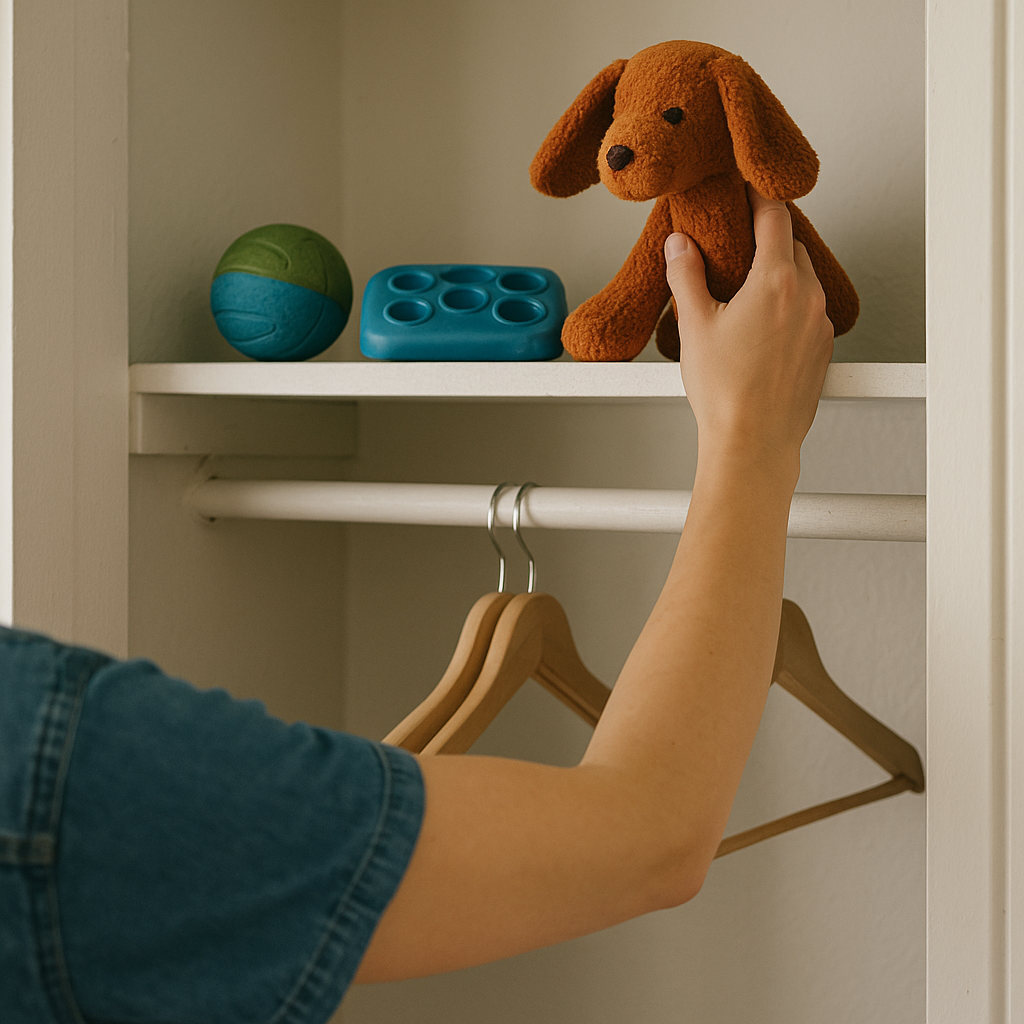
Not every toy deserves a spot in the rotation. Some stuff is just noise: the floppy plush that gets mouthed twice, the puzzle that was exciting once and then turned into a plastic object your dog steps over. I used to keep those in circulation out of guilt because, well, I paid for them. Now I have what I half-jokingly call the quarantine shelf. It's a high shelf in a closet where ignored toys go to disappear for a while, and it fixes a very specific problem: the rotation bins filling up with items that dilute the whole effect.
The rule is simple. If a toy gets zero engagement across three separate sessions, it goes on the shelf. Three strikes sounds dramatic, but it prevents me from making excuses like, "Maybe he's just tired today." When I do those sessions, I pay attention to what kind of ignoring it is. Does my dog sniff and immediately disengage? That may simply mean the toy is not appealing to that dog at the moment. Does he try, fail, and then get frustrated? That's a difficulty issue. With cats, a wand attachment may simply be the wrong movement, weight, or texture for that individual cat.
Quarantine isn't a trash can. It's a place to rethink the toy. Some things come back as a different job. A boring rubber ball can sometimes become interesting again when used in a different supervised game, as long as the toy is designed for that kind of use. A puzzle that was too hard becomes an easier scatter feed: kibble in a muffin tin, tennis balls covering some cups so the dog has to nudge and sniff. A wand toy that didn't get a single pounce gets a new attachment, and suddenly it's the star of the week. If texture seems to be the issue, I try a different pet-safe toy rather than modifying a chew with fabric that could be torn off and swallowed. So it's not just one sensation.
The best part is that quarantine keeps your floor from looking like a pet store clearance aisle. Fewer choices is the point. Keeping fewer toys available at once can make rotation easier to manage and may help preserve novelty. And on the day you pull something back off the shelf after a month? That's when you get the little head-tilt and the serious sniffing like you smuggled contraband into the house. I live for that moment.