Sphinx Moth is Named After 3 Different Animals. Can You Guess Which Ones?
The sphinx moth has a name that sounds straight out of mythology, but it actually reflects three very real creatures. Its name draws from the sphinx, the hawk, and the hummingbird — each describing something about how it looks or moves.
Like a hawk, it’s a powerful flyer. Like a hummingbird, it can hover midair while feeding. And like the mythical sphinx, it has a striking, almost mysterious presence that makes it stand out among other moths.
Meet the Sphinx Moth
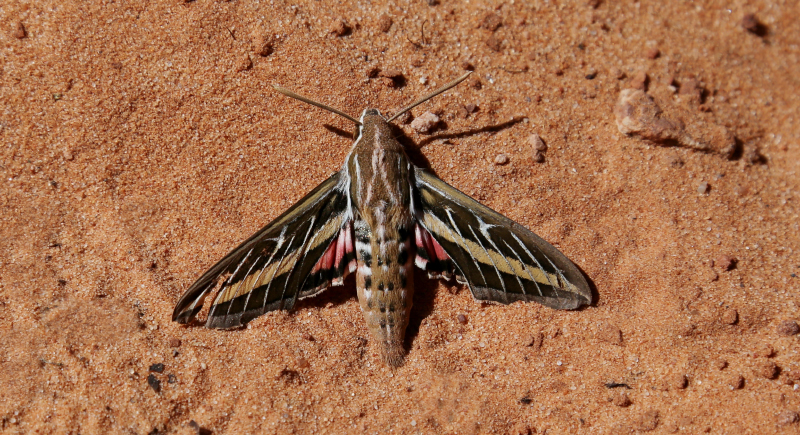
Image via iStockphoto/Ca2hill
Also called the hawk moth or hummingbird moth, the sphinx moth belongs to the family Sphingidae. It can be found all over the world except in extremely cold regions. People often mistake it for a tiny bird because of the way it hovers near flowers, wings beating fast enough to make a soft buzzing sound.
When feeding, it looks like a hummingbird sipping nectar with a straw. That “straw” is actually its proboscis, which can be several inches long. It is perfect for reaching deep into flowers where other insects can’t go.
Why It’s Named After Three Animals
Let’s start with the sphinx part. When the caterpillar is resting, it lifts the front of its body and tucks its head down, just like the statue of the Great Sphinx in Egypt. The “hawk” comes from its powerful, fast flight. These moths can reach speeds of up to 30 miles per hour and maneuver sharply, much like hawks chasing prey. And of course, the “hummingbird” connection is evident once you see it hover in front of a flower, wings beating so quickly they blur.
The combination of these traits gives the sphinx moth one of the most fascinating profiles in the insect world. It’s a moth that acts like a bird and looks like it could be part lobster from certain angles. Not to mention, it has the poise of a mythical creature.
Life in Fast Forward
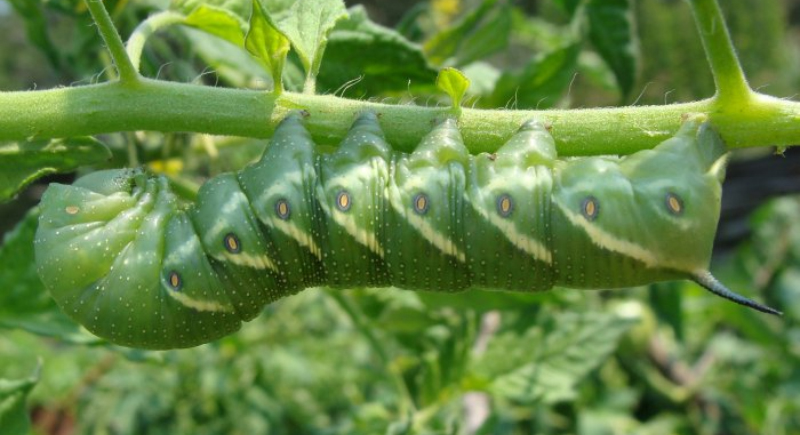
Image via Wikimedia Commons/Amanda Hill
The life cycle of a sphinx moth is a quick but dramatic transformation. It starts as an egg laid on the leaves of plants like tomatoes or tobacco. Once it hatches, the larva (better known as a hornworm) chows down nonstop, growing fast before forming a pupa underground or in leaf litter. From there, it emerges as a full-grown moth, ready to zoom off into the night or day, depending on the species. The entire process can take anywhere from a few weeks to several months.
Beyond Just a Pretty Face
Sphinx moths play a significant role in pollination. Many flowers rely on them to transfer pollen, especially those with long tubes that bees and butterflies can’t reach. Charles Darwin once predicted that a particular orchid with a foot-long nectar tube must have a moth with a matching tongue. He was right. Years later, scientists discovered the hawk moth he had imagined, complete with a tongue long enough to reach that hidden nectar.
These moths are also an important food source for birds, bats, and small mammals. Although they do not receive as much attention as butterflies, their work plays a crucial role in keeping ecosystems balanced.
Buzz Around Beauty and Fear
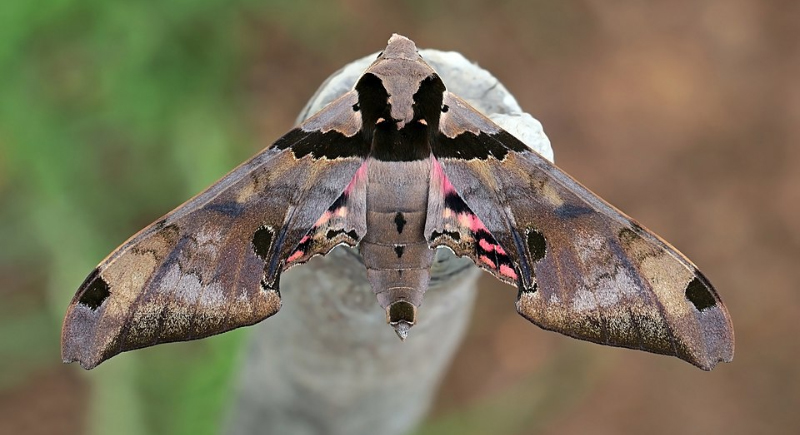
Image via Wikimedia Commons/Charles J. Sharp
People react strongly to the sphinx moth. On Reddit, users shared a range of reactions, from awe to full-blown panic attacks, after mistaking them for birds or hearing their deep wing buzz. The truth is, they’re completely harmless. They don’t bite or carry diseases. They’re just very good at being both weird and wonderful.
If ever you see what looks like a hummingbird hovering at your flowers after sunset, take a closer look. You might just be meeting one of nature’s most unique flyers: the sphinx moth, the insect named after three animals that somehow manages to live up to all of them.