Switzerland Has the Highest Number of Cows Per Capita in Europe
Switzerland is often associated with mountains, trains, and precision engineering, but another feature shapes the country just as much: cows. Despite its modest size and relatively small population, Switzerland supports a notably dense cattle presence spread across valleys, slopes, and alpine pastures. Long-standing dairy traditions and the realities of mountain farming have made cattle a constant, visible part of life in much of the country.
A Country Built for Dairy
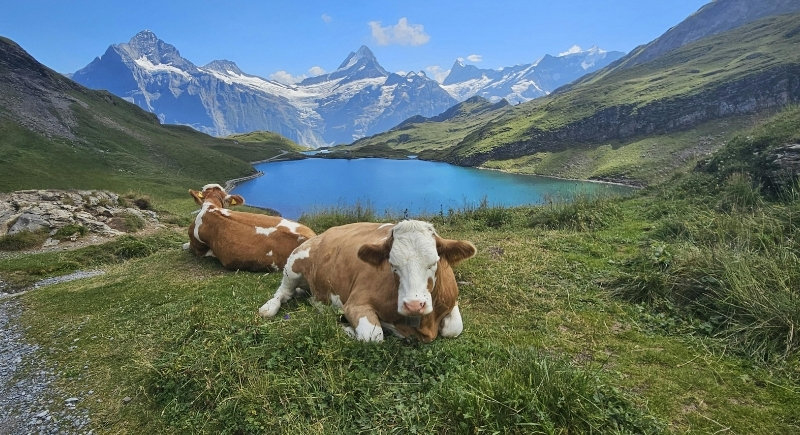
Image via Pexels/Mat
Geography plays a central role in shaping Swiss agriculture. Large portions of the country consist of mountainous and high-altitude terrain that limits large-scale crop farming but supports grazing. Over time, this has made dairy production the dominant agricultural activity. Dairy accounts for close to one quarter of Switzerland’s total agricultural output, a larger share than in many European countries.
In 2022, Switzerland had roughly 543,000 dairy cows spread across about 23,000 farms, divided between lowland and mountainous regions. When non-dairy cattle are included, total cattle numbers rise further.
Because Switzerland’s population is smaller than that of neighboring countries, these figures translate into a relatively high cow-to-human ratio. In some alpine villages, seasonal grazing can temporarily push cattle numbers above the number of permanent residents.
Why Farms Remain Small
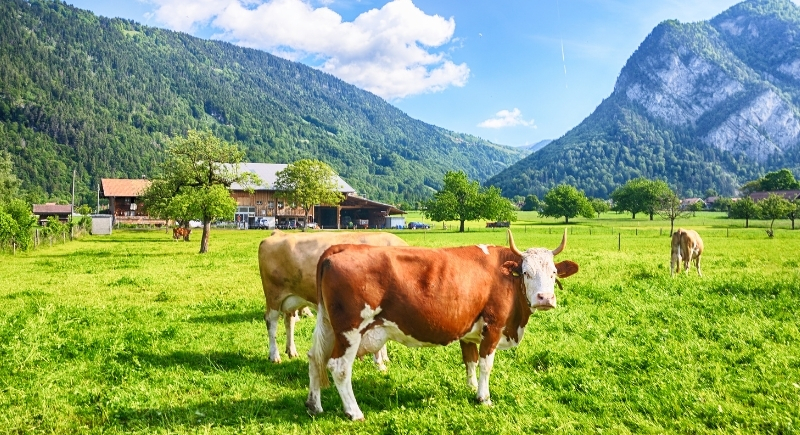
Image via Getty Images/alxpin
Swiss dairy farming works very differently from large industrial operations elsewhere in Europe. The average dairy farm manages just under 30 cows. The number has increased gradually over the past decade but remains modest by international standards. Herds are dispersed across valleys and hillsides rather than concentrated in large facilities.
This structure is reinforced by policy. Switzerland maintains strict animal welfare standards that require regular outdoor access and animal-friendly housing. These requirements raise production costs and tend to discourage very large-scale consolidation. As a result, cattle remain widely distributed across the countryside rather than clustered into a small number of intensive operations.
Higher domestic milk prices make the system viable. Swiss consumers pay more for dairy than most Europeans due to higher production costs and strict welfare standards. That pricing allows small farms to survive and keeps cattle distributed across the countryside rather than concentrated in large operations.
Grass-Based Feeding Shapes the Landscape
Most Swiss dairy cattle rely heavily on grass rather than imported feed. About 85% of their diet comes from domestic roughage such as pasture grass and hay. Alpine meadows provide natural grazing land that would be difficult to convert to other agricultural uses.
Seasonal grazing patterns further spread cattle across the country. During warmer months, many cows are moved to higher elevations where grass growth is strongest. This long-standing practice distributes herds across mountain regions and keeps cattle visible in areas heavily used by hikers, skiers, and tourists.
Cheese Keeps Demand Steady
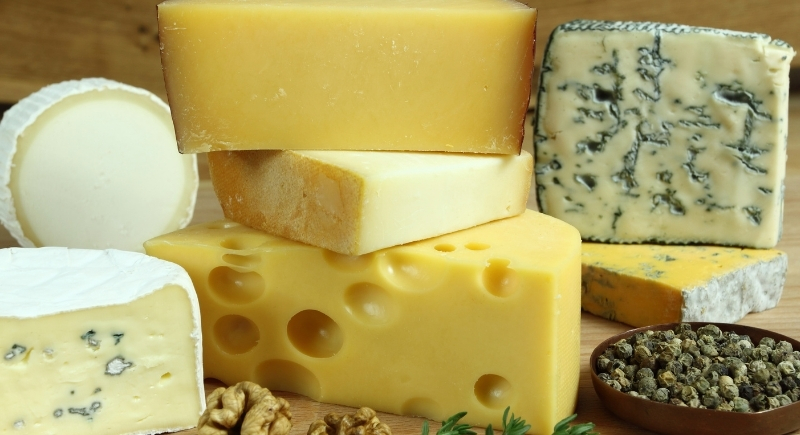
Image via Getty Images/fotokris
Nearly half of Switzerland’s milk production is processed into cheese, a higher proportion than in most European countries. Cheese plays a central role in both domestic consumption and exports, with Germany, the United States, France, and Italy among Switzerland’s most important markets.
Many traditional Swiss cheeses rely on raw milk and specific feeding practices, including silage-free diets. Those requirements favor pasture-based farming and make large-scale intensification difficult. Keeping up with cheese production, therefore, depends on maintaining a stable number of cows raised under small, closely managed systems.
Combined with Switzerland’s population size, this contributes to relatively high per-capita cattle figures even though overall output remains moderate.
Cows as Part of Daily Life
Cows also occupy a cultural position that reinforces their presence. Seasonal cattle parades mark the movement of herds between alpine pastures and villages. Decorative bells, traditional dress, and village celebrations make these movements highly visible and attract large crowds.
Tourism strengthens this connection. Visitors expect to encounter grazing cattle along hiking routes and near mountain villages, and that expectation encourages the preservation of pasture-based farming rather than widespread consolidation or removal.