Thailand’s Annual Monkey Buffet Festival Honors Local Wildlife
Once a year in the Thai city of Lopburi, long banquet tables are prepared for monkeys instead of people. The Monkey Buffet Festival takes place on the last Sunday of November and centers on the thousands of long-tailed macaques living around the historic core of the city. The event unfolds among the ruins of Phra Prang Sam Yot, a 13th-century temple that has shared space with monkey troops for centuries.
The setting itself helps explain why the festival developed here. The temple complex and surrounding streets have long been part of the monkeys’ daily territory.
During the festival, more than a hundred tables are covered with towers of food and platters. Once uncovered, the monkeys move freely across the site, climbing tables and statues while eating. The feeding period becomes the centerpiece of the day, but the festival did not start as a large public event. Its origins were much smaller.
How The Festival Began
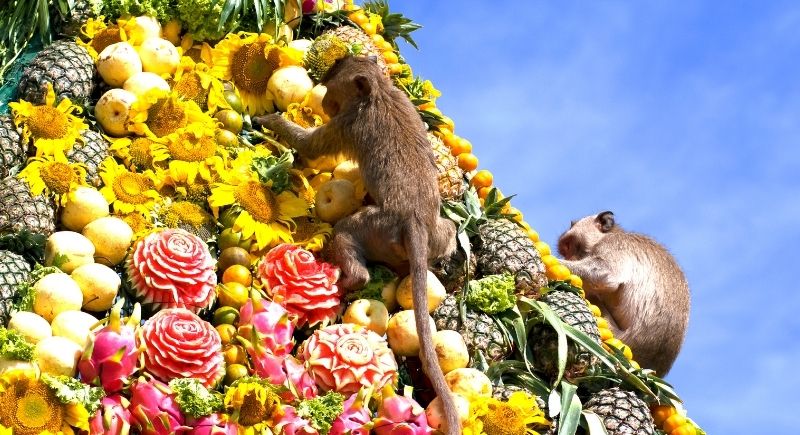
Image via Getty Images/gnomeandi
The Monkey Buffet Festival dates back to 1989. Local businessman Yongyuth Kitwatanusont organized the first event as a gesture tied to his company’s success. From a private celebration, it grew into an annual public gathering as more residents and visitors took an interest in the event.
Over time, the festival became part of Lopburi’s yearly rhythm. As it grew in scale, the amount of food prepared and the structure of the feeding itself also became more elaborate, leading directly to how the buffet looks today.
What Is Served At The Buffet
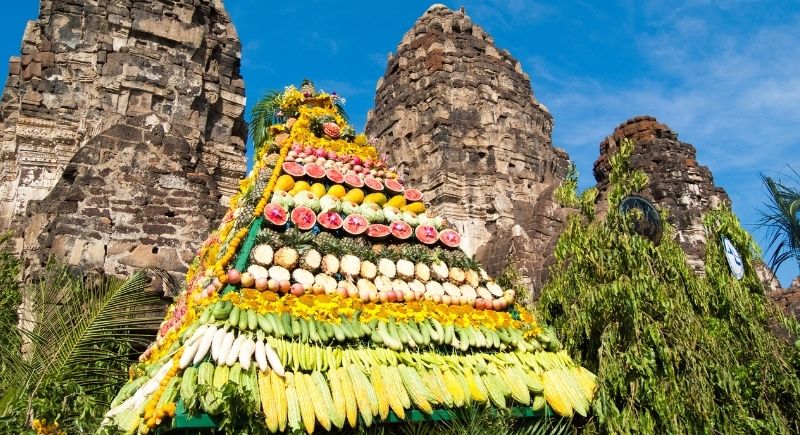
Image via Getty Images/gnomeandi
Organizers now prepare close to two metric tons of food each year. Most of it includes fruits and vegetables such as watermelon, pineapple, lettuce, and durian. Some years also include sticky rice, cashews, and traditional Thai sweets like thong yod, an egg-yolk dessert.
The food is arranged in decorative displays, often stacked into pyramids or patterned arrangements before the monkeys reach the tables. The volume of food connects directly to the size of the monkey population living in the city, which has changed significantly over the decades.
The Monkeys Of Lopburi
Lopburi is home to thousands of long-tailed macaques, sometimes called crab-eating macaques. Earlier estimates placed the population in the hundreds. More recent counts suggest numbers closer to four thousand animals living in and around the city center.
The animals have occupied the area around Phra Prang Sam Yot since before modern urban development. As Lopburi expanded, the monkeys adapted to city life and became a constant presence in streets, temples, and public spaces. Their long history in the city also connects directly to the beliefs that surround them.
Cultural Meaning Behind The Event
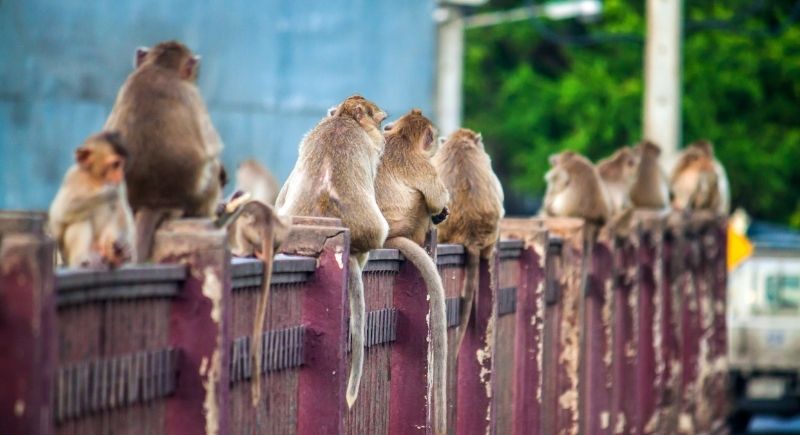
Image via Getty Images/mathess
Respect for monkeys in Lopburi is tied to regional beliefs associating them with good luck and prosperity. The connection often ties to the Ramakien, the Thai version of the Ramayana, which features Hanuman, the monkey general who aids Prince Rama. In local tradition, monkeys are viewed as descendants or followers connected to that story.
These beliefs helped shape how the festival is viewed locally, which is why the event is treated as both a feeding and a ceremonial gathering. That cultural weight also explains why the event is organized each year carefully.
A Carefully Managed Public Event
Monkeys move freely during feeding periods, while organizers maintain safety planning. Medical staff and ambulances are stationed nearby each year, and organizers manage visitor movement and food distribution. Minor bites or scratches have been reported across the decades, but no serious injuries have been documented during the event’s history.
Separate food vendors operate nearby for human visitors, allowing people to watch and participate in the festival atmosphere without interfering with the monkey feeding areas.
A Tradition That Continues Each Year
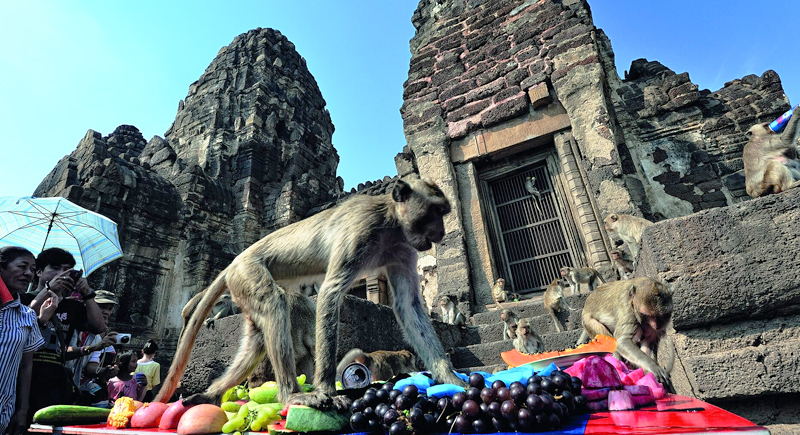
Image via Wikimedia Commons/Mr.Peerapong Prasutr
Today, the Monkey Buffet Festival remains part of Lopburi’s annual calendar, shaped by history, belief, and daily life in the city. The event continues to bring together residents, visitors, and the monkey population that has long lived around the temple ruins.