
That little hopper click turns pets into time lawyers, snack auditors, and one very persistent union.
The auto-feeder click becomes a legally binding contract
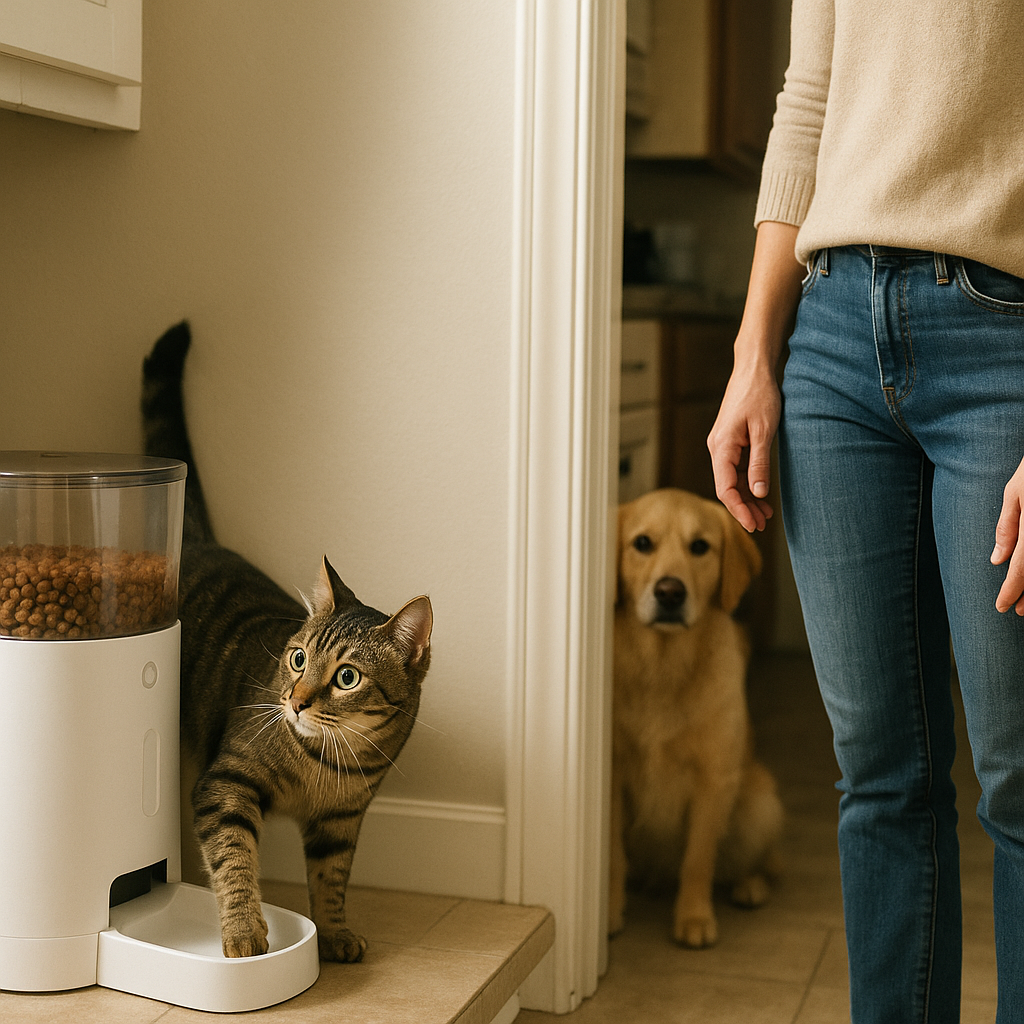
Automatic feeders are supposed to make life simpler. Mine did, for exactly three days, until my cat decided the sound of the auger turning was the official announcement of Justice. Now, the second the hopper gives that dry little krrk, she appears like she was waiting behind a curtain, pupils wide, tail up, ready to supervise the drop. The dog hears it too. He does not run to the bowl. He runs to me, because he has learned the human is the weak link in the system.
Here is the part that turns a schedule into a flexible arrangement: the click becomes the cue, not the food. If the feeder jams and nothing falls, they still clocked the click. That means, in their minds, dinner occurred and I am now late on payment. The cat will sit by the feeder and tap the chute with one paw, very gently at first, like she is trying to restart a vending machine without drawing attention. If that fails, she escalates to batting the side panel where the buttons are, which looks a lot like she is attempting to place a second order. The dog positions himself in the kitchen doorway, not blocking exactly, just occupying the most inconvenient line between sink and pantry, because he knows I will step around him and he can collect eye contact like it is currency.
If you have two pets, the negotiations get weirdly strategic. The cat will eat three pieces, then walk away on purpose, because leaving food behind suggests scarcity is coming and everyone should panic. The dog will rush in and vacuum the leftovers, which convinces the cat her scarcity theory was correct. Then she returns to the feeder to demand a second drop, while the dog stands behind her like her bodyguard, hoping her activism pays dividends. I have watched this partnership form in real time. It is impressive and extremely annoying.
The feeder manual says, basically, schedule it and forget it. Your pets are going to treat that click like the opening bell on the stock exchange. If you want the arrangement to feel less negotiable, don’t touch the feeder right after it dispenses. No topping off, no bonus handful. If you do it once, you have taught them the click is only the beginning of the meeting.
The empty bowl inspection and the hunger math they swear is accurate
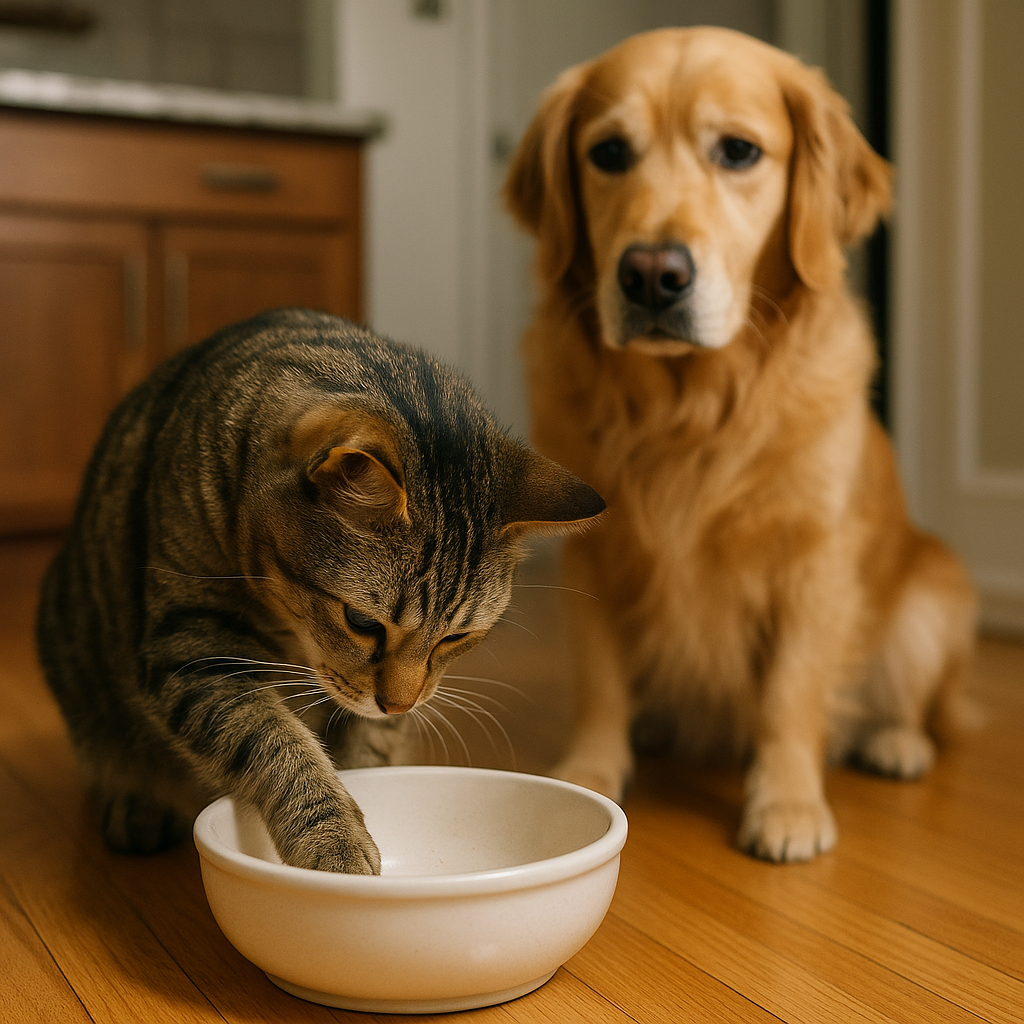
I used to think the bowl was just a container. My pets treat it like evidence. The cat does this thing where she walks up, looks in, then looks at me, then looks back in, like she is giving me one last chance to notice the injustice on my own. If there are a few crumbs stuck to the bottom, she will scrape at them with a claw, making that dry ceramic tick-tick-tick that somehow carries through the whole house. The dog has his own method: he noses the bowl so it slides an inch across the floor. Not enough to spill, just enough noise to file a complaint.
This is how feeding schedules become flexible: they don’t argue the clock, they argue the quantity. If dinner was at 6:00, fine. But was it enough dinner? That is where the loopholes live. The cat will insist, through prolonged staring, that the feeder’s portion is a tragic underestimate of her needs. The dog will back her up by acting faintly concerned, like he is worried about her health. Ten seconds later, he is trying to lick the inside of her bowl.
When you free-feed, they can graze and move on. When you portion, the bowl becomes a scoreboard. And once they have a scoreboard, they start running hunger math with the confidence of an accountant. My cat’s favorite argument is to eat half, leave, return ten minutes later, and then behave like the remaining half is not her responsibility because it is now a separate meal. The dog’s counter-argument is to finish his portion in 12 seconds and then claim he is still participating in the meal because other people are eating.
I’ve also watched them weaponize the concept of “empty.” If the bowl isn’t polished clean, my dog will sometimes refuse to leave the kitchen, because he knows I’m more likely to add a little extra than I am to wash the bowl mid-evening. The cat, meanwhile, will leave one single kibble behind like a planted flag. If I top it off, she wins. If I don’t, she can point at it later as proof she was never fed properly in her whole life.
If you’re trying to keep any kind of routine, the only thing that helps is making the bowl boring. Same place, same dish, no dramatic refills in front of an audience. Otherwise you’re not feeding pets, you’re officiating an ongoing audit.
Why the midnight snack request always comes with a witness (and a plan)
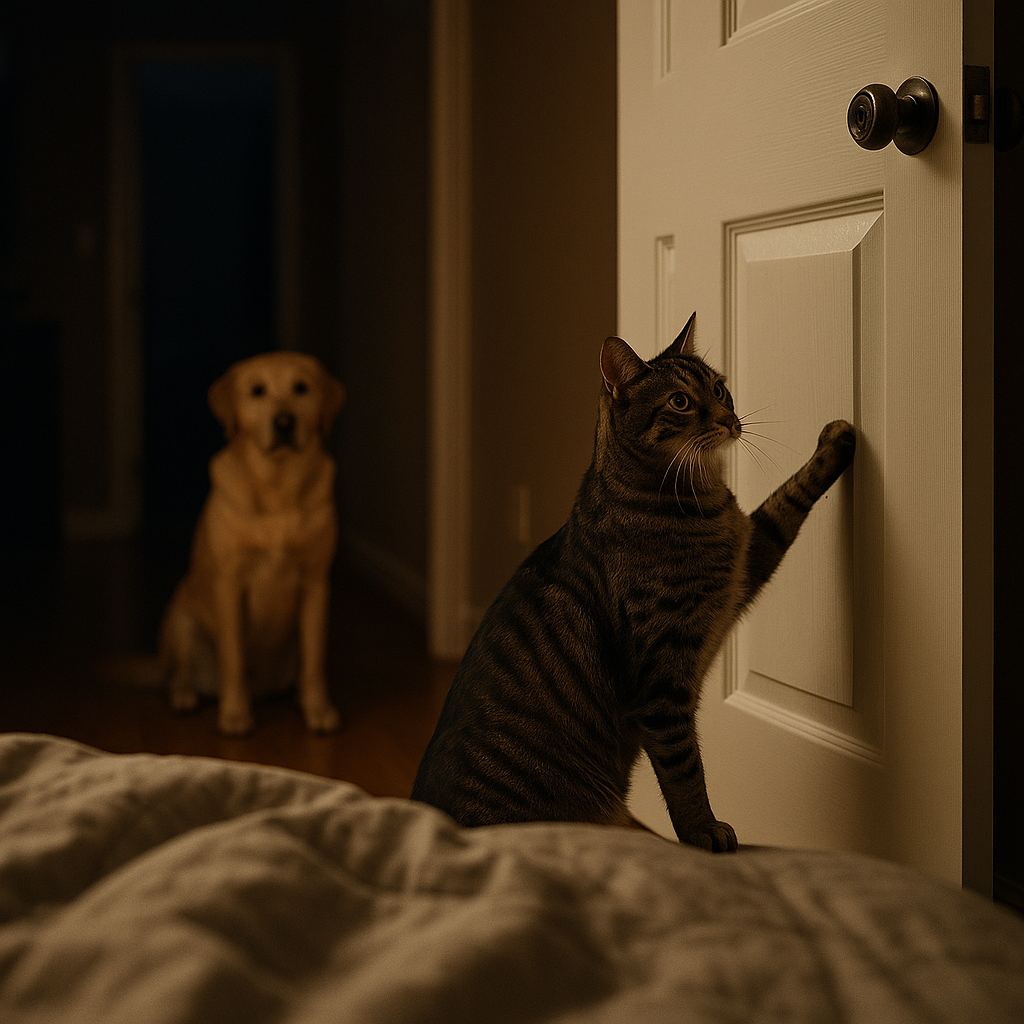
There is a specific hour when pets decide the feeding schedule was more of a suggestion, and it’s not at dinnertime. It’s later, when the house is quiet and you’ve been tricked into thinking everyone has settled. My cat starts with the softest possible paw tap on the bedroom door. Not scratching, not banging, just a polite little knock like she has a question about tomorrow’s agenda. The dog doesn’t knock. He sighs heavily from the hallway, loud enough that it feels personal.
And they rarely do it alone. One of them recruits the other because a witness makes the case stronger. The cat will stand in the doorway with a face that says, I am simply here to alert you to a serious oversight. The dog will sit a few feet behind her, very still, because he knows if he looks too enthusiastic he’ll blow the whole operation. If I move, both of them move. If I don’t, the cat escalates to walking across the bed and stepping directly on the part of my ribcage that makes me sit up. The dog’s contribution is to thump his tail twice, like a metronome for my guilt.
This is where household rules get rewritten in real time. “Kitchen is closed” becomes “kitchen is closed unless you can argue convincingly.” “No feeding after bedtime” becomes “no feeding after bedtime unless everyone is awake anyway.” The pets don’t need you to be generous. They need you to be consistent, and they are very good at locating the exact moment you’re least consistent, which is the moment you’re half asleep and trying to avoid a whole-house commotion.
I’ve had the cat lead me to the feeder like a tour guide, stopping to look back every few steps to make sure I’m following. She will sit beside it and stare at the chute, then glance at me, then stare again. The dog uses a different tactic: he plants himself between me and the bedroom like a bouncer, forcing the route to pass through the kitchen. None of it is random. They’ve tested the layout. They know which floorboards squeak. They know which cabinet door makes me flinch.
If you want to keep nights peaceful, you don’t have to win the argument with words. Just don’t hold the meeting. If you get up to “check,” you have already agreed that the schedule is negotiable, and they will bring that precedent to court tomorrow.