
Three moments I've watched on repeat that explain why the cat's toy wins, from scent math to squeak timing.
Catnip dust is basically a neon sign
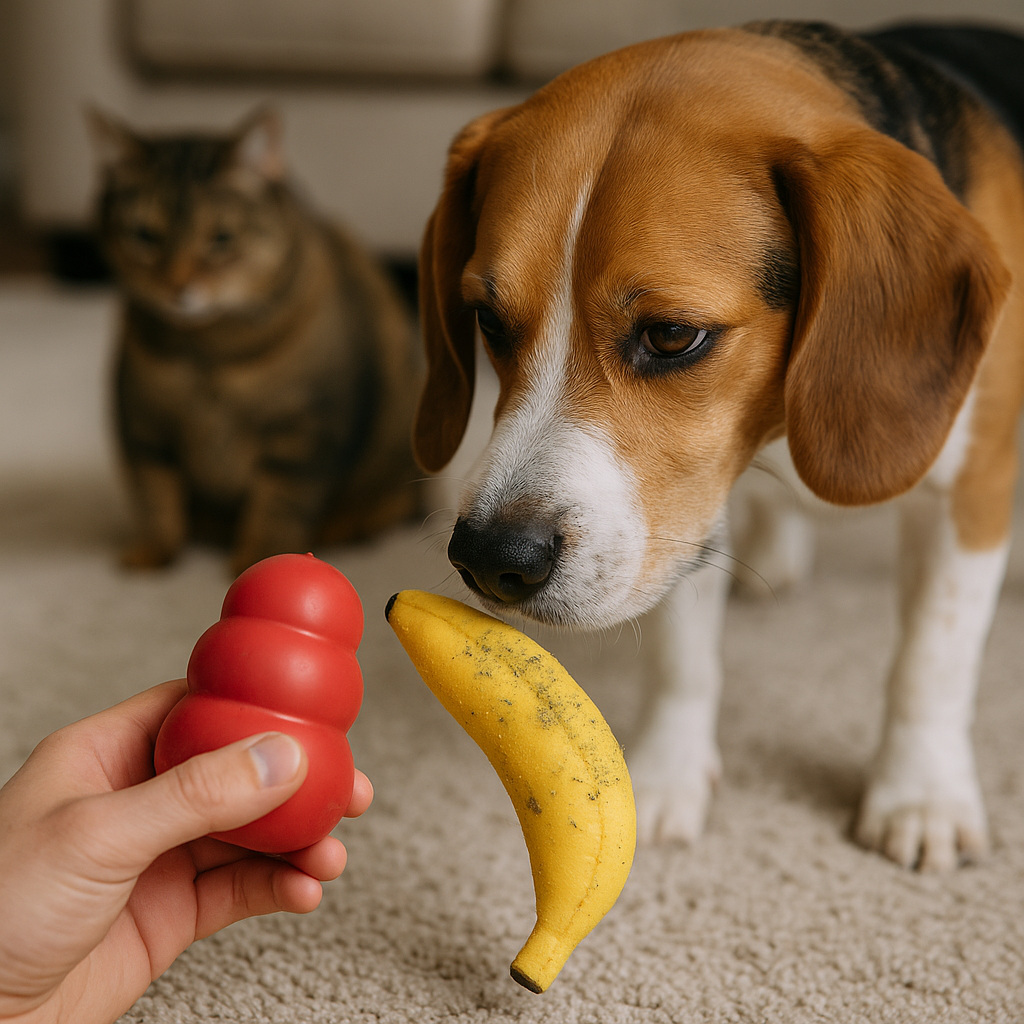
The funniest part about the whole toy-theft thing is that it often looks like pickiness when it's really chemistry plus habit. The cat's little kick-toy (the banana, the fish, the sad felt mouse) is lightly dusted with catnip, silvervine, or whatever blend came in the package. That stuff doesn't just smell interesting. It smells different every time it gets warmed up, drooled on, and rolled under the couch. Meanwhile, your dog's own rubber chew is sitting there in a polite, predictable cloud of nothing. I learned this when I grabbed a brand-new KONG from the bag, tossed it to my dog, and he gave me the slow blink of disrespect before walking straight over to the cat's toy like it had been personally announced.
If you want to test whether scent is driving the preference (instead of some mysterious interspecies rivalry), do a quick swap that keeps the shape constant. Take two similarly sized toys, ideally soft ones, and rub one on the cat's favorite sleeping spot for 10 to 15 seconds. Not the litter box, not food, just the place that smells like their routine. Then offer that toy first. I've watched the entire decision unfold at nose level: nostrils flare, tiny head turns, toy gets picked up like contraband. Dogs rely heavily on smell when investigating objects, so an unfamiliar or scent-rich toy may attract extra attention. That does not mean scent is always the reason a dog chooses the cat's toy, though. Texture, movement, novelty, and individual play preferences can also matter.
One practical takeaway that doesn't require buying a pile of new stuff: rotate and "season" your dog's toys on purpose. Rotating a few dog-safe toys can make familiar options feel less routine. Scent-based enrichment can also be useful, as long as anything offered for play is appropriate for your dog's size and chewing habits. Not forever. Just long enough to compete with the catnip banana that has, somehow, become the most valuable object in the living room.
The tiny squeaker that doesn't follow the rules
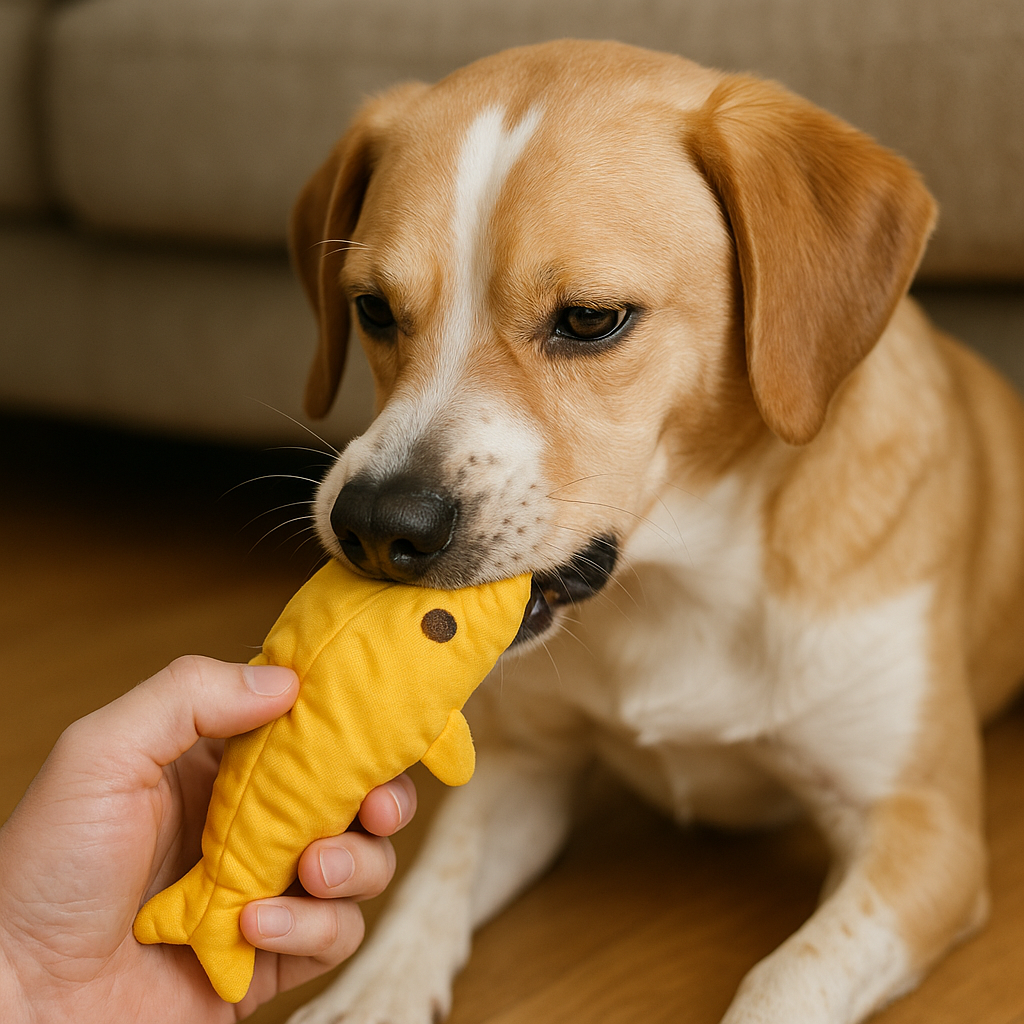
Here's a thing I didn't understand until I stepped on it at 6:12 a.m.: cat toys often make weirder sounds than dog toys. Dog squeakers are usually loud, blunt, and centered. A lot of cat toys have a smaller squeaker, a crinkle layer, or a bell that goes off half a beat late. That unpredictability matters. With my dog, a standard squeaky plush is basically a button he can press. Squeak, squeak, squeak, solved. The cat's toy does that irritating, inconsistent mix of crinkle-and-squeak where the sound only happens if you bite at a certain angle. He'll spend ten minutes trying to reproduce it like he's debugging firmware.
If you're trying to make sense of the snub, pay attention to how your dog mouths things. Some dogs are crush-and-release chewers. Others do the side-molar grind. If their own toy rewards only one style (for example, a squeaker that only triggers with a straight-on bite), it might not align with how they naturally play. The cat's toy, because it's smaller and floppier, shifts around and accidentally rewards more bite patterns. I can see it in the way my dog keeps re-gripping the cat toy, repositioning it, then looking mildly offended when it doesn't squeak on command. That inconsistent payoff may help keep his attention, much like other activities where the interesting result does not happen every single time.
Want a clean experiment? Sit on the floor and offer two toys without tossing them. Keep your hands still. If the cat toy gets chosen, watch what catches your dog's attention during the first 20 seconds. It might be the crinkle, the squeaker, the toy's movement, or simply the novelty of an object that normally belongs to the cat. None of that means your dog's toys are bad. It means the feedback loop is different, and for some dogs, different wins.
When I buy dog toys now, I don't just look at durability. I look at the sound and where it lives in the toy. Offset squeakers, layered fabrics, and toys that respond to a gentle mouth (not a full bite) hold my dog's attention longer in my house than the big, obvious squeak brick. It doesn't stop the cat-toy heists entirely, but it does cut down on the full-body sulk when I hand him something that, to him, is boring on contact.
Why small toys feel like stolen food
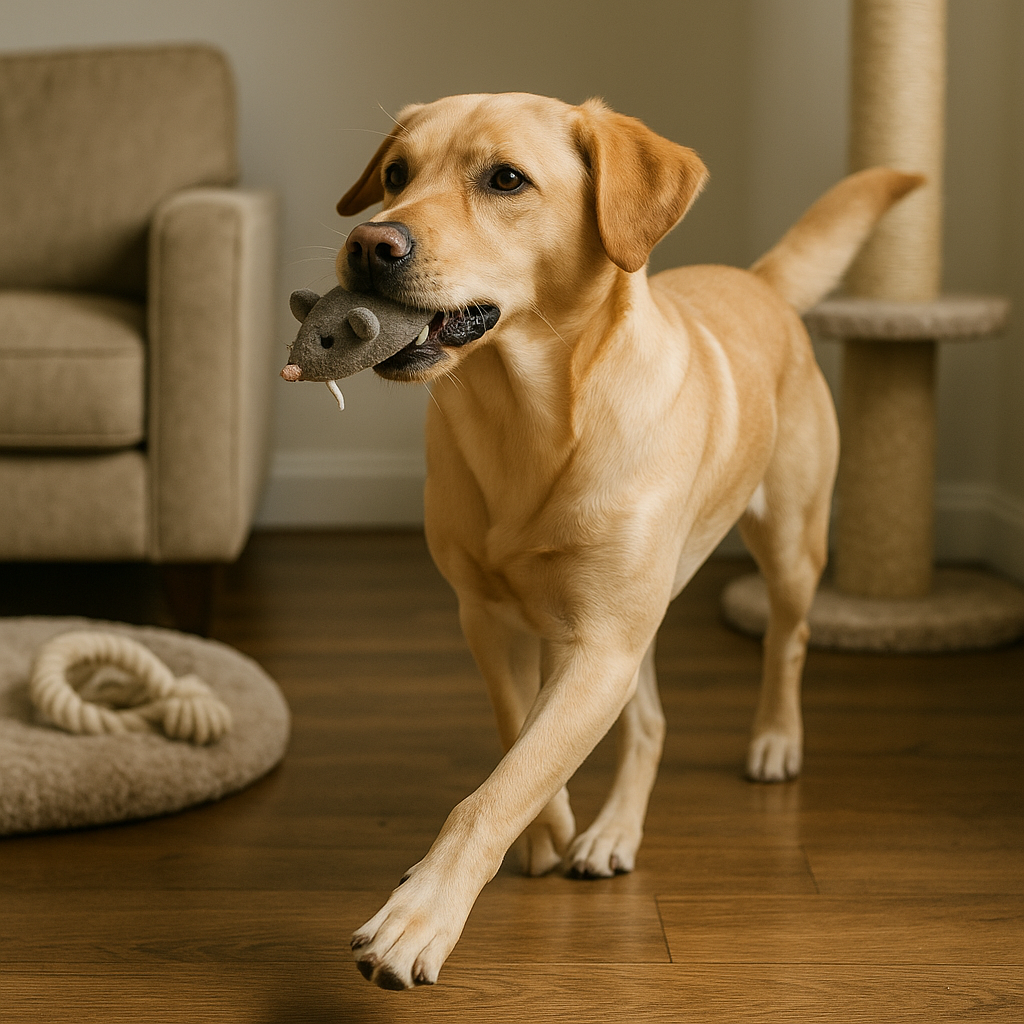
Not every preference is scent or sound. Size and portability may also influence which objects a dog enjoys carrying, although a preference for a smaller toy should never override safety. A lot of dog toys are built to be left behind: bulky ropes, big plush toys, heavy rubber chews that thunk when they hit the floor. Cat toys are usually light, compact, and easy to carry off. That portability may be part of the appeal for some dogs. They can pick it up, trot away, and keep it. I've watched my dog steal a tiny stuffed mouse and immediately do that stiff, proud walk he never does with his own toys. It's the same posture he uses when he finds a dropped slice of pizza crust on the sidewalk and wants to relocate it before anyone objects.
This is where the household dynamics sneak in. Cat toys tend to live in cat territory: the base of the cat tree, the window perch, the spot behind the scratching post. A cat's reaction or an owner's sudden attention can also make toy stealing more eventful than quietly playing with an ordinary dog toy. If the cat notices, your dog gets a reaction. If you notice, your dog gets a reaction. Their own toy, sitting in the open like community property, doesn't have that charge.
I don't mean you should encourage toy theft for enrichment. I mean: when your dog ignores their own pile but keeps targeting the cat's stash, it's worth asking if your dog's toys are too big, too available, or too boring to "win." I started leaving one smaller dog-safe plush in a basket up on a low shelf (still accessible, just not sprawled across the floor). It changed the vibe. He'd select it, bring it down, and act like he'd scored something. Same dog, same day, different presentation.
Two notes that matter if you're living this: first, small toys are a safety issue for medium and large dogs. Choose toys that are appropriately sized for your dog's body and chewing habits, and remove anything small enough to be swallowed or broken into pieces that can be swallowed. Second, if your dog is targeting cat toys with feathers, strings, or glued-on bits, manage it as you would any other household hazard. Put the cat toys away when the cat isn't using them, and give your dog an appropriately sized, dog-safe alternative with a similar texture or play style. A dog-safe replacement with similar appeal may make the cat's stash less tempting. Not because your dog learned manners overnight, but because the reward finally exists on their side of the room.