The ‘Cats Always Land on Their Feet’ Myth That Kills Indoor Cats
There are many myths about pets, and while most seem harmless, some can actually put your cat at real risk, like the one you’ve probably heard your whole life: cats always land on their feet.
It sounds reassuring, like they can handle falls on their own. For indoor cat owners, that idea can make open windows, balconies, or high spots feel less risky.
But it’s only partly true. Cats can twist in the air and land on their feet, but that doesn’t mean they’re safe. Falls still cause serious injuries. That missing detail is where things go wrong.
Landing On Their Feet Doesn’t Mean Landing Safely
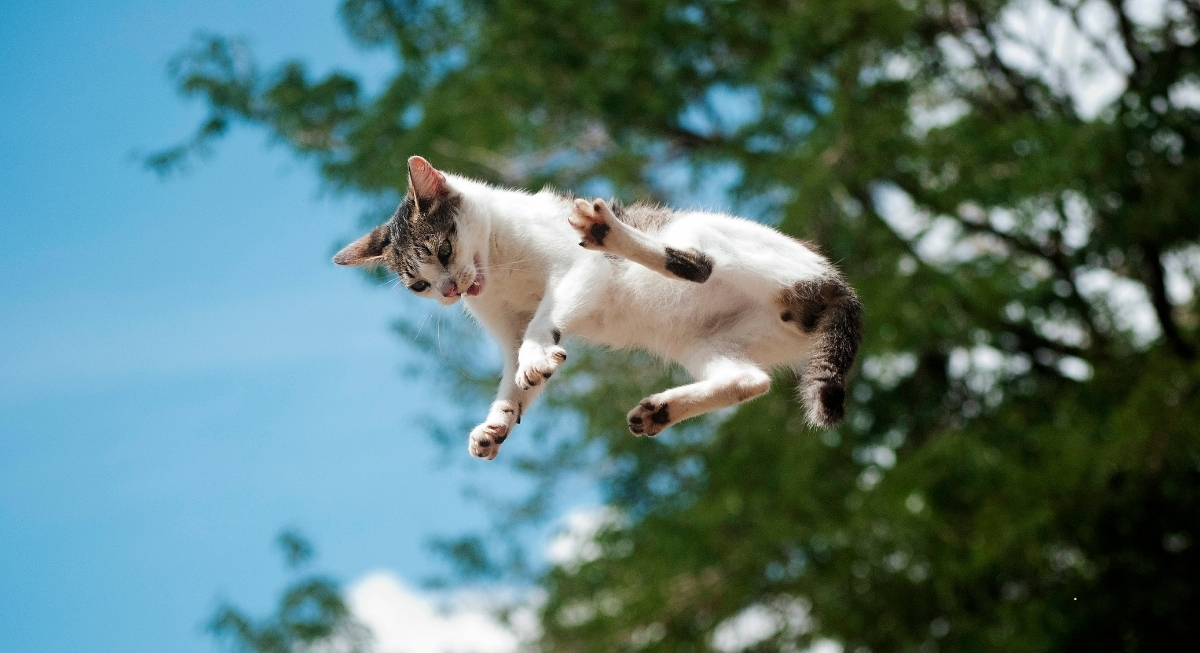
Image via Getty Images/yordanka caridad
Cats do have an impressive ability called the righting reflex. It develops early in life, usually within the first few weeks, and allows them to twist mid-air and orient their body so their feet face the ground. This isn’t guesswork or luck. A cat’s inner ear helps it detect which way is up, while its flexible spine and lightweight body allow it to rotate quickly.
As it falls, the head turns first, then the rest of the body follows. Legs tuck in, then extend just before impact. That’s why cats often land feet-first and also why the myth has lasted so long.
Even when a cat lands on its feet, the force of the impact still travels through its body. The legs absorb some of it, but not all. Injuries are common, including broken bones, jaw damage, and internal trauma affecting organs like the lungs or bladder. In other words, a “correct” landing can still end in serious harm.
The Height Problem Most People Don’t Know About
For the righting reflex to work, a cat needs enough time in the air to adjust its position. Falls from very short distances may not give it that chance. Extreme heights, too, are risky because the force of the fall can overwhelm the body.
Some veterinary data has shown that cats falling from higher buildings sometimes suffer fewer visible injuries than those falling from mid-level heights. This happens because they have more time to reposition and may relax their bodies during descent, which can slightly reduce impact.
The Reality Of High-Rise Syndrome
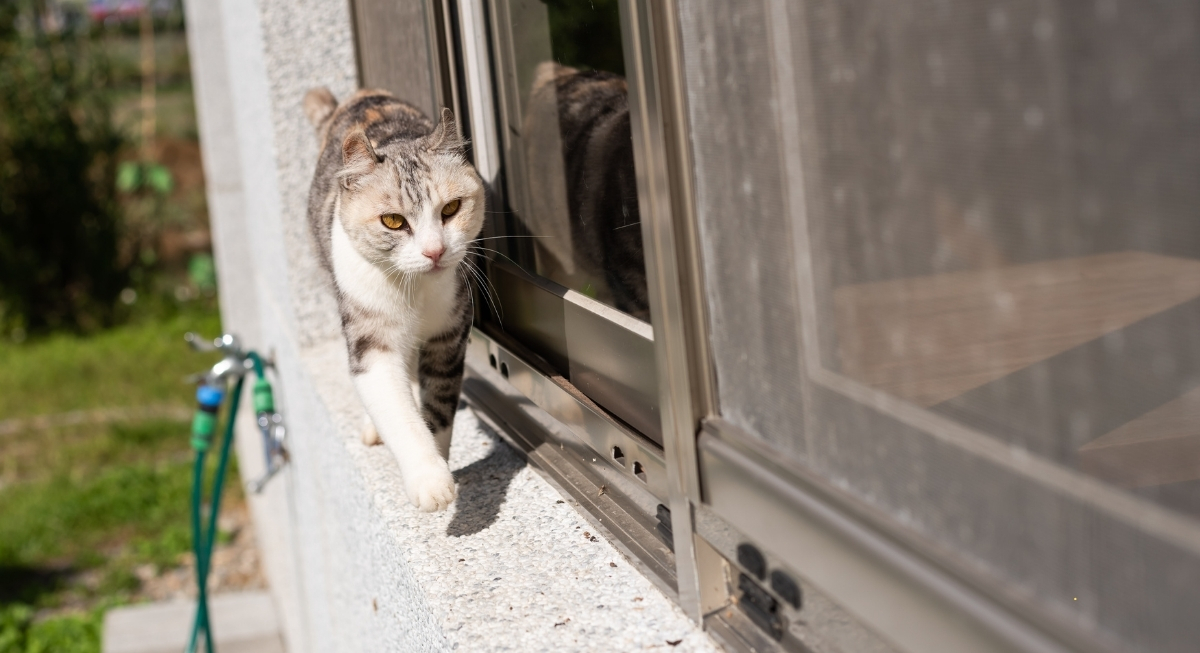
Image via Canva/sambarfoto
This is where the myth becomes dangerous for indoor cats. High-rise syndrome refers to injuries caused when cats fall from windows, balconies, or other elevated indoor spaces. It’s more common than many people expect, especially in apartments.
Cats are naturally curious. They chase movement, lean toward birds, and explore narrow ledges without understanding the risk. An open window or balcony door can turn into a fall in seconds. Because many owners believe their cat will “land safely,” these risks are often underestimated.
Not All Cats Have The Same Ability
Even when everything lines up, not every cat will respond the same way. Older cats may not react quickly enough. Overweight cats can struggle to rotate mid-air. Less agile cats may not position themselves correctly before impact.
Indoor cats are often seen as protected from danger, and in many ways, they are. They avoid traffic, predators, and getting lost. But windows, balconies, and high furniture create opportunities for falls that owners need to take seriously.