The Chemical Reaction That Makes You Obsessed With Your Cat
A measurable hormone spike can change decision-making, lower stress hormones, and reinforce attachment pathways in the brain within minutes. In 2016, researchers reported a 57 percent increase in oxytocin levels in dogs after 10 minutes of play with their owners.
Cats showed a smaller increase, about 12 percent. The contrast surprised researchers, yet it still confirmed that the bond between humans and animals produces measurable biological effects. Even with a milder response, the interaction triggers the same attachment pathways in the brain. In practical terms, spending time with a cat still strengthens the emotional priority the brain assigns to that relationship.
The Oxytocin Loop

Image via Getty Images/designer491
Oxytocin drives the attachment, and it’s the same chemical that surges during parent-infant bonding and close romantic contact. A 2021 study in Japan found that women who gently interacted with their cats for just a few minutes had higher oxytocin levels in their saliva compared with a resting period. A February 2025 study went further and measured the cats as well. When the interaction was voluntary, both human and feline oxytocin levels rose.
Oxytocin strengthens emotional memory and reinforces trust. The brain logs the cat as a safe presence, then rewards future interaction. Eye contact, slow blinking, and relaxed petting keep the loop going. Securely attached cats in the 2025 study showed stronger hormonal boosts when they initiated contact, such as lap sitting or nudging.
Stress Drops, Blood Pressure Follows
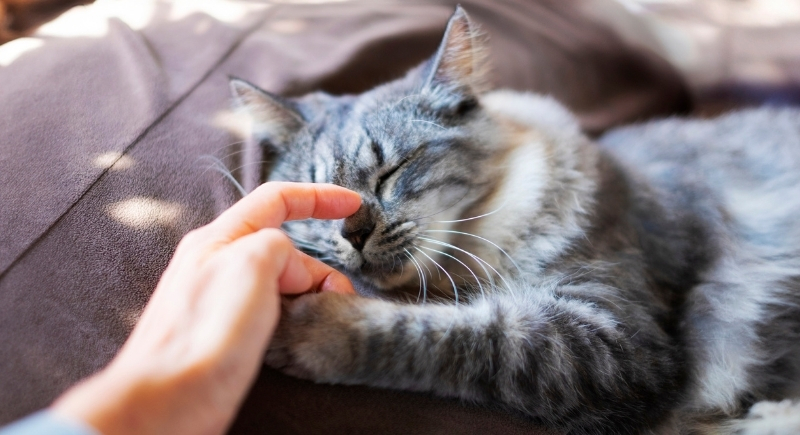
Image via Canva/Aflo Images
Oxytocin does not act alone. It suppresses cortisol, the main stress hormone. A 2002 study found that gentle interaction with a cat increased oxytocin and lowered cortisol, which can reduce blood pressure and perceived stress.
Purring may add another aspect. Cat purrs typically vibrate between 25 and 150 hertz, a frequency range associated with tissue repair and relaxation in some therapeutic studies. Research suggests that listening to purring can lower heart rate and support a calmer nervous system response.
Petting a cat shifts the body toward parasympathetic activity, often called the rest and digest state. Blood pressure dips slightly, muscles relax, and the brain registers safety. Repeat that cycle daily, and attachment deepens.
Routine, Dopamine, And Daily Fixes
Attachment also grows through repetition. Feeding time, evening cuddles, and the sound of paws in the hallway become familiar cues. When those moments happen, the brain releases dopamine, reinforcing the habit and encouraging the behavior again.
A 2022 study in Frontiers in Psychology found that people living with pets showed higher emotional resilience and lower cortisol levels than those without pets, especially when daily routines involved their animals. Shared schedules add structure, which helps stabilize mood. The brain begins to expect the next interaction.
Online behavior reflects the same pattern. Research on digital media consumption shows that watching cat videos can increase positive emotion and energy levels. The brain registers the clip as a small reward, which helps explain why cat videos spread so widely on social media.