The Complete Guide to Flying With Your Dog: Airline Policies, Fees, and Survival Tips
Flying with your dog is possible. That said, it’s not always straightforward, and it’s not always the right call for every situation. Between strict airline rules, limited availability, health requirements, and the reality of the flight itself, there’s more to think through than most people expect.
Still, thousands of dogs fly successfully every year. This guide breaks things down clearly so you understand what applies, what may change depending on your situation, and what actually matters when you’re planning a trip with your dog.
Can Your Dog Fly at All?
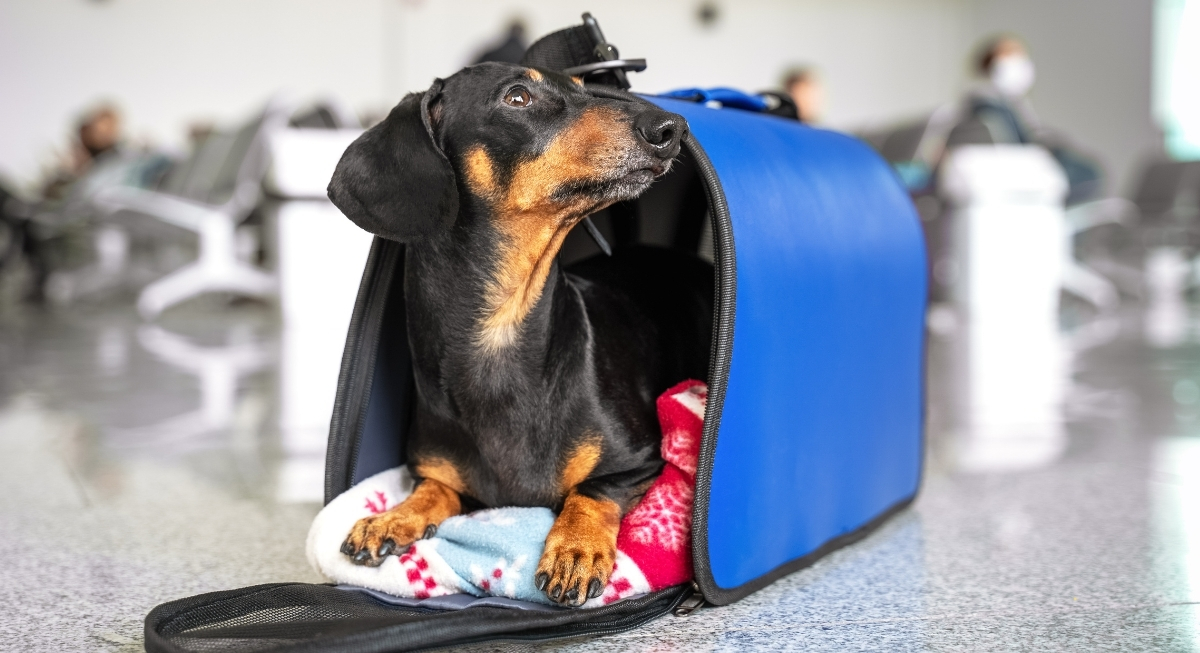
Image via Getty Images/Ирина Мещерякова
Before looking at airline policies, the first step is deciding whether flying is appropriate for your dog. Air travel can be stressful for animals. Airports introduce loud noises, unfamiliar environments, temperature changes, and long periods inside a carrier.
Older dogs, anxious pets, or dogs with health conditions may struggle more than others during a flight. Veterinary experts often recommend flying with a dog only when it is necessary, especially if the animal must travel in cargo.
A visit to the veterinarian should always come first. Many airlines require a health certificate confirming that the dog is fit to fly and up to date on vaccinations. These certificates are typically valid for about 30 days and may need to be issued shortly before departure.
Breed also plays a role. Short-nosed breeds such as bulldogs, pugs, and French bulldogs face higher respiratory risks at altitude, which leads some airlines to restrict or prohibit them from certain types of air travel.
The Three Ways Dogs Travel on Planes
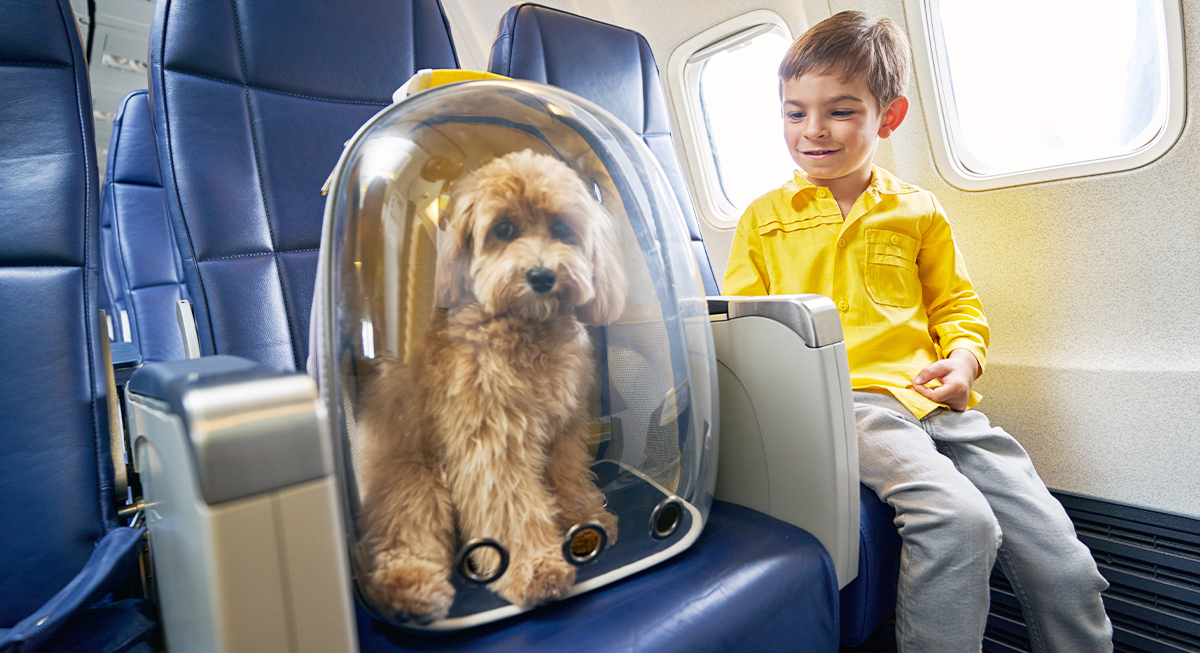
Image via iStockphoto/Svitlana Hulko
Dogs travel by air in three ways, but they are not equally available. Small dogs can travel in the cabin, provided they fit inside a carrier that slides under the seat and allows them to stand and turn around.
Larger dogs typically travel through cargo systems, which are climate-controlled but involve separate handling, loading, and pickup procedures.
A third category, checked baggage, still exists in some cases but is now limited or unavailable on many airlines. Current policies have shifted toward either in-cabin travel for small pets or cargo transport for larger ones.
Size determines everything here. Most airlines expect in-cabin pets, including their carrier, to fall within roughly 15 to 20 pounds or less and fit comfortably beneath a seat.
Airline Rules That Actually Matter
Every airline publishes its own pet travel policy, and those policies can differ significantly.
Most major U.S. airlines allow small dogs and cats in the cabin, provided they remain in an airline-approved carrier that fits beneath the seat.
Typical policies include:
United Airlines: Up to two pets per passenger with specific carrier size limits; pets must remain in the carrier throughout the flight.
Delta Air Lines: Small dogs, cats, and birds may fly in the cabin if they fit inside a soft carrier under the seat.
Southwest Airlines: Allows small dogs and cats on domestic flights only, with one carrier per passenger.
JetBlue: Only small pets are allowed; larger animals cannot travel via cargo on the airline.
Large dogs usually travel in cargo. However, some airlines have reduced or eliminated pet cargo options in recent years. American Airlines and Alaska Airlines remain among the few carriers that still allow pets to fly as cargo on certain routes.
Another constraint many travelers overlook is capacity. Airlines often limit pet reservations to two to six animals per flight, depending on aircraft size. That means booking early is essential.
How Much It Costs to Fly With a Dog

Image via Pexels/Karola G
Pet travel fees vary by airline, but most follow a similar structure. For dogs traveling in the cabin, airlines usually charge between $95 and $150 each way on domestic flights.
Examples include:
Delta: about $125 per flight segment
Southwest: about $125 per carrier each way
United: about $150 per flight segment
American Airlines: about $150 per flight segment
Cargo travel is significantly more expensive. Costs depend on crate size, route distance, and total weight. For domestic travel on some airlines, fees can start around $435 each way for larger dogs. These charges are separate from your ticket and must usually be paid during check-in.
Carrier and Crate Requirements
Carrier and crate requirements are strict, and airlines take them seriously for safety reasons. For in-cabin travel, the carrier needs to fit under the seat in front of you while still giving your dog enough space to stand, turn around, and lie down comfortably. It also has to allow proper airflow, with ventilation on multiple sides.
Most airlines lean toward soft-sided carriers for cabin travel because they can adjust slightly to fit under the seat without taking away from your dog’s comfort.
For cargo travel, crates must meet International Air Transport Association (IATA) standards. They are similar to those for in-cabin travel and must also include absorbent flooring and accessible food and water containers.
Clear labeling is required. Airlines often ask owners to mark crates with “Live Animal” labels and attach contact information in case of delays.
What Happens at the Airport
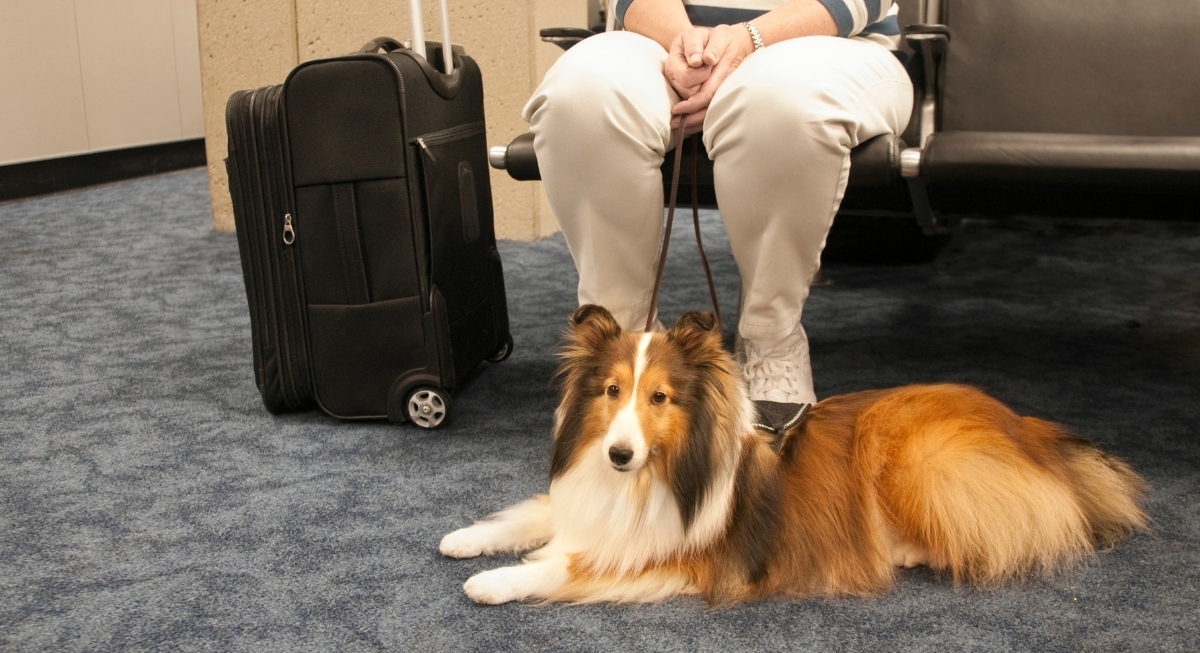
Image via Getty Images/Lokibaho
Travel day involves more steps than typical air travel. If your dog flies in the cabin, you will check in at the airline counter, present any required health documents, and pay the pet fee. Afterward, security screening begins.
At TSA checkpoints, the carrier goes through the X-ray machine while the owner carries or walks the dog through the metal detector. Collars with metal parts may need to be removed temporarily.
Cargo travel requires even more time. Airlines often ask owners to arrive three hours before domestic flights and up to five hours before international departures to complete cargo processing.
After landing, cargo pets are typically available for pickup about two hours later at a designated cargo facility.
Survival Tips for a Smoother Flight
Preparation makes the biggest difference in how smoothly a trip goes. Start by introducing your dog to the carrier weeks before travel. Leaving the crate open at home with familiar bedding encourages dogs to treat it as a safe place rather than a stressful enclosure.
Exercise helps as well. A long walk before heading to the airport allows dogs to burn off energy and rest more comfortably during the flight. Veterinarians often recommend avoiding sedatives unless specifically prescribed. Sedation can interfere with breathing at altitude and is discouraged by many airlines.
Finally, direct flights reduce complications. Fewer connections mean less time in cargo holds, fewer handling transfers, and a shorter overall journey for your pet.