The Cutest Killer on Earth Lives in Holes Dug by Rats
When people picture a deadly hunter, they usually imagine something large and intimidating. In reality, one of the most efficient predators on Earth is smaller than many house cats. It succeeds in roughly 60 percent of its hunts and can catch more than a dozen animals in a single night.
Researchers follow this tiny carnivore across southern Africa, where it survives by staying on the move, hunting constantly, and slipping into burrows dug by rodents. Its daily life depends on homes it never even built itself.
Tiny Body, Extreme Hunting Results
The black-footed cat (Felis nigripes) weighs roughly 2 to 6 pounds and stands about 8 inches tall. That size sounds harmless until you look at its hunting data. Studies and wildlife tracking show this cat can kill about 10 to 14 prey animals per night. That equals a successful hunt roughly every 50 minutes during active hours.
Big cats like lions average around a 20 to 25 percent success rate, but this small predator reaches around 60 percent! The difference comes down to biology: small carnivores burn energy faster, which forces them to hunt more frequently. That pressure creates a predator built around efficiency rather than power. The menu usually includes rodents, birds, insects, and small reptiles. Each kill may look minor on its own, yet combined totals make this cat one of the most productive hunters alive.
Three Hunting Styles In One Night
Wildlife researchers documented three distinct hunting methods. The first involves fast movement through grass to flush prey into motion, the second uses slow stalking, where the cat creeps forward with careful steps, and the third strategy might be the most intense. The cat can sit completely still near burrow entrances for up to two hours before striking.
This flexibility increases success across changing terrain and prey behavior. Instead of relying on strength, the cat relies on timing and persistence. Most hunting happens at night, with large eyes that improve low-light vision, and spotted coats that blend into dry grass and sand.
Living Inside Someone Else’s Work
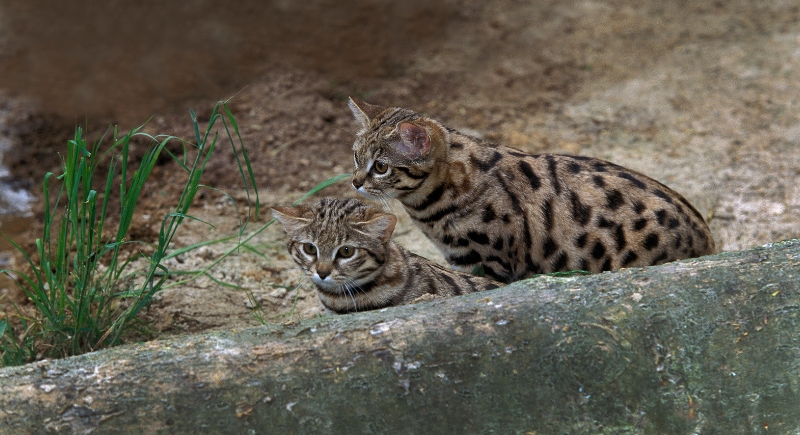
Image via Getty Images/slowmotiongli
Female black-footed cats raise kittens inside abandoned underground tunnels, especially ones dug by springhares, large rodent relatives known for powerful jumping legs. These burrows protect against heat swings and predators. Tracking studies found that females may rotate among roughly 12 shelters over several months.
Mothers raising young often stay inside one den longer early in development, then switch locations almost daily once kittens start moving. That movement reduces scent buildup and lowers the risk of predation. Other animals also use these underground spaces, creating a shared survival network. This hidden ecosystem helps multiple species survive harsh conditions.
A Population That Cannot Recover Quickly
The total wild population sits around 10,000 individuals. Each female typically produces only one or two kittens per year. Losses hit population stability hard because replacement happens slowly. Disease also adds pressure, as AA amyloidosis, a kidney condition, appears in several wild populations and weakens affected animals.
Habitat change adds another aspect to this. Livestock grazing can reduce prey numbers and alter grassland structure. Predator control efforts targeting jackals and other threats can accidentally kill these cats, too. Most habitat exists on private farmland, which means conservation often depends on cooperation with landowners rather than protected parks alone.
Cute Looks, Serious Survival Math
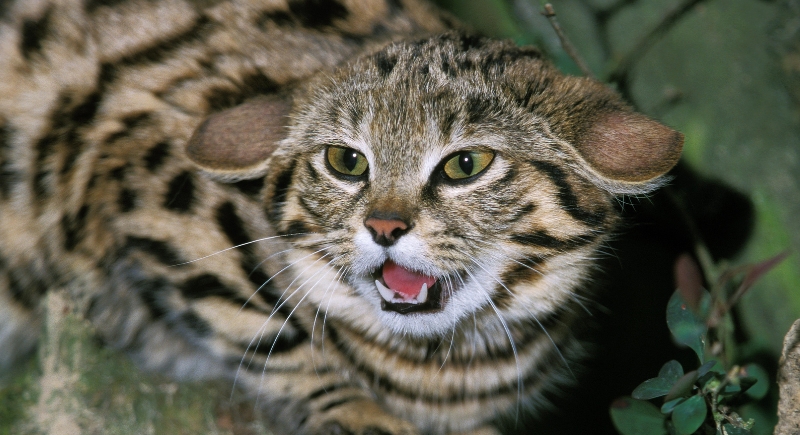
Image via Getty Images/slowmotiongli
This species looks similar to a small tabby cat, right down to pink skin and black paw pads that inspired its name. That familiar appearance hides one of the most efficient predator profiles scientists have ever measured. Its survival depends on constant hunting, access to burrows created by other animals, and stable grassland ecosystems.
Researchers continue studying movement patterns, disease risks, and habitat use because even small environmental shifts can quickly impact numbers. Every data point helps conservation teams protect one of Africa’s most specialized hunters. In dry grasslands across Namibia, Botswana, and South Africa, this tiny predator keeps proving that size rarely predicts success in nature.