
When seasonal shedding ramps up, I grab the right grooming tool for the coat, a damp towel, and a vac attachment that doesn't clog in 30 seconds.
Why shedding can spike as the seasons change
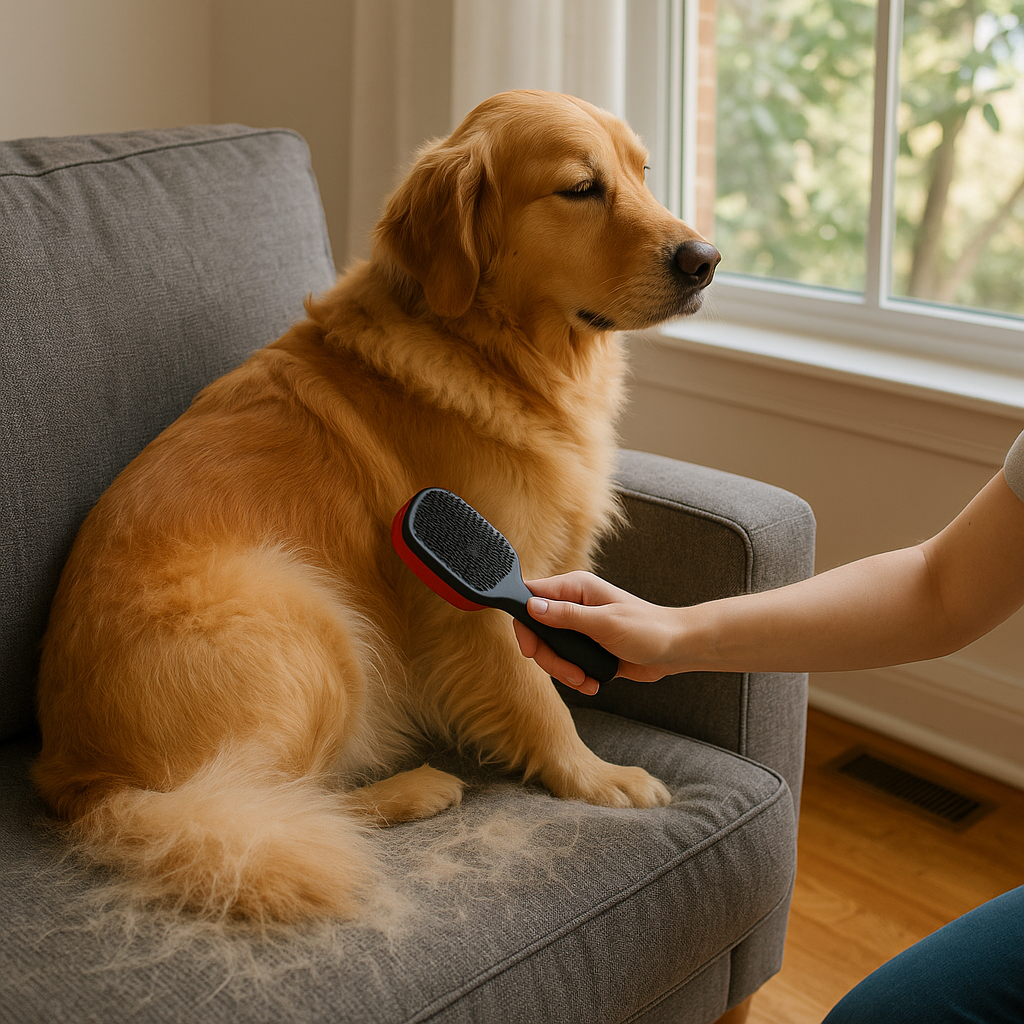
The weird part about seasonal shedding is how it can seem to come out of nowhere. You do your normal brushing, things seem fine, then you wake up, and the couch has a new colorway. Indoor pets can shed differently because artificial light and relatively steady indoor temperatures may soften the usual seasonal pattern, contributing to year-round shedding. I notice it most around seasonal transitions, especially when the weather starts shifting more dramatically, and the coat that felt plush in February suddenly feels a little dry at the ends but dense at the roots.
A quick way to tell this is normal seasonal turnover and not a grooming miss is by how the hair looks and feels. Seasonal shed tends to be lots of intact hairs that come out cleanly when you run your hand down the back, plus that fuzzy undercoat that clings to everything like dryer lint. When it crosses into “I should pay attention,” it usually shows up as dandruffy flakes, hot spots from licking, obvious thinning patches, or your pet acting itchy and uncomfortable. I don't play home detective beyond that. If the skin looks angry or the shedding is paired with scratching that keeps them up, I call the vet, because you can't eyeball your way out of allergies, parasites, or an infection.
For the everyday seasonal surge, the goal isn't perfection. It's management: getting ahead of loose hair and undercoat, when the pet has one, before tangles and mats build up and turn into those little felted tufts you find in armpits and around the tail base. The indoor trick is to stop thinking of shedding as a single event and treat it like a short season. I plan on doing smaller, more frequent sessions for two to three weeks around the switch, even if it's just five minutes with the right tool while the coffee finishes brewing. You don't need a spa day. You need consistency and a grooming tool suited to your pet's coat type.
The silicone curry brush I keep by the back door
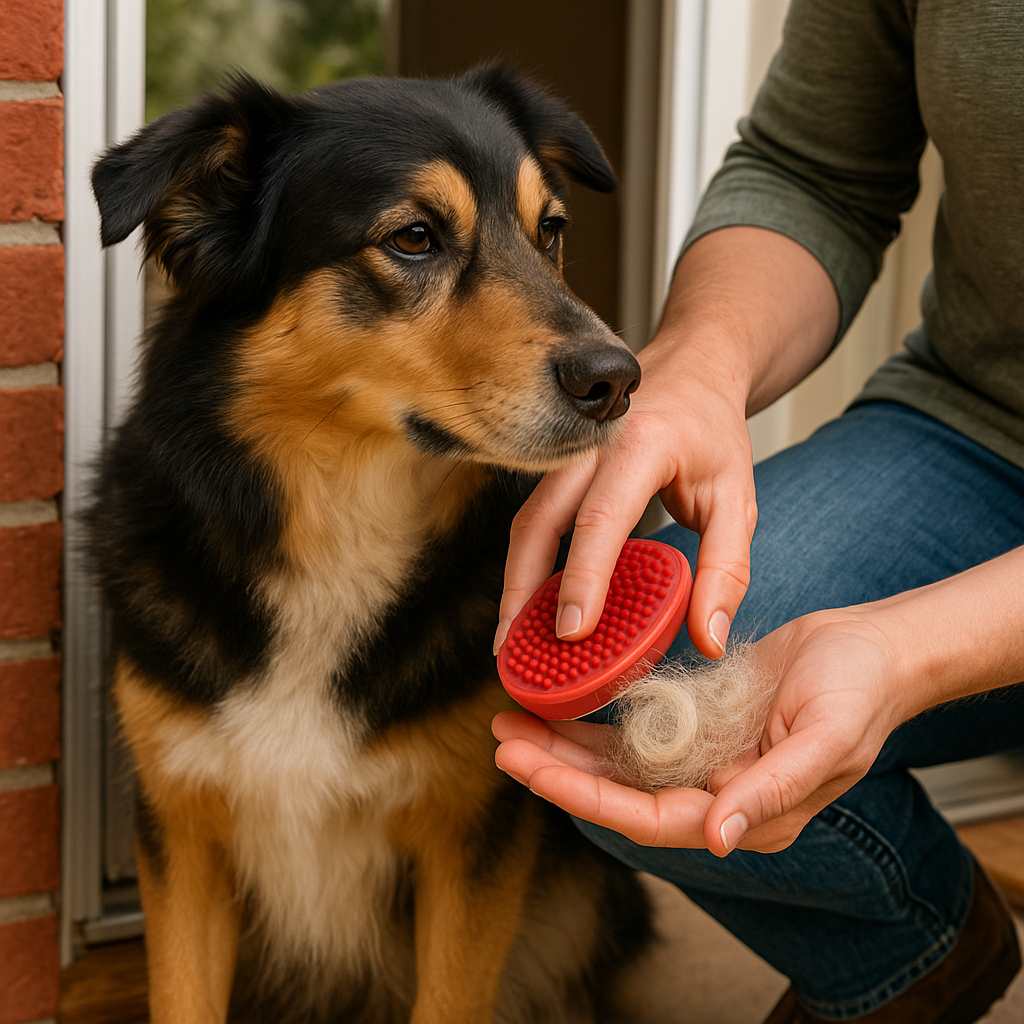
For short-coated pets in my house, a soft silicone curry brush can make a big difference during heavier shedding. Not the sharp rubber kind meant to rake like crazy, and not a metal deshedding blade that can overdo it on some coats. I mean the soft silicone palm-style brush with nubs that flex. It looks too gentle to matter. Then you try it on a coat that's mid-transition, and it starts rolling the loose hair into tidy little ropes you can pick up with two fingers instead of chasing tumbleweeds around the living room.
Here's how I use it so it works fast and doesn't irritate skin. I start with a completely dry coat and make small, light circles with almost no pressure, especially on the ribs and hips, where the undercoat lifts first. If you press hard, you rub the hair around. When I'm doing it right, I can see the hair gathering on the surface within 30 seconds, and the brush makes a faint squeaky-grippy sound as the silicone catches the loose stuff. After a minute or two, I switch to long strokes in the direction of the coat to smooth it out, then I peel the hair off the brush in one sheet. That's the satisfying part, and it's also the moment you realize why your vacuum has been struggling.
For longer or double coats, I switch to a tool suited to that coat, such as a slicker, undercoat rake, or metal comb, and check common tangle spots behind the ears, in the armpits, and on the fluffy pants on the back legs. If the comb gets hung up, I don't keep yanking like I'm starting a lawnmower. I stop and work the area gently with an appropriate comb or detangling tool, or use a little pet-safe detangling spray and my fingers to tease it apart. A lot of “shedding” complaints are really “that undercoat is trapped.” Removing loose undercoat during grooming can reduce how much of that hair ends up around the house.
The other reason the silicone brush earns its hook by my back door is the cleanup. I can curry on the porch, over the trash can, or even in the bathtub with the drain covered by a hair catcher. If you try to do this on your favorite rug, you'll end up vacuuming with the roller clogged every two minutes and muttering at a machine that did nothing wrong. Outside, you finish, shake out the brush, and you're done. Inside, it's a whole second chore.
Vacuuming fur without murdering your vacuum
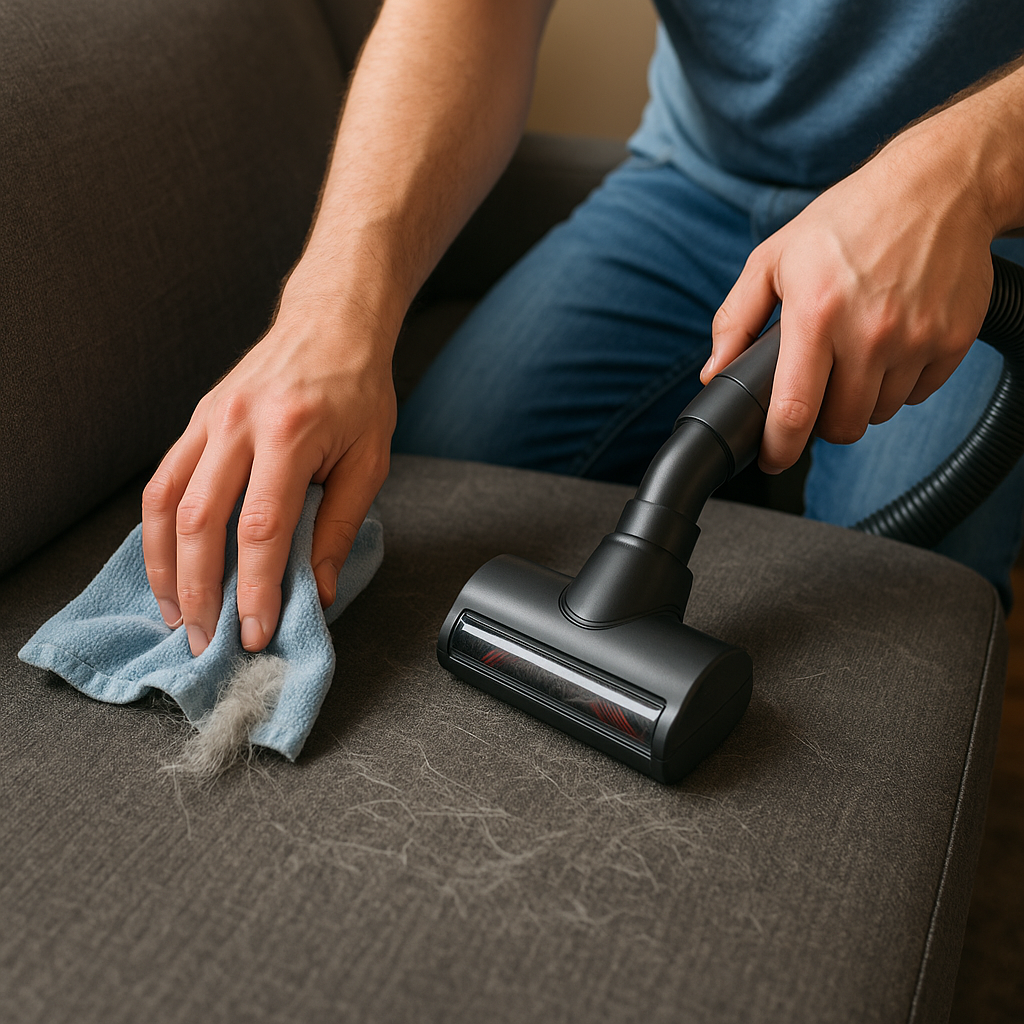
When seasonal shedding hits, most people (me included, the first few years) respond by vacuuming harder. More passes, more frustration, more time cutting a grey felt ring off the roller with scissors. The better move is to change the order of operations: lift hair off upholstery and bedding first, then vacuum what's left. That one switch keeps the brush roll from wrapping itself in a wig and losing all suction.
On the couch and the dog bed, I start with a slightly damp microfiber towel. Not dripping, just damp enough that hair clings to it. I wipe in one direction, and the fur pills up into rows you can grab. If the fabric is a tight weave, a ChomChom Roller can work well too, and it doesn't leave adhesive behind like a lint roller can. For blankets, I do a quick shake outside, then run the towel over the folded blanket on a hard surface so I'm not grinding hair deeper into the fibers.
Only after that do I vacuum, and I skip the floor head for upholstery. I use the hose with a hair tool or mini motorized attachment if your vacuum has one. The smaller head is easier to keep clear, and you can see the moment it starts to pack up. When it does, don't keep going and hope it magically sorts itself out. Turn it off, pop the cover, pull the wad, and keep moving. Two 20-second cleanouts beat one 10-minute wrestling match later.
If you're dealing with an indoor cat who sleeps in the same two spots, put washable throws there during the heavy shed weeks. Not as a decor project, just as a sacrificial layer you can toss in the washer. I rotate two throws so one's always clean, and the other is mid-fur. It sounds small, but it changes how the whole house feels when the weather flips, and the coat decides it's time to let go. And yes, you'll still find hair in your socks. But it won't be coming off the sofa in sheets.