
A weird household obsession usually isn't random: it's smell, sound, and a tiny reward loop hiding in plain sight.
Scent souvenirs: why yesterday's object beats a new toy
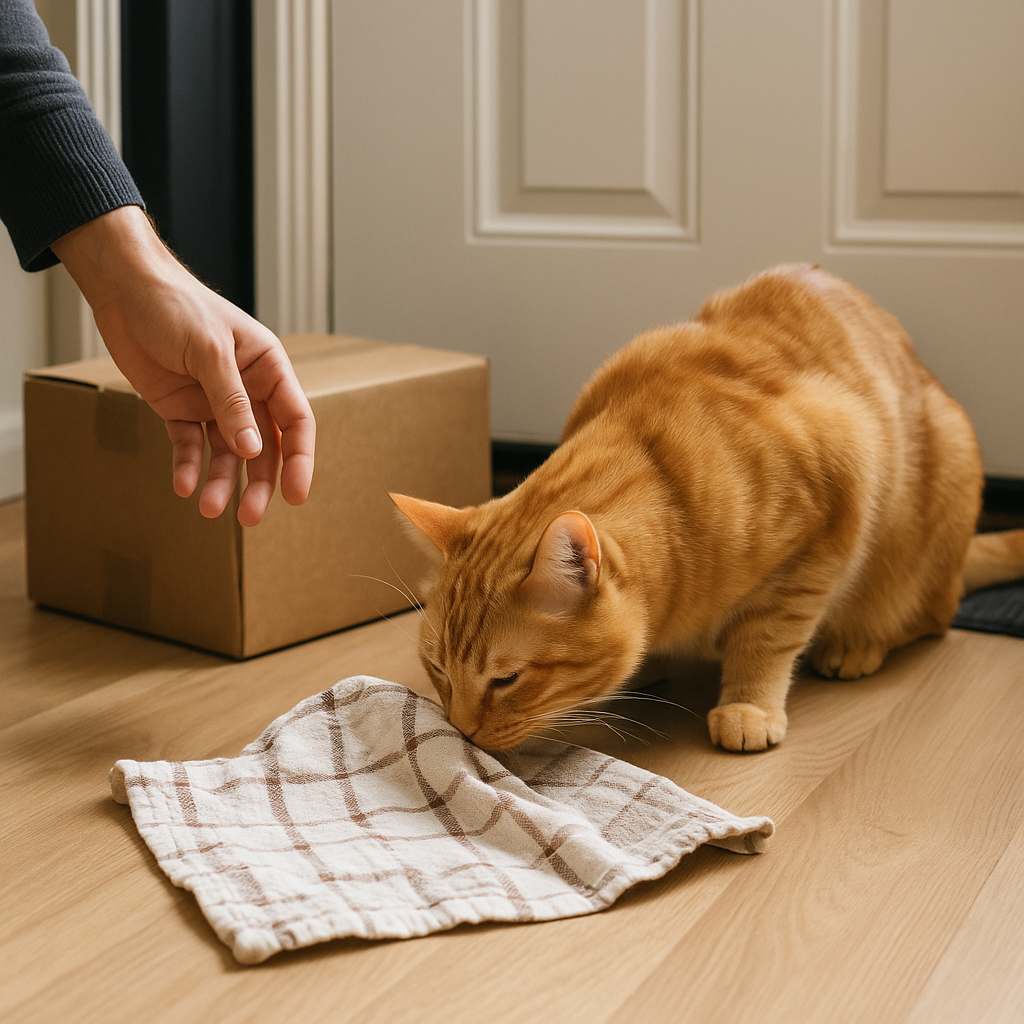
When one of my animals decides a completely normal thing is now The Thing, smell is often part of the explanation. Not in a mystical way. In a boring, sticky, human way. A cardboard box that sat by the front door for two days suddenly has a whole layer of sock lint, street air, and whatever perfume you wore when you carried groceries in. A dish towel that's been used to dry hands becomes a moving target because it holds the sharp little cocktail of soap, skin oil, and dinner prep. To us, it's background. To a nose that lives at floor level, it's a scrapbook.
The pattern I notice is that the obsession usually starts after the object comes into contact with one of three scent sources: your hands, food, or the outdoors. If you toss a clean paper bag on the counter, it might get a polite sniff. If you put two still-warm takeout containers in that same bag, carry it from the car, and then leave it near the trash, the bag turns into a mission. They aren't necessarily hungry. They're tracking a dense trail: paper, grease, onion, parking lot, and your fingerprints all layered together. Cats may linger over an interesting smell, and some odors can even trigger the open-mouth flehmen response they use to analyze scent more closely.
If you're trying to figure out why a random item got singled out, don't start by asking what's special about the object. Start by asking where it's been. Did it come out of a closet with mothball-ish scent? Did you wipe it with a lemon cleaner? Did it sit under a chair that someone snacks in? I once watched a dog ignore three brand-new chew toys and then carry off the oven mitt I'd used to pull out bacon. Not because it was chewy. Because it was bacon plus my hands plus heat, and heat makes smells louder.
If you want to redirect the fixation without turning it into a game of keep-away, you can swap the scent payload. Put the object out of reach, then offer something you can control that still scratches the same itch: a snuffle mat, a lick mat with a thin smear of xylitol-free peanut butter, or even a clean towel you've rubbed on your hands and then tied in a loose knot for supervised sniffing and pawing. The point is to give them a smell puzzle that's allowed, not to convince them the original object was never interesting.
The click-and-slide sound that keeps them coming back
Every pet owner has watched their animal fall in love with something that makes an annoying little noise. Part of the appeal may be simple cause-and-effect: the pet touches the object, and it immediately moves or makes a sound. Think about the plastic flip top on a takeout dressing cup. The click isn't loud to you, but it's crisp and consistent. Or a silicone spatula dragged across a metal bowl. Or the thin clatter of a binder clip skittering across hardwood. These are sounds with sharp edges that occur right when a paw, nose, or tooth makes contact. That's the whole hook.
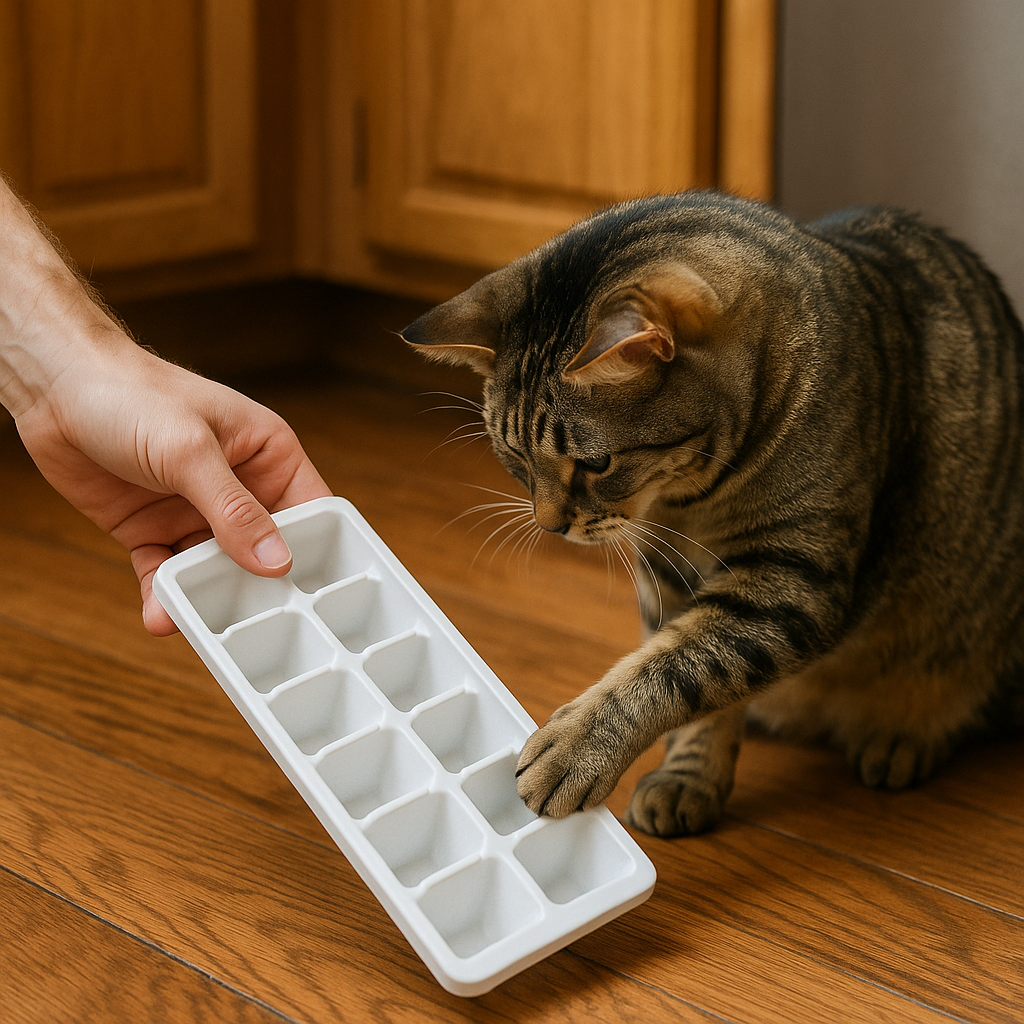
One of my favorites (and I mean that with my eyes half-closed because it gets old fast) is the ice cube tray. The old hard plastic kind that crackles when you twist it. In my house, the crackle of the tray quickly became part of a familiar sequence. I've had a cat sit under the freezer and stare at the handle, waiting for the door to open, the tray to rattle, and a cube to skate across the floor. The sound and movement seem to be part of the appeal.
Once you see it as a sound-and-response loop, the "why this object" question gets simpler. Anything that makes a brief click, skitter, or springy snap can turn into a jackpot. It's why some pets ignore a plush toy and then obsess over the little plastic ring from a milk jug. The ring doesn't feel better. It behaves better. It bounces. It rolls unpredictably. It makes that tiny tick when it hits baseboards. It's a self-starting chase scene.
Two practical notes from having lived with this: First, manage access instead of wrestling the object away every time. If the ice cube tray is the obsession, put it in a cabinet, not on top of the fridge, where they'll stare at it and rehearse the obsession for hours. Second, give them a legal substitute with similar feedback. For dogs, a Kong Wobbler or a hard rubber treat ball scratches the same cause-and-effect itch without shards or sharp corners. For cats, those little track toys with a captive ball work because the sound is immediate and the "prey" can't disappear under the stove. You're not curing a quirk. You're swapping the sensory trigger for a safer one.
Intermittent rewards: the one time it worked is why they keep trying
Here's the part that makes the obsession feel spooky: sometimes the object isn't sensory at all. It's a slot machine. One time, the weird household item produced a reward, and now your pet runs the experiment again and again because the reward is unpredictable. This is the same reason a dog will keep checking the spot under the high chair long after you stopped feeding the baby there. The jackpot isn't guaranteed, which is exactly why the behavior sticks.
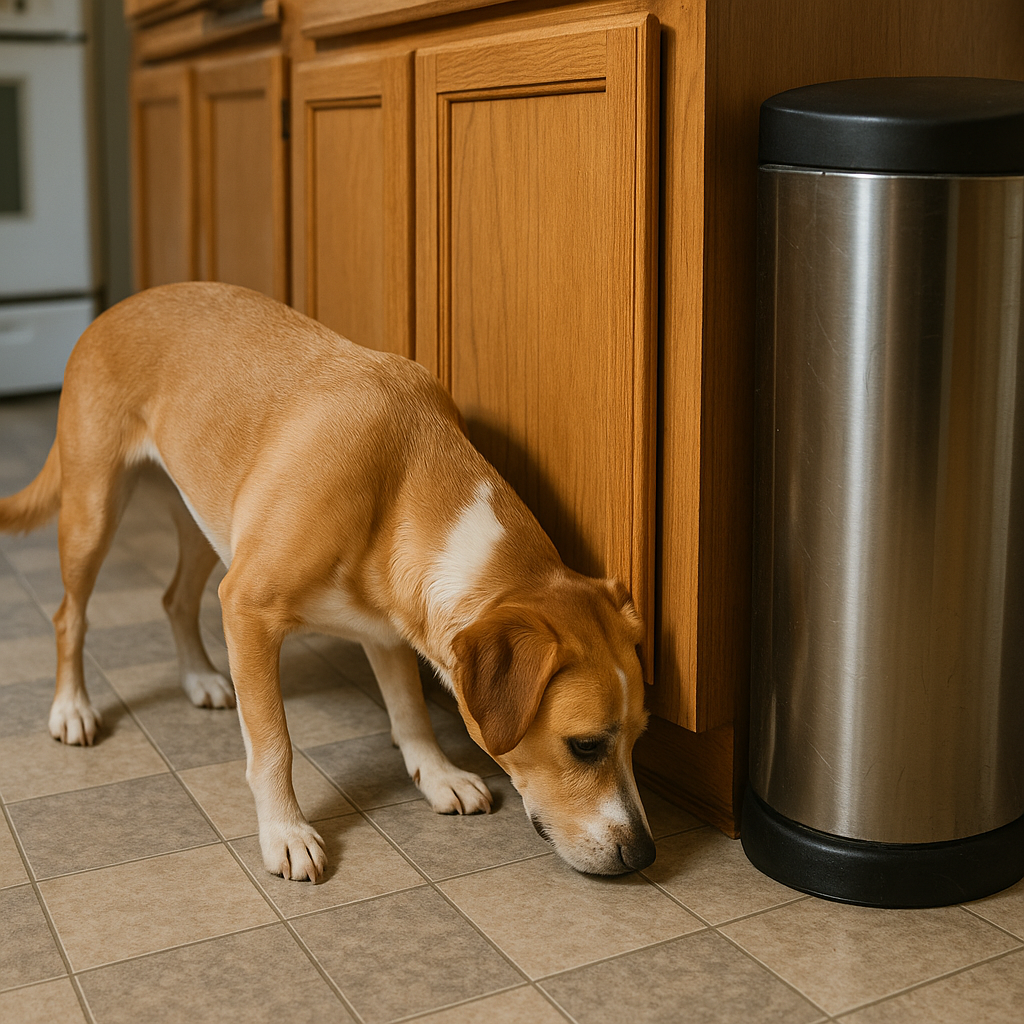
The most common version in my house is the kitchen: a dropped shred of cheese, a rogue crouton, one cube of kibble that bounced farther than the rest. After that, the floor mat, the oven drawer, or the little gap next to the trash can becomes the focus of a daily audit. It's not that they're confused. They're being efficient. If the probability of success is low but not zero, the behavior is worth repeating, especially for animals wired to forage. I've watched a dog nose the same cabinet toe-kick because months ago, a treat rolled under it, and I helped him fish it out. He learned two things: treats can end up there, and humans sometimes assist. Great. Now the cabinet has a fan club.
Pets also learn reward patterns from us, even when we think we're being neutral. If your cat paws at a pen and you laugh once, that's attention. If your dog grabs a dish sponge and you chase, that's attention plus movement plus you making exciting noises. I don't mean that in a scolding way. I've reinforced plenty of nonsense by accident, usually while I'm holding coffee and negotiating with a creature who has decided a potholder is now a trophy.
If you want the obsession to fade, you have to make the reward history boring. That means two things I try to stick to. One: stop paying the object tax: no chasing, no bargaining, no dramatic reaction. Just trade for something allowed (treat, chew, toy) and move on. Two: clean up the accidental jackpots. If the fixation is the trash can area, it's because something good has ended up there before. Wipe the rim, rinse the bin if food dripped, and pick up the little crumbs that keep the idea alive. You're not proving anything to them. You're removing the evidence.
And if you're thinking, "But my pet is obsessed with a completely pointless object," there may still be some payoff in keeping the behavior going, even if it's subtle: an interesting smell, movement, texture, or a reaction from you. If the fixation persists or becomes difficult to interrupt, though, it's worth considering other behavioral or medical causes rather than assuming reinforcement explains everything.